Department of Neurology, Henan Provincial People's Hospital, Zhengzhou , Henan Province, 450003, People's Republic of China.
Department of Neurology and Institute of Neurology, Ruijin Hospital, Shanghai Jiao Tong University School of Medicine, Shanghai, 200025, People's Republic of China.
Transl Neurodegener. 2012 Oct 30;1(1):21. doi: 10.1186/2047-9158-1-21.
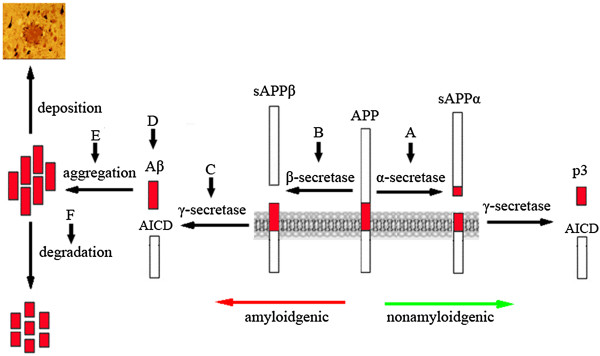
Alzheimer's disease (AD) is a neurodegenerative disorder that impairs mainly the memory and cognitive function in elderly. Extracellular beta amyloid deposition and intracellular tau hyperphosphorylation are the two pathological events that are thought to cause neuronal dysfunction in AD. Since the detailed mechanisms that underlie the pathogenesis of AD are still not clear, the current treatments are those drugs that can alleviate the symptoms of AD patients. Recent studies have indicated that these symptom-reliving drugs also have the ability of regulating amyloid precursor protein processing and tau phosphorylation. Thus the pharmacological mechanism of these drugs may be too simply-evaluated. This review summarizes the current status of AD therapy and some potential preclinical considerations that target beta amyloid and tau protein are also discussed.
阿尔茨海默病(AD)是一种神经退行性疾病,主要损害老年人的记忆和认知功能。细胞外β淀粉样蛋白沉积和细胞内tau 过度磷酸化被认为是导致 AD 神经元功能障碍的两个病理事件。由于 AD 发病机制的详细机制尚不清楚,目前的治疗方法是那些可以缓解 AD 患者症状的药物。最近的研究表明,这些缓解症状的药物也具有调节淀粉样前体蛋白加工和 tau 磷酸化的能力。因此,这些药物的药理机制可能被过于简单地评估。本文综述了 AD 治疗的现状,并讨论了一些针对β淀粉样蛋白和 tau 蛋白的潜在临床前考虑因素。