Department of Pharmacology and Chemical Biology, Institute of Medical Sciences, Shanghai Jiao Tong University School of Medicine, Shanghai, 200025, China.
Institute of Interdisciplinary Integrative Biomedical Research, Shanghai University of Traditional Chinese Medicine, Shanghai, 201210, China.
Transl Neurodegener. 2021 Mar 31;10(1):12. doi: 10.1186/s40035-021-00235-4.
Currently, there is no cure for Alzheimer's disease (AD). Therapeutics that can modify the early stage of AD are urgently needed. Recent studies have shown that the pathogenesis of AD is closely regulated by an endo/lysosomal asparaginyl endopeptidase (AEP). Inhibition of AEP has been reported to prevent neural degeneration in transgenic mouse models of AD. However, more than 90% of AD cases are age-related sporadic AD rather than hereditary AD. The therapeutic efficacy of AEP inhibition in ageing-associated sporadic AD remains unknown.
The senescence-accelerated mouse prone 8 (SAMP8) was chosen as an approximate model of sporadic AD and treated with a selective AEP inhibitor,: δ-secretase inhibitor 11. Activation of AEP was determined by enzymatic activity assay. Concentration of soluble amyloid β (Aβ) in the brain was determined by ELISA. Morris water maze test was performed to assess the learning and memory-related cognitive ability. Pathological changes in the brain were explored by morphological and western blot analyses.
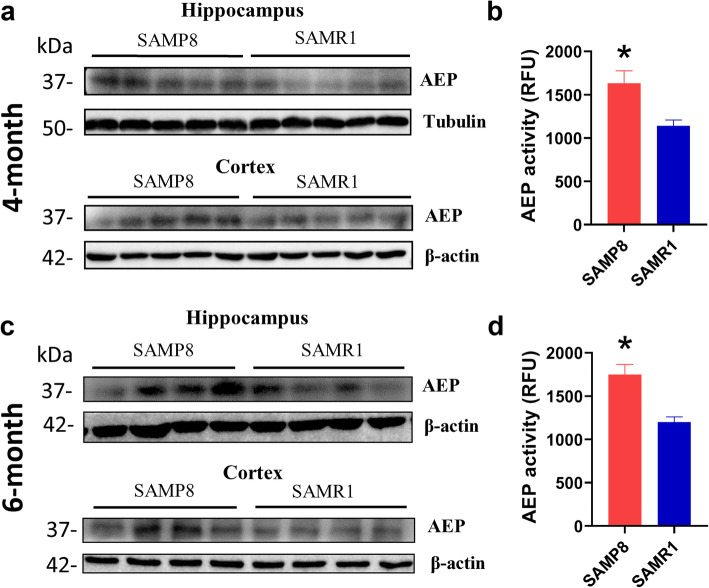
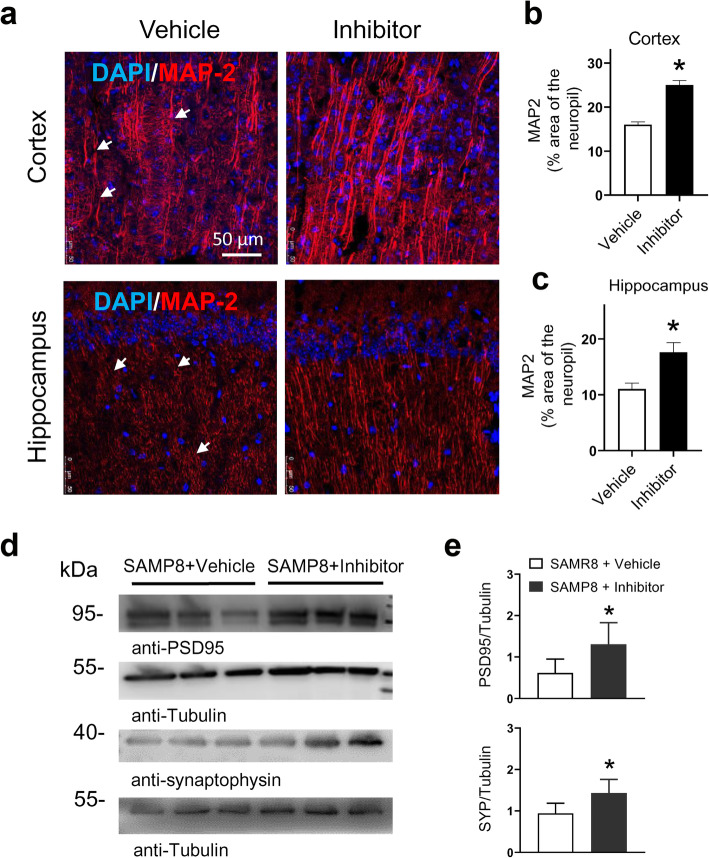
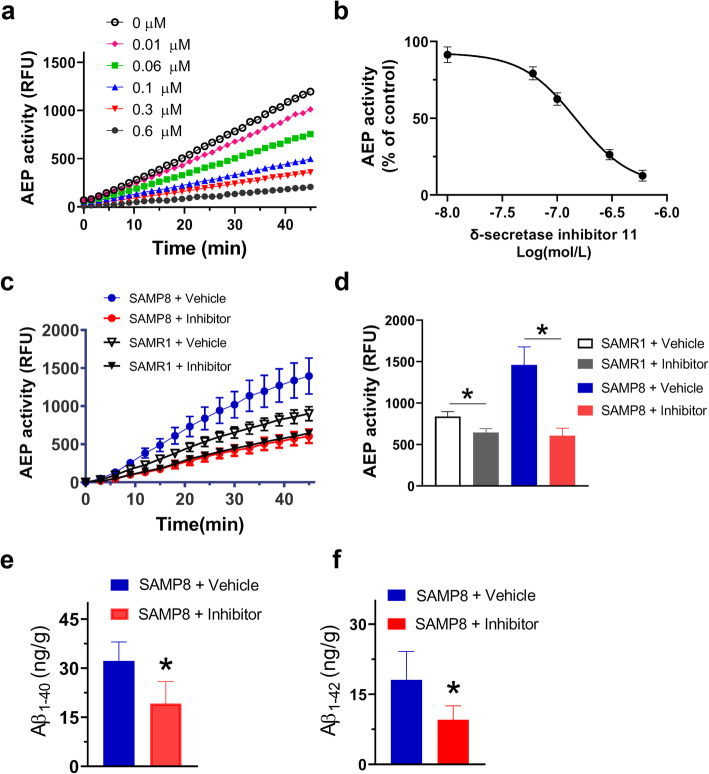
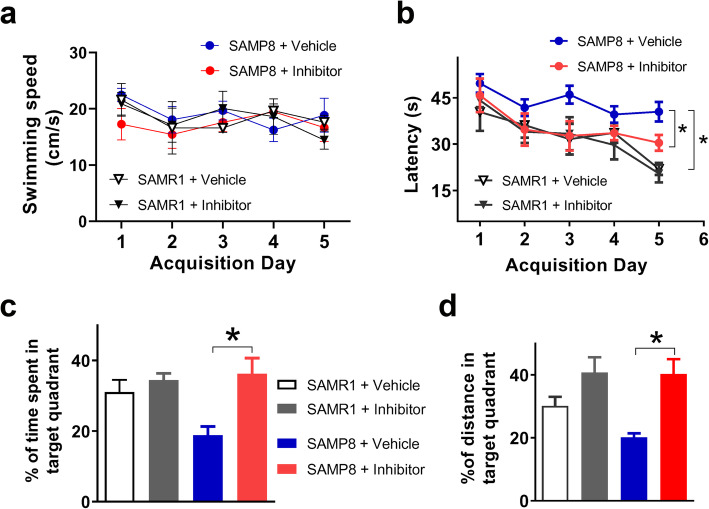
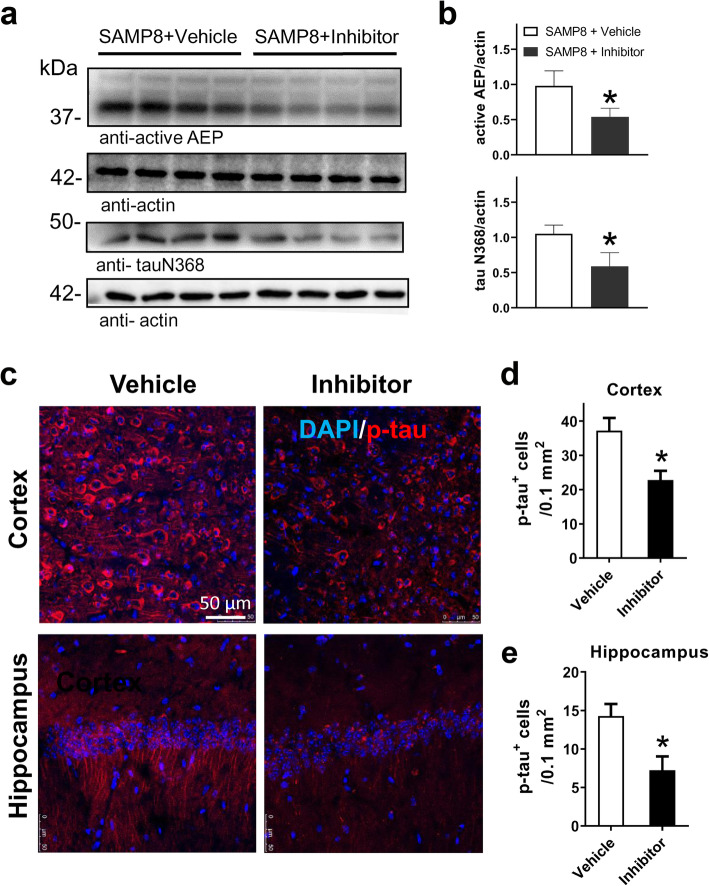
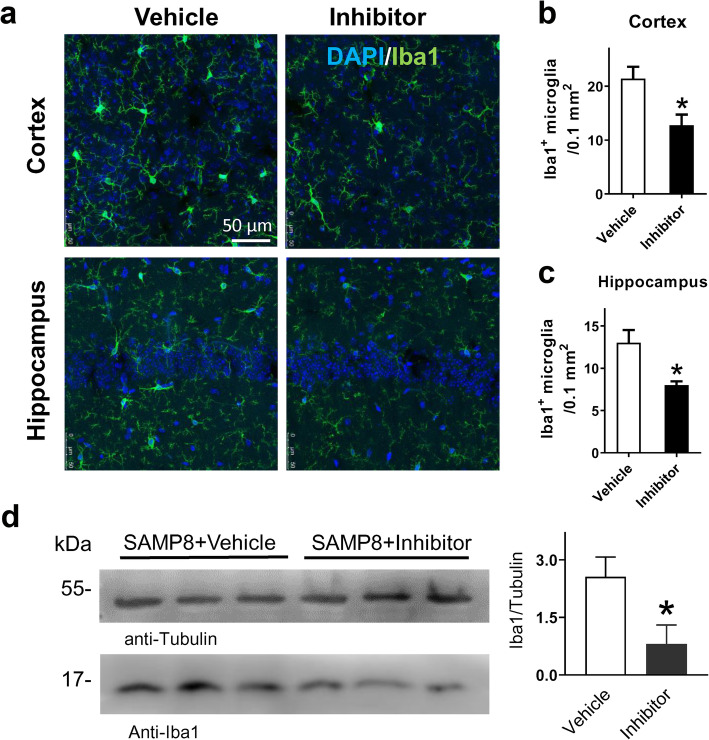
The enzymatic activity of AEP in the SAMP8 mouse brain was significantly higher than that in the age-matched SAMR1 mice. The half maximal inhibitory concentration (IC) for δ-secretase inhibitor 11 to inhibit AEP in vitro is was around 150 nM. Chronic treatment with δ-secretase inhibitor 11 markedly decreased the brain AEP activity, reduced the generation of Aβ and ameliorated memory loss. The inhibition of AEP with this reagent not only reduced the AEP-cleaved tau fragments and tau hyperphosphorylation, but also attenuated neuroinflammation in the form of microglial activation. Moreover, treatment with δ-secretase inhibitor 11 prevented the synaptic loss and alleviated dendritic disruption in SAMP8 mouse brain.
Pharmacological inhibition of AEP can intervene and prevent AD-like pathological progress in the model of sporadic AD. The up-regulated AEP in the brain could be a promising target for early treatment of AD. The δ-secretase inhibitor 11 can be used as a lead compound for translational development of AD treatment.
目前,尚无治疗阿尔茨海默病(AD)的方法。迫切需要能够改变 AD 早期阶段的治疗方法。最近的研究表明,AD 的发病机制受到内体/溶酶体天冬酰胺内肽酶(AEP)的严密调节。据报道,抑制 AEP 可防止 AD 转基因小鼠模型中的神经变性。但是,超过 90%的 AD 病例是与年龄相关的散发性 AD,而不是遗传性 AD。AEP 抑制在与衰老相关的散发性 AD 中的治疗效果尚不清楚。
选择快速老化小鼠品系 8(SAMP8)作为散发性 AD 的近似模型,并使用选择性 AEP 抑制剂:δ-分泌酶抑制剂 11 进行治疗。通过酶活性测定确定 AEP 的激活。通过 ELISA 测定脑可溶性淀粉样β(Aβ)的浓度。通过 Morris 水迷宫测试评估与学习和记忆相关的认知能力。通过形态学和 Western blot 分析探索脑的病理变化。
SAMP8 小鼠脑 AEP 的酶活性明显高于同龄 SAMR1 小鼠。体外δ-分泌酶抑制剂 11 抑制 AEP 的半最大抑制浓度(IC)约为 150nM。慢性用 δ-分泌酶抑制剂 11 治疗可显著降低脑 AEP 活性,减少 Aβ的产生并改善记忆丧失。用该试剂抑制 AEP 不仅减少了 AEP 切割的 tau 片段和 tau 过度磷酸化,而且还减轻了小胶质细胞活化形式的神经炎症。此外,用 δ-分泌酶抑制剂 11 治疗可防止 SAMP8 小鼠脑的突触丢失和树突破坏。
AEP 的药理学抑制可以干预和预防散发性 AD 模型中的 AD 样病理进展。脑中上调的 AEP 可能是 AD 早期治疗的有希望的靶标。δ-分泌酶抑制剂 11 可作为 AD 治疗转化发展的先导化合物。