Division of Neurology, Department of Medicine, University of Hong Kong, Pokfulam, Hong Kong SAR, China.
Transl Neurodegener. 2012 Jan 13;1(1):3. doi: 10.1186/2047-9158-1-3.
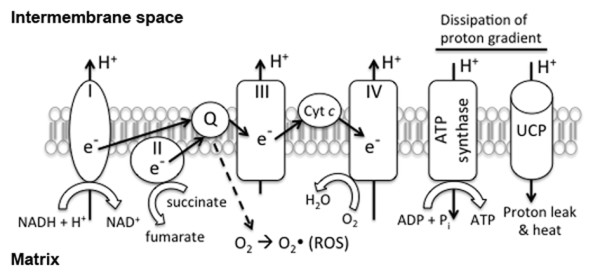
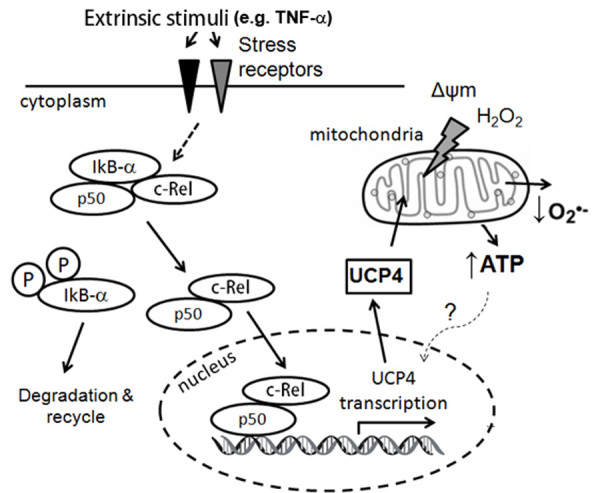
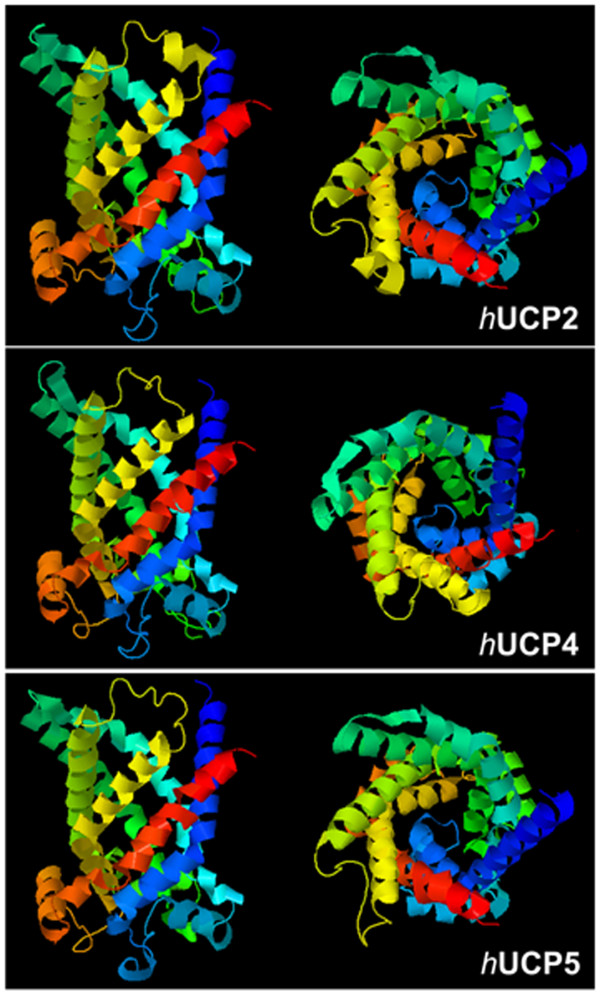
This review gives a brief insight into the role of mitochondrial dysfunction and oxidative stress in the converging pathogenic processes involved in Parkinson's disease (PD). Mitochondria provide cellular energy in the form of ATP via oxidative phosphorylation, but as an integral part of this process, superoxides and other reactive oxygen species are also produced. Excessive free radical production contributes to oxidative stress. Cells have evolved to handle such stress via various endogenous anti-oxidant proteins. One such family of proteins is the mitochondrial uncoupling proteins (UCPs), which are anion carriers located in the mitochondrial inner membrane. There are five known homologues (UCP1 to 5), of which UCP4 and 5 are predominantly expressed in neural cells. In a series of previous publications, we have shown how these neuronal UCPs respond to 1-methyl-4-phenylpyridinium (MPP+; toxic metabolite of MPTP) and dopamine-induced toxicity to alleviate neuronal cell death by preserving ATP levels and mitochondrial membrane potential, and reducing oxidative stress. We also showed how their expression can be influenced by nuclear factor kappa-B (NF-κB) signaling pathway specifically in UCP4. Furthermore, we previously reported an interesting link between PD and metabolic processes through the protective effects of leptin (hormone produced by adipocytes) acting via UCP2 against MPP+-induced toxicity. There is increasing evidence that these endogenous neuronal UCPs can play a vital role to protect neurons against various pathogenic stresses including those associated with PD. Their expression, which can be induced, may well be a potential therapeutic target for various drugs to alleviate the harmful effects of pathogenic processes in PD and hence modify the progression of this disease.
这篇综述简要探讨了线粒体功能障碍和氧化应激在帕金森病(PD)相关致病过程中的作用。线粒体通过氧化磷酸化以 ATP 的形式为细胞提供能量,但作为这个过程的一个组成部分,也会产生超氧化物和其他活性氧物质。过多的自由基产生会导致氧化应激。细胞已经进化出通过各种内源性抗氧化蛋白来应对这种应激。其中一类蛋白质是线粒体解偶联蛋白(UCPs),它们是位于线粒体内膜的阴离子载体。有五种已知的同源物(UCP1 到 5),其中 UCP4 和 UCP5 主要在神经细胞中表达。在一系列之前的出版物中,我们已经展示了这些神经元 UCPs 如何对 1-甲基-4-苯基吡啶(MPP+;MPTP 的有毒代谢物)和多巴胺诱导的毒性做出反应,通过维持 ATP 水平和线粒体膜电位以及减少氧化应激来减轻神经元细胞死亡。我们还展示了它们的表达如何可以通过核因子 kappa-B(NF-κB)信号通路特异性地在 UCP4 中受到影响。此外,我们之前还报道了 PD 与代谢过程之间的一个有趣联系,即瘦素(脂肪细胞产生的激素)通过 UCP2 发挥作用,对抗 MPP+诱导的毒性,从而产生保护作用。越来越多的证据表明,这些内源性神经元 UCPs 可以在保护神经元免受各种致病应激方面发挥重要作用,包括与 PD 相关的应激。它们的表达可以被诱导,这很可能是各种药物的一个潜在治疗靶点,以减轻 PD 中致病过程的有害影响,从而改变这种疾病的进展。