Université de Toulouse; INP, UPS; Laboratoire d'Écologie Fonctionnelle et Environnement (EcoLab); ENSAT, 18 chemin de Borderouge, 31326 Castanet Tolosan, France.
J Exp Bot. 2013 Jan;64(1):317-32. doi: 10.1093/jxb/ers337. Epub 2012 Dec 3.
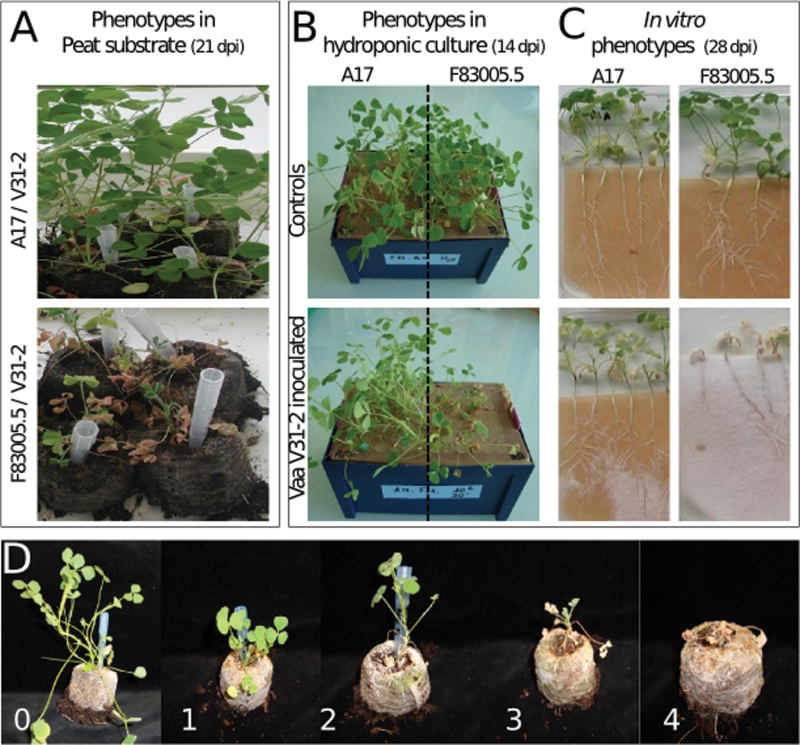
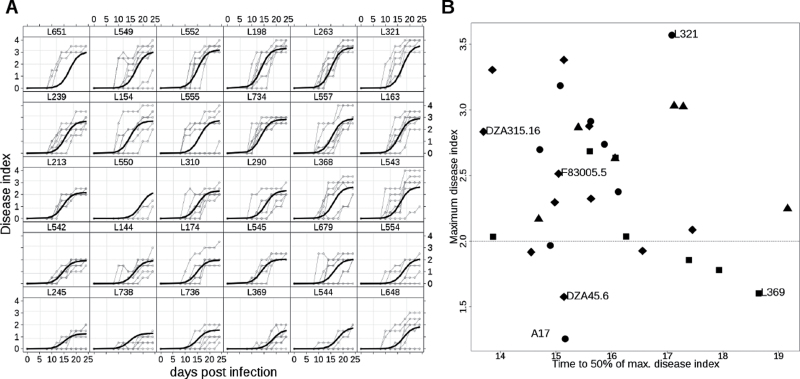
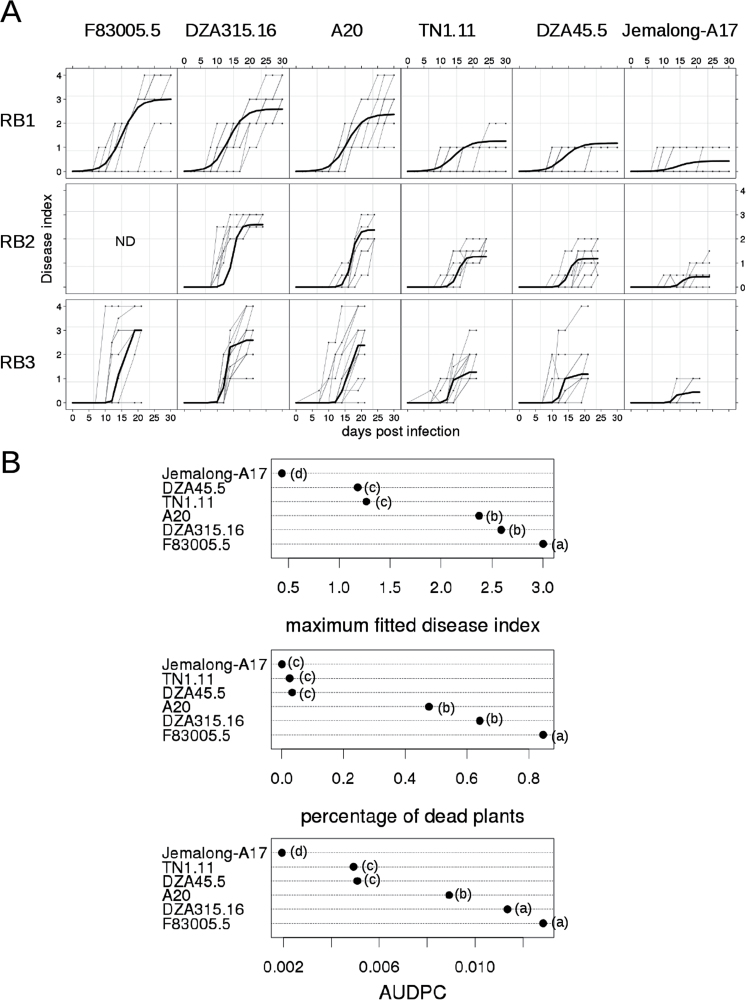
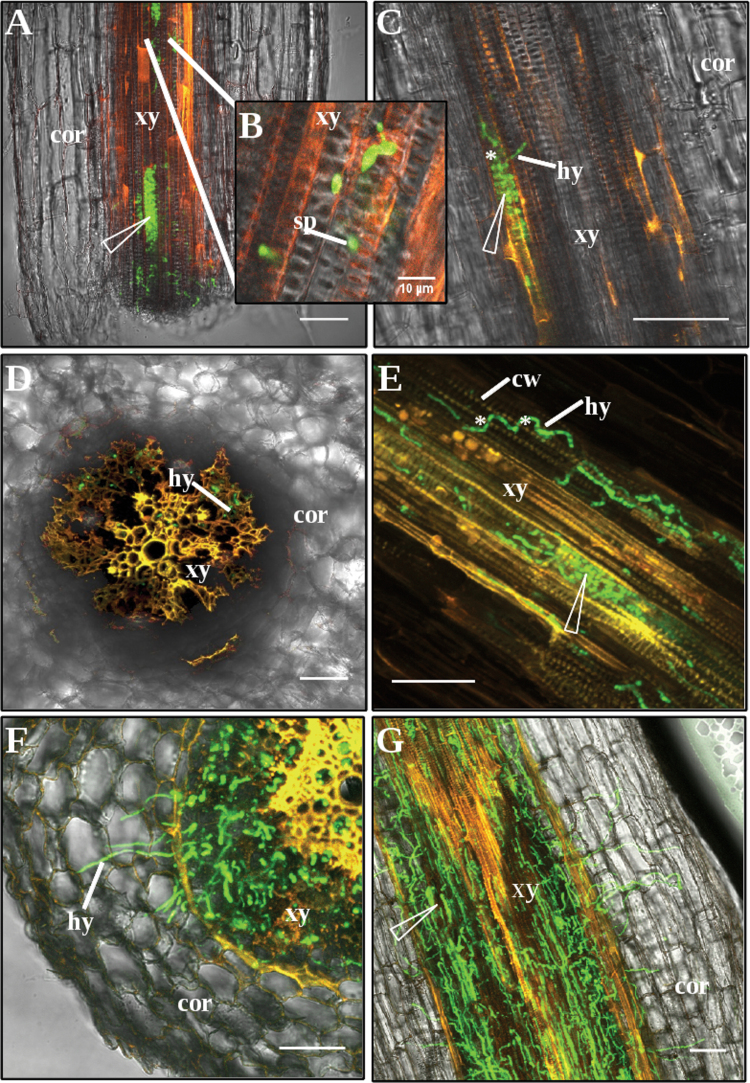
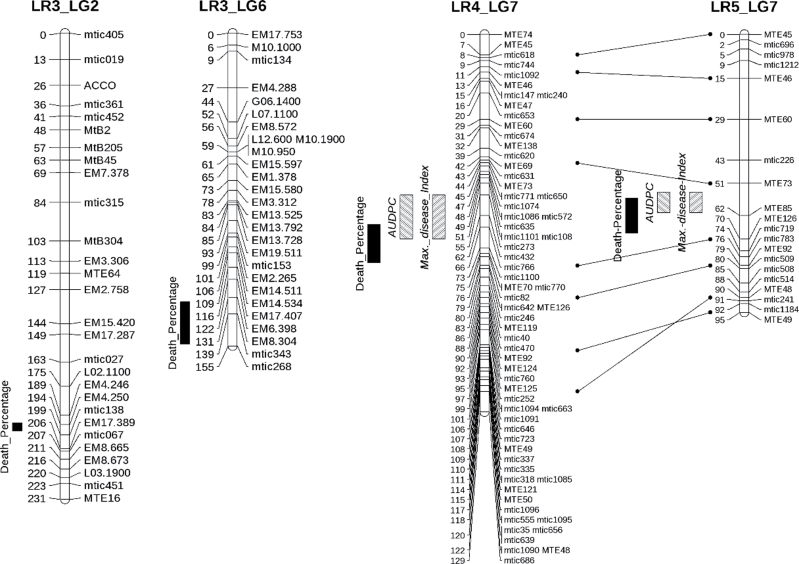
Verticillium wilt is a major threat to alfalfa (Medicago sativa) and many other crops. The model legume Medicago truncatula was used as a host for studying resistance and susceptibility to Verticillium albo-atrum. In addition to presenting well-established genetic resources, this wild plant species enables to investigate biodiversity of the response to the pathogen and putative crosstalk between disease and symbiosis. Symptom scoring after root inoculation and modelling of disease curves allowed assessing susceptibility levels in recombinant lines of three crosses between susceptible and resistant lines, in a core collection of 32 lines, and in mutants affected in symbiosis with rhizobia. A GFP-expressing V. albo-atrum strain was used to study colonization of susceptible plants. Symptoms and colonization pattern in infected M. truncatula plants were typical of Verticillium wilt. Three distinct major quantitative trait loci were identified using a multicross, multisite design, suggesting that simple genetic mechanisms appear to control Verticillium wilt resistance in M. truncatula lines A17 and DZA45.5. The disease functional parameters varied largely in lines of the core collection. This biodiversity with regard to disease response encourages the development of association genetics and ecological approaches. Several mutants of the resistant line, impaired in different steps of rhizobial symbiosis, were affected in their response to V. albo-atrum, which suggests that mechanisms involved in the establishment of symbiosis or disease might have some common regulatory control points.
黄萎病是紫花苜蓿(Medicago sativa)和许多其他作物的主要威胁。模式豆科植物蒺藜苜蓿被用作研究对Verticillium albo-atrum 抗性和易感性的宿主。除了提供成熟的遗传资源外,这种野生植物物种还能够研究对病原体的生物多样性反应以及疾病和共生之间的潜在串扰。根接种后的症状评分和疾病曲线建模,使我们能够评估在 32 条核心品系的三个杂交品系的重组系中,以及在与根瘤菌共生受影响的突变体中的易感性水平。使用表达 GFP 的 V. albo-atrum 菌株来研究易感植物的定植。感染蒺藜苜蓿植物的症状和定植模式是典型的黄萎病。使用多交叉、多点设计鉴定了三个不同的主要数量性状位点,这表明在 A17 和 DZA45.5 品系中,简单的遗传机制似乎控制了蒺藜苜蓿对黄萎病的抗性。核心品系中品系的疾病功能参数差异很大。这种对疾病反应的生物多样性鼓励发展关联遗传学和生态学方法。抗性系的几个突变体在根瘤菌共生的不同步骤中受到影响,这表明参与共生或疾病建立的机制可能具有一些共同的调节控制点。