Ecole Normale Supérieure, Institut de Biologie de l'ENS, IBENS, Inserm, U1024, CNRS, UMR 8197, Génomique, Environnementale et Evolutive Section 3 CNRS UMR8197, 46 rue d'Ulm, Paris, 75005, France.
Plant Methods. 2012 Dec 7;8(1):48. doi: 10.1186/1746-4811-8-48.
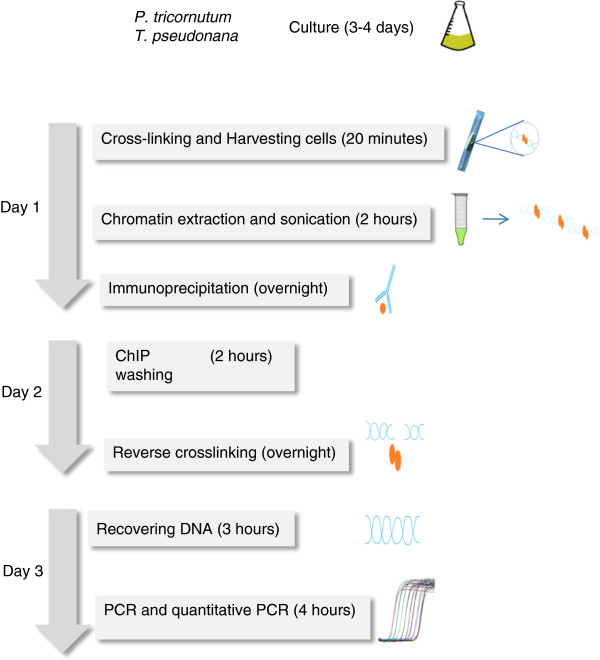
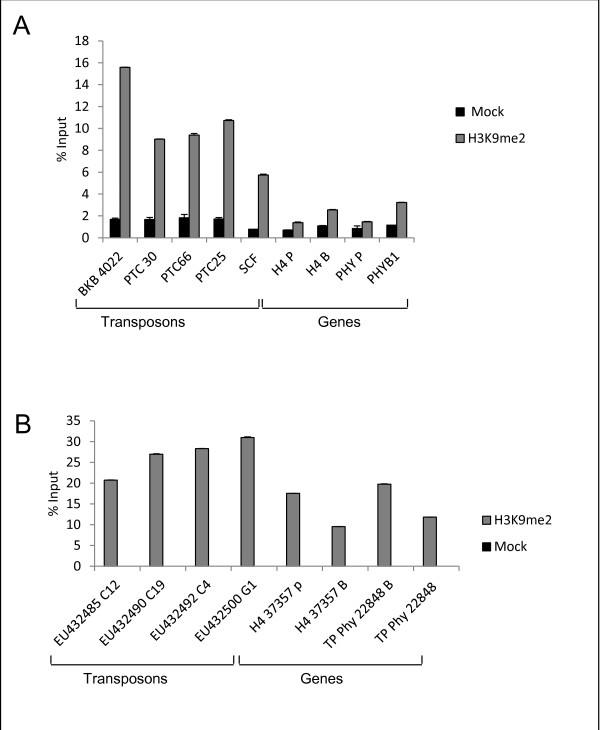
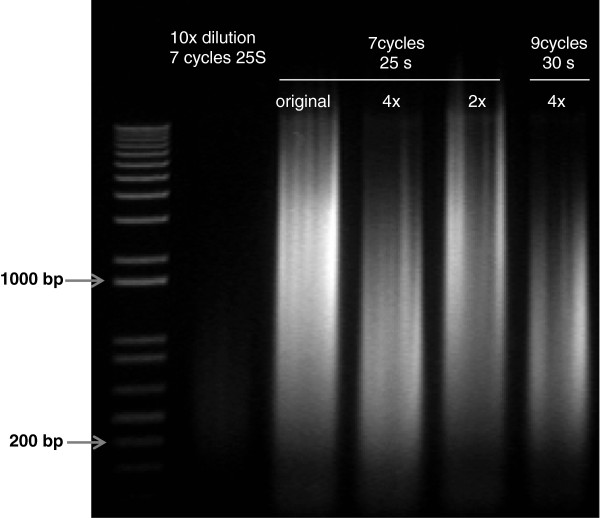
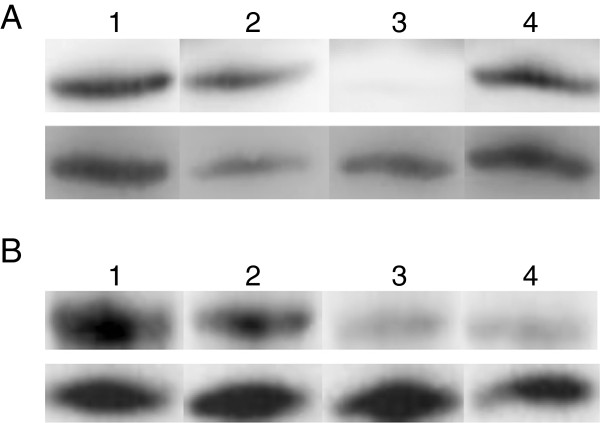
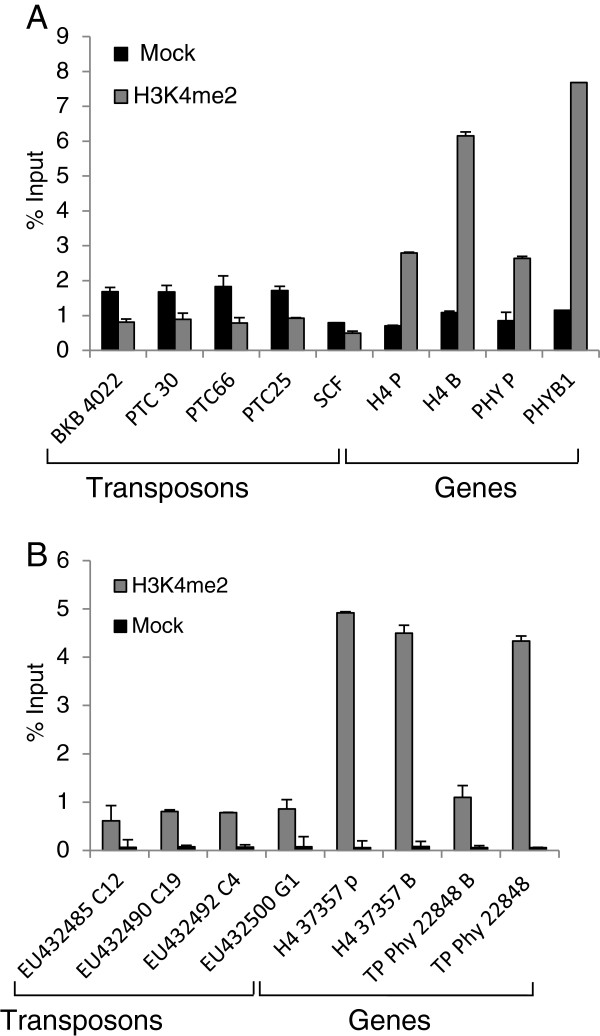
In this report we describe a chromatin immunoprecipitation (ChIP) protocol for two fully sequenced model diatom species Phaeodactylum tricornutum and Thalassiosira pseudonana. This protocol allows the extraction of satisfactory amounts of chromatin and gives reproducible results. We coupled the ChIP assay with real time quantitative PCR. Our results reveal that the two major histone marks H3K4me2 and H3K9me2 exist in P. tricornutum and T. pseudonana. As in other eukaryotes, H3K4me2 marks active genes whereas H3K9me2 marks transcriptionally inactive transposable elements. Unexpectedly however, T. pseudonana housekeeping genes also show a relative enrichment of H3K9me2. We also discuss optimization of the procedure, including growth conditions, cross linking and sonication. Validation of the protocol provides a set of genes and transposable elements that can be used as controls for studies using ChIP in each diatom species. This protocol can be easily adapted to other diatoms and eukaryotic phytoplankton species for genetic and biochemical studies.
在本报告中,我们描述了一种针对两种完全测序的模式硅藻物种——三角褐指藻和拟菱形藻的染色质免疫沉淀(ChIP)方案。该方案可提取出令人满意的染色质量,并获得可重复的结果。我们将 ChIP 测定与实时定量 PCR 相结合。结果表明,H3K4me2 和 H3K9me2 这两种主要的组蛋白标记在三角褐指藻和拟菱形藻中存在。与其他真核生物一样,H3K4me2 标记活性基因,而 H3K9me2 标记转录失活的转座元件。然而出乎意料的是,拟菱形藻的管家基因也显示出相对富集的 H3K9me2。我们还讨论了该方案的优化,包括生长条件、交联和超声处理。该方案的验证提供了一组可用于每个硅藻物种的 ChIP 研究的基因和转座元件作为对照。该方案可轻松应用于其他硅藻和真核浮游植物物种,用于遗传和生化研究。