Huang Xiaorong, Pan Qinwei, Lin Ying, Gu Tingting, Li Yi
1State Key Laboratory of Plant Genetics and Germplasm Enhancement and College of Horticulture, Nanjing Agricultural University, Nanjing, 210095 People's Republic of China.
Minzhulu Primary School of Xuzhou City, Xuzhou, 221000 People's Republic of China.
Plant Methods. 2020 Feb 3;16:10. doi: 10.1186/s13007-020-0556-z. eCollection 2020.
Covalent modifications of histones and histone variants have great influence on chromatin structure, which is involved in the transcriptional regulation of gene expression. Chromatin immunoprecipitation (ChIP) is a powerful tool for studying in vivo DNA-histone interactions. Strawberry is a model for Rosaceae and non-climacteric fruits, in which histone modifications have been implicated to affect fruit development and ripening. However, a validated ChIP method has not been reported in strawberry, probably due to its high levels of polysaccharides which affect the quality of prepared chromatin and the efficiency of immunoprecipitation.
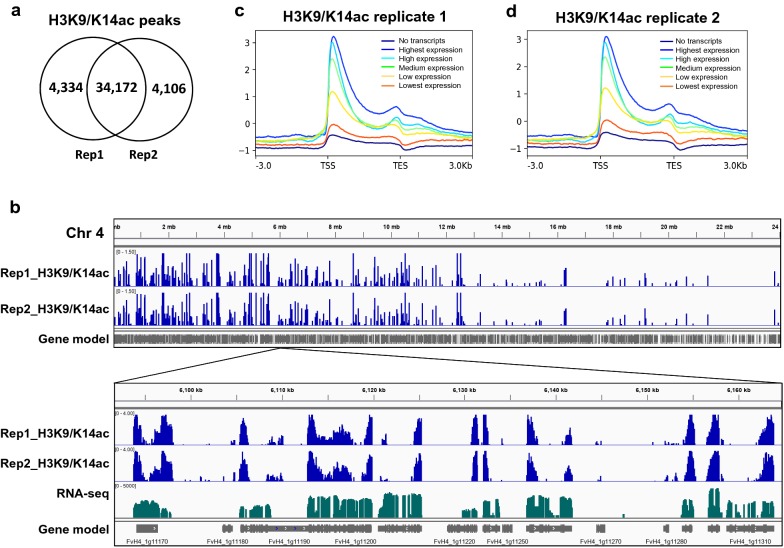
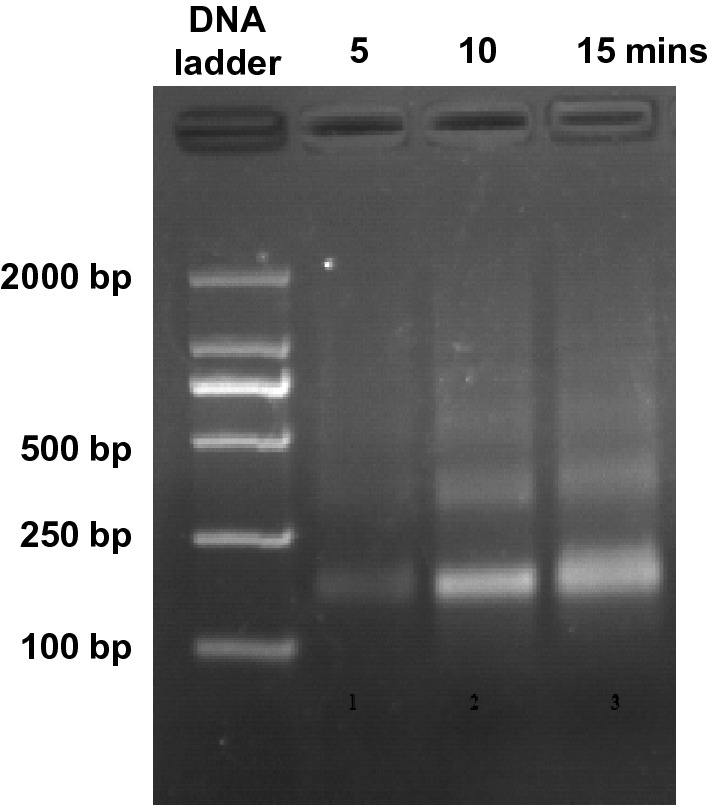
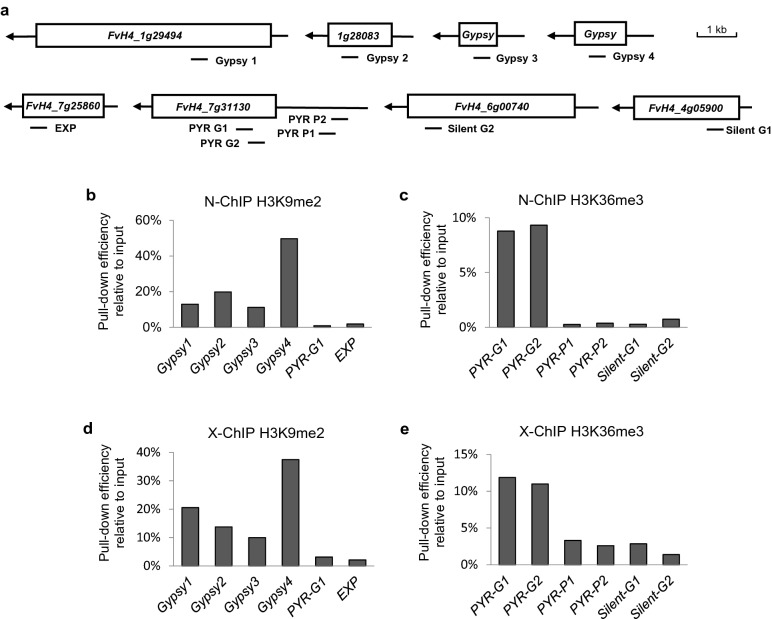
We describe a native chromatin immunoprecipitation (N-ChIP) protocol suitable for strawberry by optimizing the parameters for nuclei isolation, chromatin extraction, DNA fragmentation and validation analysis using quantitative real-time PCR (qRT-PCR). The qRT-PCR results show that both the active mark H3K36me3 and the silent mark H3K9me2 are efficiently immunoprecipitated for the enriched regions. Compared to X-ChIP (cross-linked chromatin followed by immunoprecipitation), our optimized N-ChIP procedure has a higher signal-to-noise ratio and a lower background for both the active and the silent histone modifications. Furthermore, high-throughput sequencing following N-ChIP demonstrates that nearly 90% of the enriched H3K9/K14ac peaks are overlapped between biological replicates, indicating its remarkable consistency and reproducibility.
An N-ChIP method suitable for the fleshy fruit tissues of woodland strawberry is described in this study. The efficiency and reproducibility of our optimized N-ChIP protocol are validated by both qRT-PCR and high-throughput sequencing. We conclude that N-ChIP is a more suitable method for strawberry fruit tissues relative to X-ChIP, which could be combined with high-throughput sequencing to investigate the impact of histone modifications in strawberry and potentially in other fruits with high content of polysaccharides.
组蛋白和组蛋白变体的共价修饰对染色质结构有很大影响,而染色质结构参与基因表达的转录调控。染色质免疫沉淀(ChIP)是研究体内DNA-组蛋白相互作用的有力工具。草莓是蔷薇科和非跃变型果实的模型,其中组蛋白修饰被认为会影响果实发育和成熟。然而,尚未有适用于草莓的经过验证的ChIP方法报道,这可能是由于其多糖含量高,影响了制备的染色质质量和免疫沉淀效率。
我们通过优化细胞核分离、染色质提取、DNA片段化以及使用定量实时PCR(qRT-PCR)进行验证分析的参数,描述了一种适用于草莓的天然染色质免疫沉淀(N-ChIP)方案。qRT-PCR结果表明,活性标记H3K36me3和沉默标记H3K9me2在富集区域均能有效免疫沉淀。与X-ChIP(交联染色质后进行免疫沉淀)相比,我们优化的N-ChIP程序对于活性和沉默组蛋白修饰均具有更高的信噪比和更低的背景。此外,N-ChIP后的高通量测序表明,近90%的富集H3K9/K14ac峰在生物学重复之间重叠,表明其具有显著的一致性和可重复性。
本研究描述了一种适用于森林草莓肉质果实组织的N-ChIP方法。我们优化的N-ChIP方案的效率和可重复性通过qRT-PCR和高通量测序得到验证。我们得出结论,相对于X-ChIP,N-ChIP是更适合草莓果实组织的方法,它可以与高通量测序相结合,以研究组蛋白修饰对草莓以及可能对其他多糖含量高的果实的影响。