Department of Diagnostic Medicine and Pathobiology, College of Veterinary Medicine, Kansas State University, Manhattan, 66506, USA.
Antiviral Res. 2013 Feb;97(2):161-8. doi: 10.1016/j.antiviral.2012.11.005. Epub 2012 Nov 28.
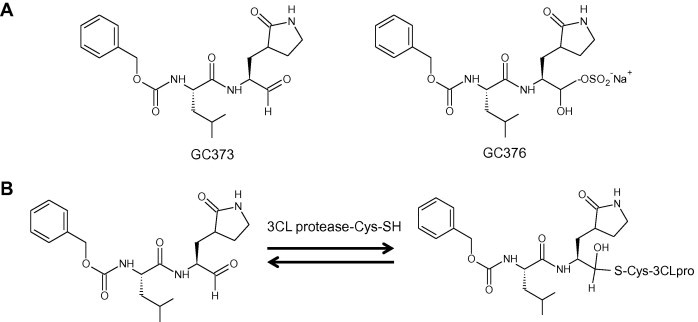
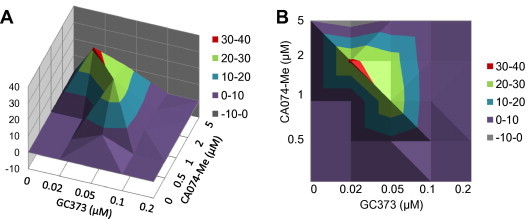
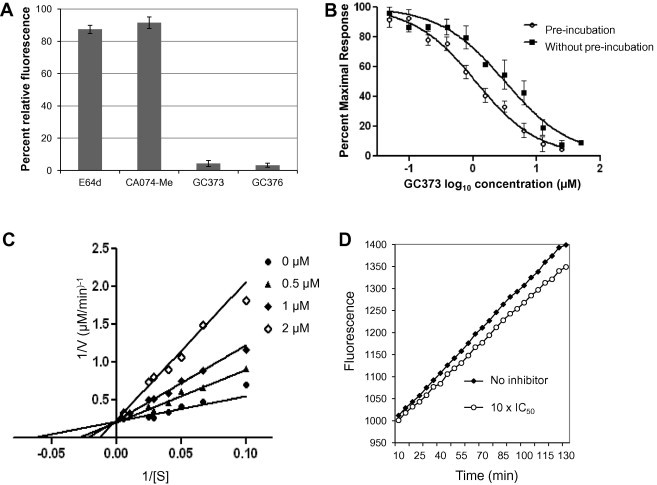
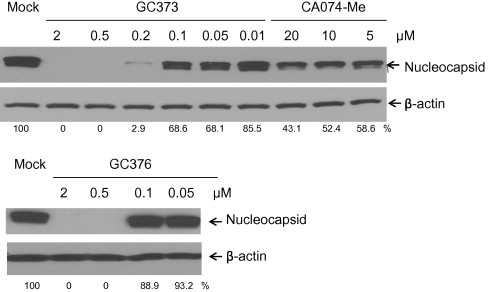
Feline coronavirus infection is common among domestic and exotic felid species and usually associated with mild or asymptomatic enteritis; however, feline infectious peritonitis (FIP) is a fatal disease of cats that is caused by systemic infection with a feline infectious peritonitis virus (FIPV), a variant of feline enteric coronavirus (FECV). Currently, there is no specific treatment approved for FIP despite the importance of FIP as the leading infectious cause of death in young cats. During the replication process, coronavirus produces viral polyproteins that are processed into mature proteins by viral proteases, the main protease (3C-like [3CL] protease) and the papain-like protease. Since the cleavages of viral polyproteins are an essential step for virus replication, blockage of viral protease is an attractive target for therapeutic intervention. Previously, we reported the generation of broad-spectrum peptidyl inhibitors against viruses that possess a 3C or 3CL protease. In this study, we further evaluated the antiviral effects of the peptidyl inhibitors against feline coronaviruses, and investigated the interaction between our protease inhibitor and a cathepsin B inhibitor, an entry blocker, against a feline coronavirus in cell culture. Herein we report that our compounds behave as reversible, competitive inhibitors of 3CL protease, potently inhibited the replication of feline coronaviruses (EC(50) in a nanomolar range) and, furthermore, combination of cathepsin B and 3CL protease inhibitors led to a strong synergistic interaction against feline coronaviruses in a cell culture system.
猫冠状病毒感染在国内外猫科动物中很常见,通常与轻度或无症状的肠炎有关;然而,猫传染性腹膜炎(FIP)是一种致命的猫病,由猫传染性腹膜炎病毒(FIPV)全身感染引起,FIPV 是猫肠道冠状病毒(FECV)的一种变异株。目前,尽管 FIP 是幼猫主要的传染性致死原因,但仍没有针对 FIP 的特定治疗方法获得批准。在复制过程中,冠状病毒产生病毒多蛋白,这些多蛋白被病毒蛋白酶加工成成熟蛋白,主要蛋白酶(3C 样[3CL]蛋白酶)和木瓜蛋白酶样蛋白酶。由于病毒多蛋白的切割是病毒复制的一个必要步骤,因此阻断病毒蛋白酶是治疗干预的一个有吸引力的目标。此前,我们报道了针对具有 3C 或 3CL 蛋白酶的病毒的广谱肽类抑制剂的生成。在这项研究中,我们进一步评估了肽类抑制剂对猫冠状病毒的抗病毒作用,并研究了我们的蛋白酶抑制剂与 cathepsin B 抑制剂(一种进入抑制剂)在细胞培养中对猫冠状病毒的相互作用。在此,我们报告我们的化合物是 3CL 蛋白酶的可逆、竞争性抑制剂,能有效抑制猫冠状病毒的复制(在纳摩尔范围内的 EC50),此外,cathepsin B 和 3CL 蛋白酶抑制剂的联合使用导致在细胞培养系统中对猫冠状病毒产生强烈的协同作用。