Department of Neurology, Washington University School of Medicine, St. Louis, MO 63110, USA.
Genome Res. 2013 Mar;23(3):431-9. doi: 10.1101/gr.142604.112. Epub 2012 Dec 5.
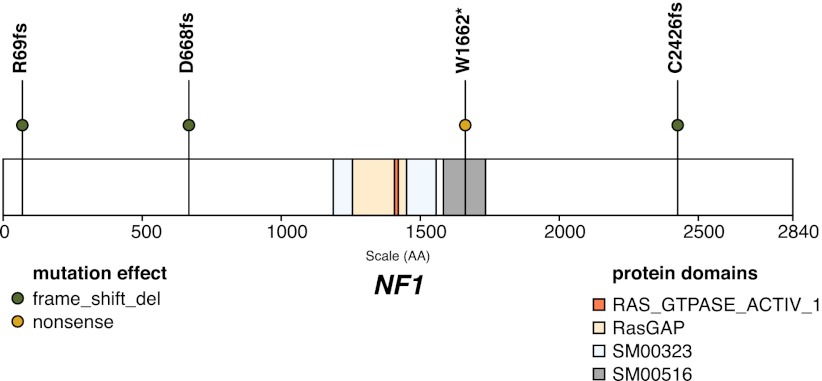
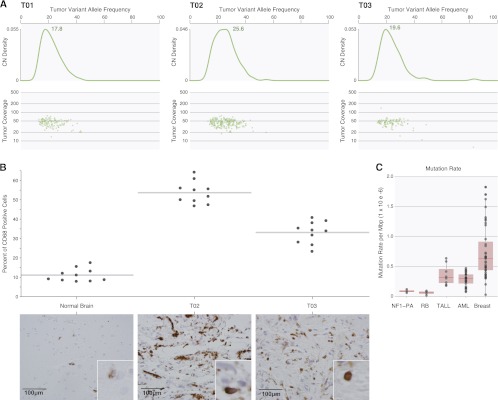
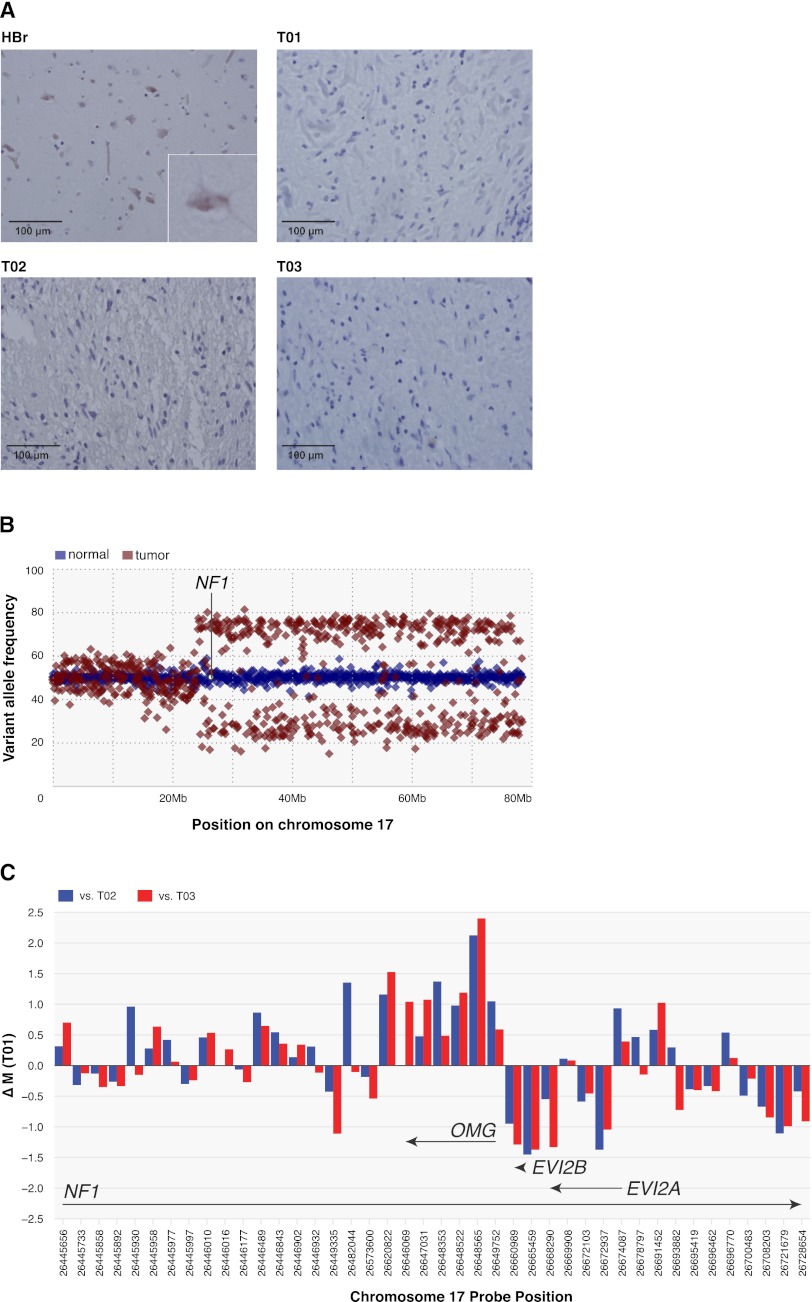
Low-grade brain tumors (pilocytic astrocytomas) arising in the neurofibromatosis type 1 (NF1) inherited cancer predisposition syndrome are hypothesized to result from a combination of germline and acquired somatic NF1 tumor suppressor gene mutations. However, genetically engineered mice (GEM) in which mono-allelic germline Nf1 gene loss is coupled with bi-allelic somatic (glial progenitor cell) Nf1 gene inactivation develop brain tumors that do not fully recapitulate the neuropathological features of the human condition. These observations raise the intriguing possibility that, while loss of neurofibromin function is necessary for NF1-associated low-grade astrocytoma development, additional genetic changes may be required for full penetrance of the human brain tumor phenotype. To identify these potential cooperating genetic mutations, we performed whole-genome sequencing (WGS) analysis of three NF1-associated pilocytic astrocytoma (PA) tumors. We found that the mechanism of somatic NF1 loss was different in each tumor (frameshift mutation, loss of heterozygosity, and methylation). In addition, tumor purity analysis revealed that these tumors had a high proportion of stromal cells, such that only 50%-60% of cells in the tumor mass exhibited somatic NF1 loss. Importantly, we identified no additional recurrent pathogenic somatic mutations, supporting a model in which neuroglial progenitor cell NF1 loss is likely sufficient for PA formation in cooperation with a proper stromal environment.
在神经纤维瘤病 1 型(NF1)遗传癌症易感性综合征中发生的低级别的脑肿瘤(毛细胞星形细胞瘤)被假设是由于种系和获得性体细胞 NF1 肿瘤抑制基因突变为组合的结果。然而,在单等位基因种系 Nf1 基因缺失与双等位基因体细胞(神经胶质祖细胞)Nf1 基因失活相结合的基因工程小鼠(GEM)中,发展出的脑肿瘤并未完全再现人类疾病的神经病理学特征。这些观察结果提出了一个有趣的可能性,即虽然神经纤维瘤蛋白功能的丧失对于 NF1 相关的低级星形细胞瘤的发展是必要的,但是对于人类脑瘤表型的完全表现,可能还需要其他遗传变化。为了鉴定这些潜在的协同遗传突变,我们对三个 NF1 相关的毛细胞星形细胞瘤(PA)肿瘤进行了全基因组测序(WGS)分析。我们发现,每个肿瘤中体细胞 NF1 缺失的机制都不同(移码突变、杂合性缺失和甲基化)。此外,肿瘤纯度分析表明,这些肿瘤具有高比例的基质细胞,以至于肿瘤块中只有 50%-60%的细胞表现出体细胞 NF1 缺失。重要的是,我们没有发现其他复发的致病性体细胞突变,支持这样一种模型,即神经胶质祖细胞 NF1 缺失与适当的基质环境协同作用,很可能足以形成 PA。