Department of Metabolic Health Research, TNO, Leiden, The Netherlands.
PLoS One. 2012;7(11):e50388. doi: 10.1371/journal.pone.0050388. Epub 2012 Nov 30.
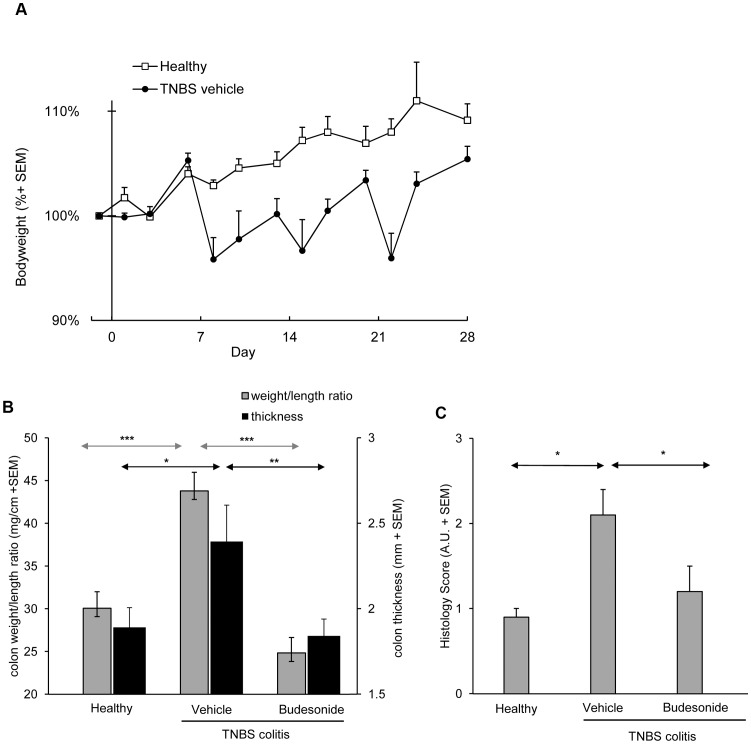
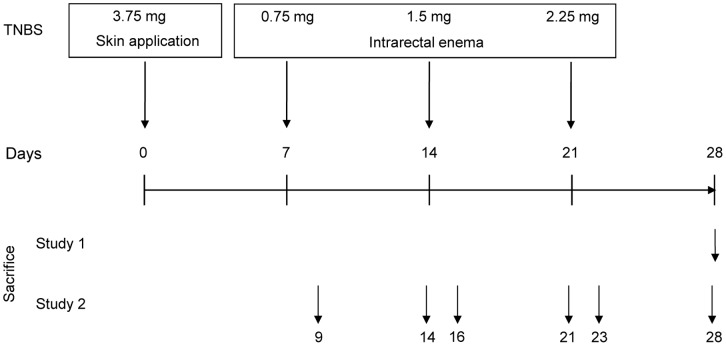
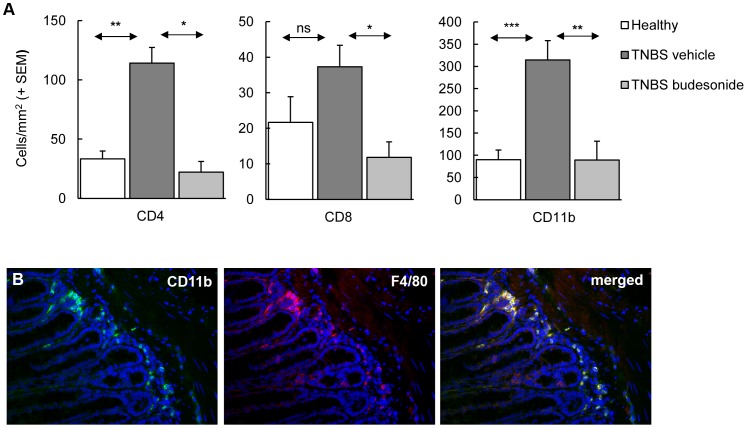
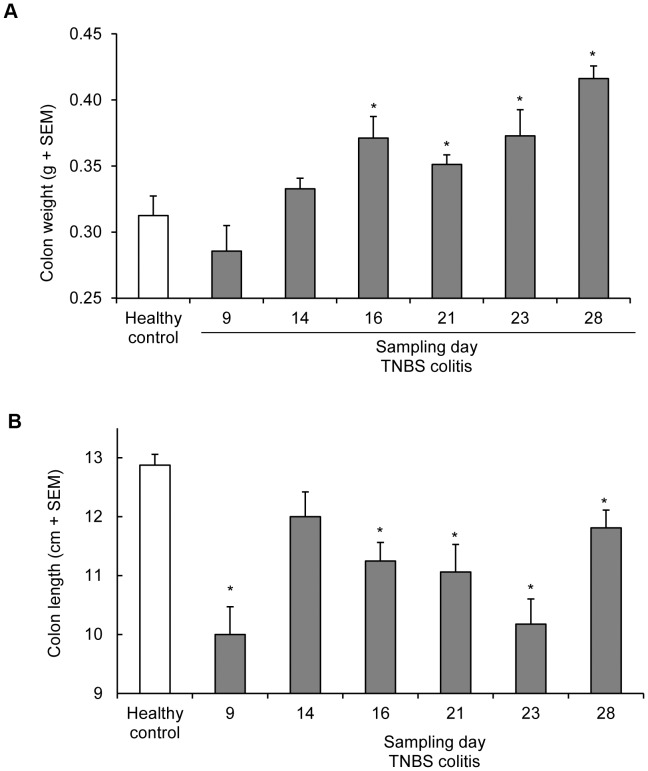
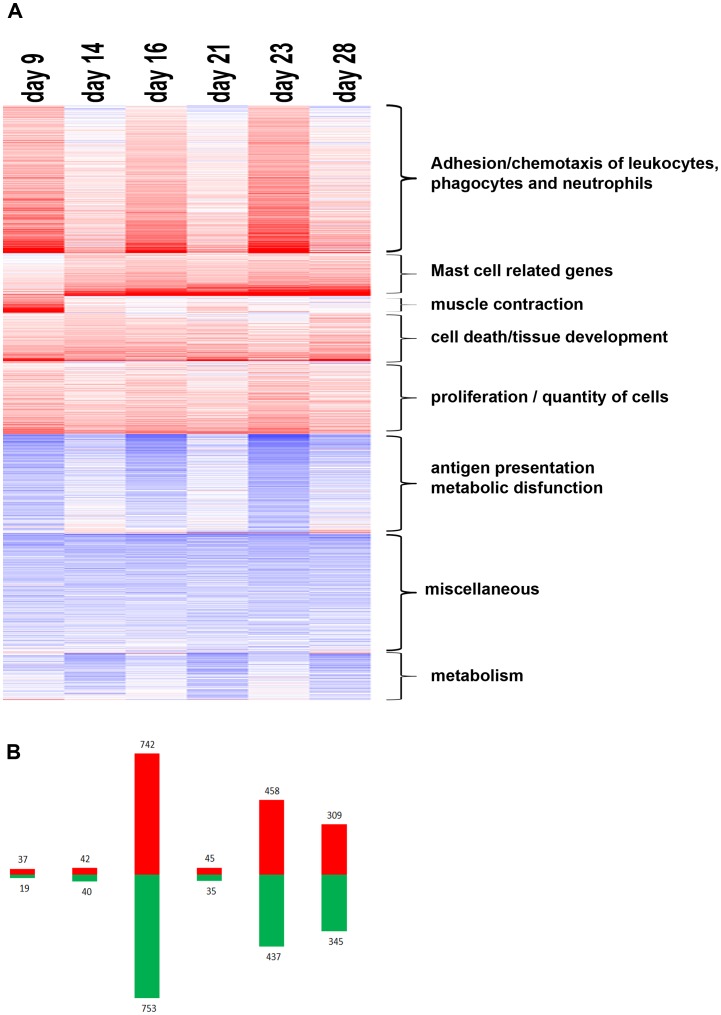
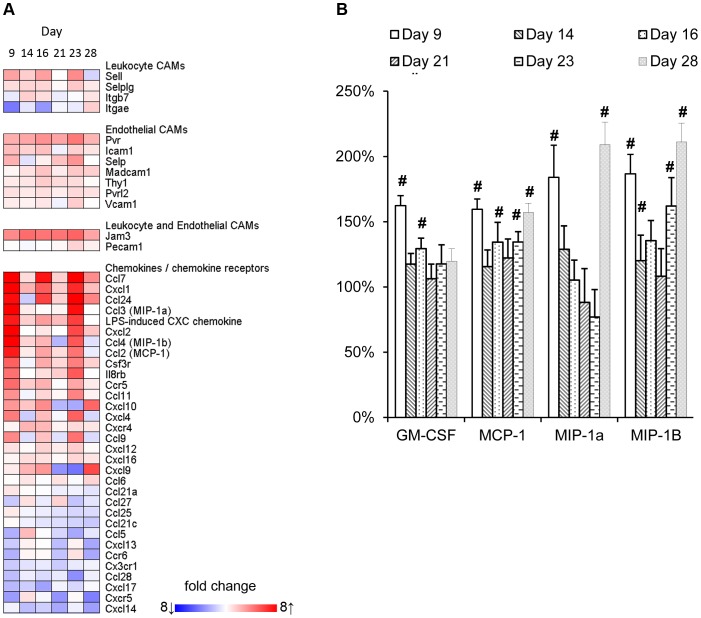
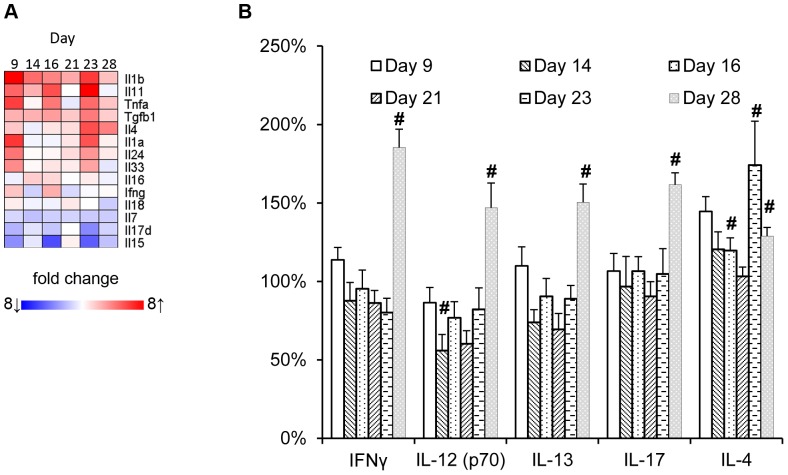
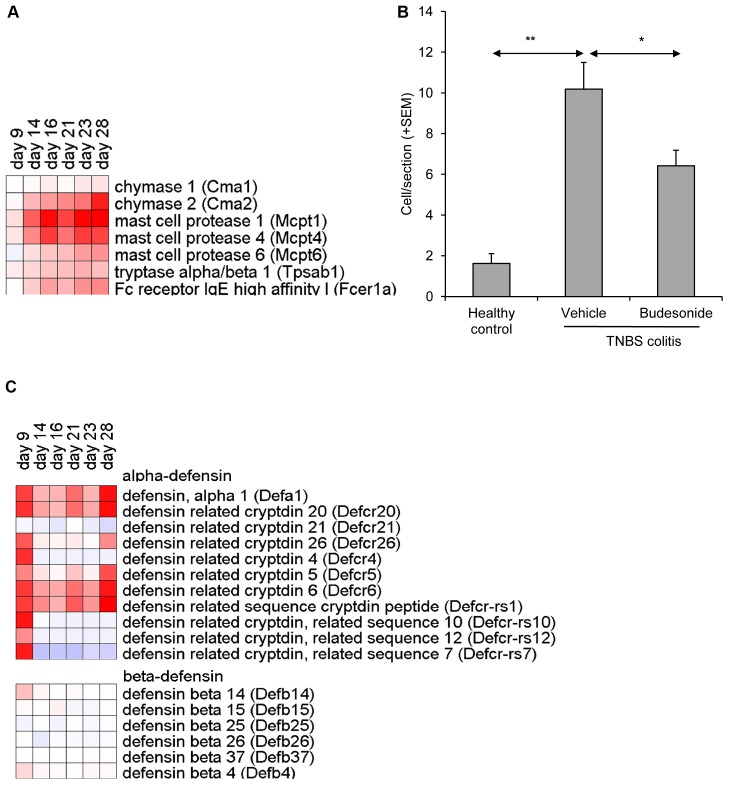
The recurrent TNBS-colitis model in BALB/c mice has been proposed as a model of Inflammatory Bowel Disease with a shifting pattern of local cytokines with the expression of Th1 cytokines during the early phase, Th17 cytokines during the intermediate phase and Th2 cytokines during late fibrotic stages. In this study, we evaluated the development of pathology in time-in conjunction with genome-wide gene expression in the colons-in response to three weekly intrarectal instillations of TNBS. During this time-frame mice develop colitis with extensive cellular infiltration of (sub)mucosa and mildly to moderately affected crypt architecture. These pathological processes were sensitive to local treatment with budesonide. Gene expression profiling confirmed an acute phase response after each intrarectal TNBS-challenge. In addition, a chronic inflammatory process developed over time particularly evident from a gradual increase in expression of mast cell related genes. The changes in pathological hallmarks were consistent with a temporal expression of mRNA encoding a selection of chemokines. In conclusion, the early stages of the recurrent TNBS-colitis model reflect several aspects of inflammatory bowel disease which are sensitive to immunomodulation.
TNBS-结肠炎复发性模型在 BALB/c 小鼠中被提出作为炎症性肠病的模型,其局部细胞因子的表达模式发生变化,在早期阶段表达 Th1 细胞因子,在中期阶段表达 Th17 细胞因子,在晚期纤维化阶段表达 Th2 细胞因子。在这项研究中,我们评估了在时间上与结肠的全基因组基因表达相结合的病理学发展,以响应每周三次的 TNBS 直肠内灌注。在这个时间范围内,小鼠会发生结肠炎,伴有(黏膜下)黏膜的广泛细胞浸润和轻度至中度影响隐窝结构。这些病理过程对布地奈德的局部治疗敏感。基因表达谱分析证实了每次直肠内 TNBS 挑战后的急性反应。此外,随着时间的推移,慢性炎症过程逐渐发展,特别是从与肥大细胞相关的基因表达逐渐增加中可以明显看出。病理特征的变化与一组趋化因子的 mRNA 表达的时间变化一致。总之,复发性 TNBS-结肠炎模型的早期阶段反映了炎症性肠病的几个方面,这些方面对免疫调节敏感。