State Key Laboratory of Biogeology and Environmental Geology (China University of Geosciences), Beijing 100083, China.
Sci Rep. 2012;2:925. doi: 10.1038/srep00925. Epub 2012 Dec 5.
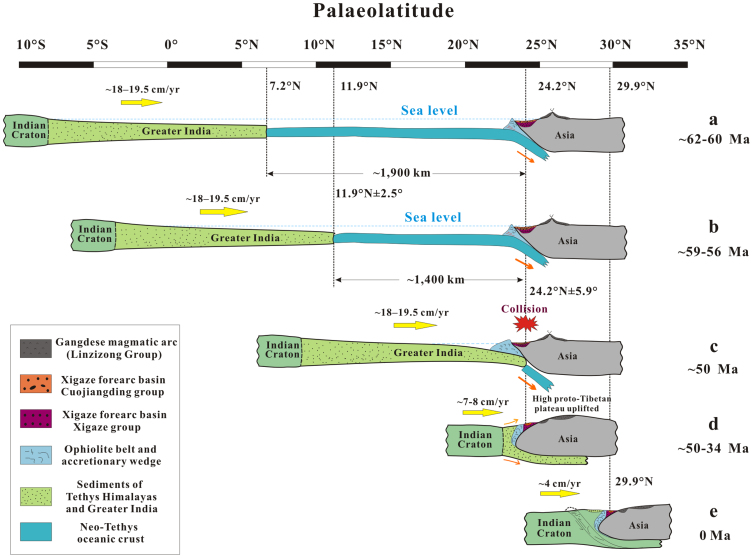
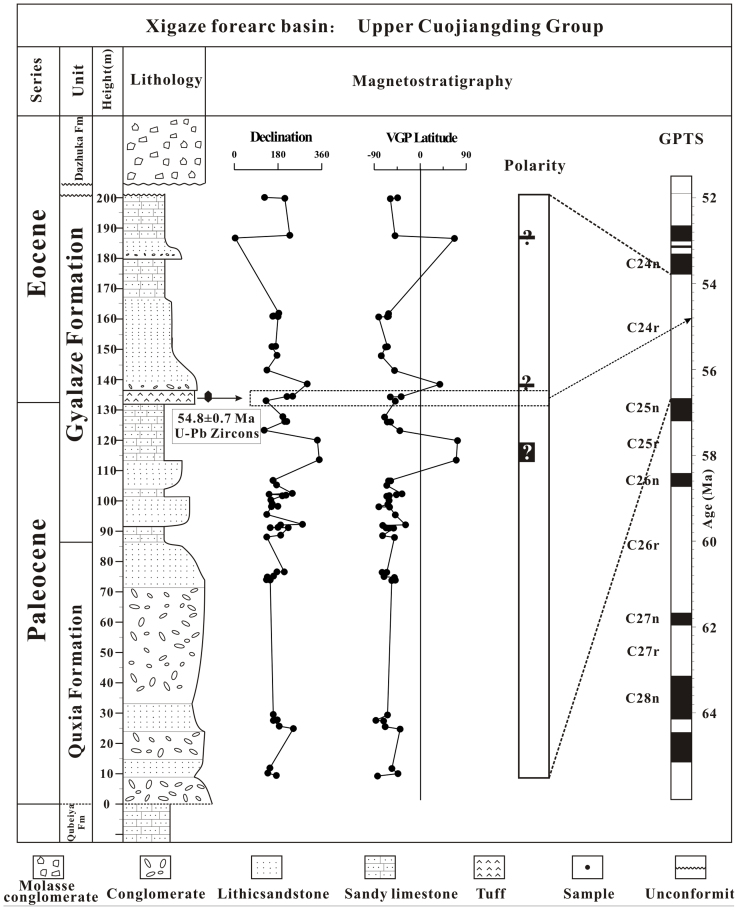
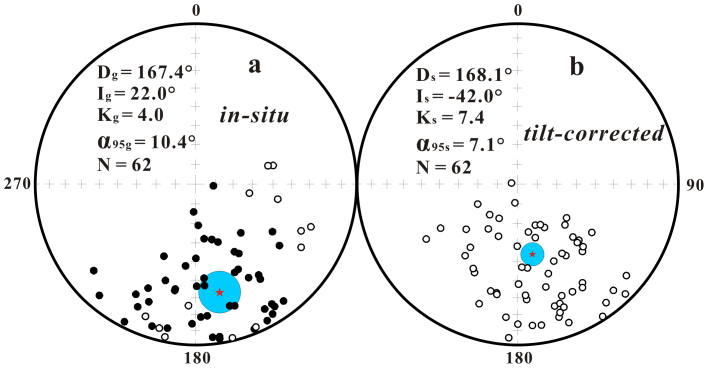
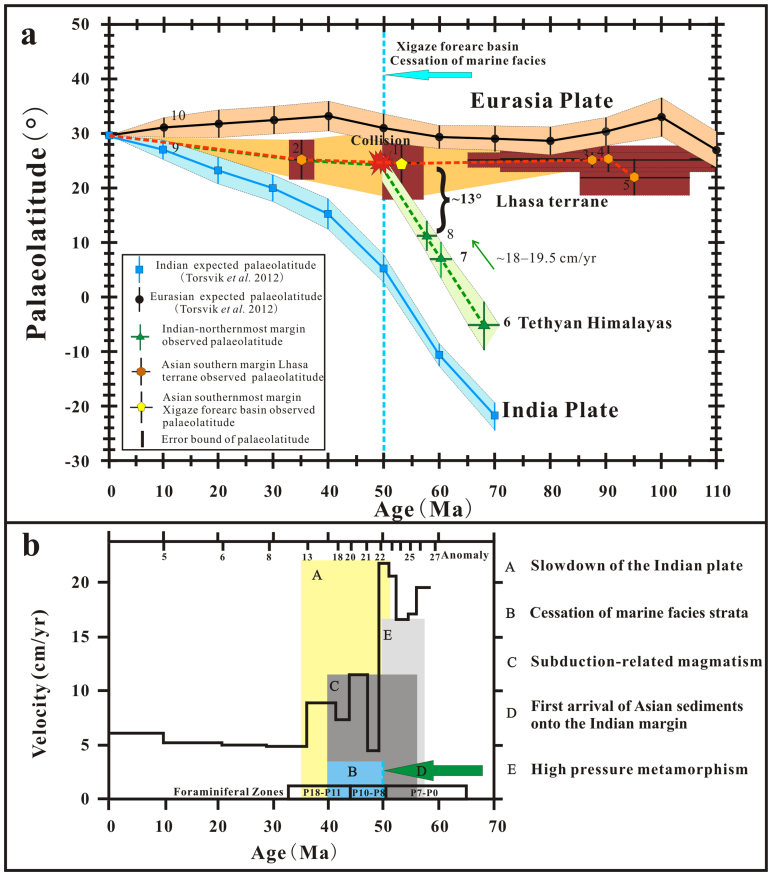
How and when India collided with Asia is crucial for global climate and continental dynamics. We present new palaeomagnetic data showing that the Xigaze forearc basin of southern Tibet was located at 24.2 ± 5.9°N during 54-57 Ma, providing a direct constraint on the position of the southernmost margin of Asia at this crucial stage. Our study suggests 1) the age and locus of the initial India-Asia collision are at ~50 Ma and ~24°N, respectively; 2) Tibet resisted India's northward push during the first ~16 Ma of initial impact from the collision and experienced little latitudinal displacement; and 3) Sometime a little after 34 Ma, Greater India was consumed and thicker Indian Craton subsequently made contact with Asia, resulting in ~6° northward drift of Asia. Our model has implications for the process by which the high proto-Tibetan plateau formed and for the two slowdowns of India's convergence rate with Asia.
印度和亚洲何时以及如何碰撞对全球气候和大陆动力学至关重要。我们提供了新的古地磁数据,表明西藏南部的日喀则前缘盆地在 54-57 百万年前位于北纬 24.2±5.9°,为这一关键阶段亚洲最南端边界的位置提供了直接约束。我们的研究表明:1)初始印度-亚洲碰撞的年龄和位置分别约为 50 百万年和北纬 24°;2)在初始碰撞的最初 16 百万年中,西藏抵抗了印度的向北推进,经历的纬度位移很小;3)大约在 34 百万年后的某个时候,更大的印度被消耗,更厚的印度克拉通随后与亚洲接触,导致亚洲向北漂移约 6°。我们的模型对高原雏形形成的过程以及印度与亚洲的汇聚速率的两次减速具有重要意义。