Department of Clinical Neurosciences, University Hospital and University of Lausanne, Lausanne, Switzerland.
PLoS One. 2012;7(12):e50718. doi: 10.1371/journal.pone.0050718. Epub 2012 Dec 5.
Deficits in decision making (DM) are commonly associated with prefrontal cortical damage, but may occur with multiple sclerosis (MS). There are no data concerning the impact of MS on tasks evaluating DM under explicit risk, where different emotional and cognitive components can be distinguished.
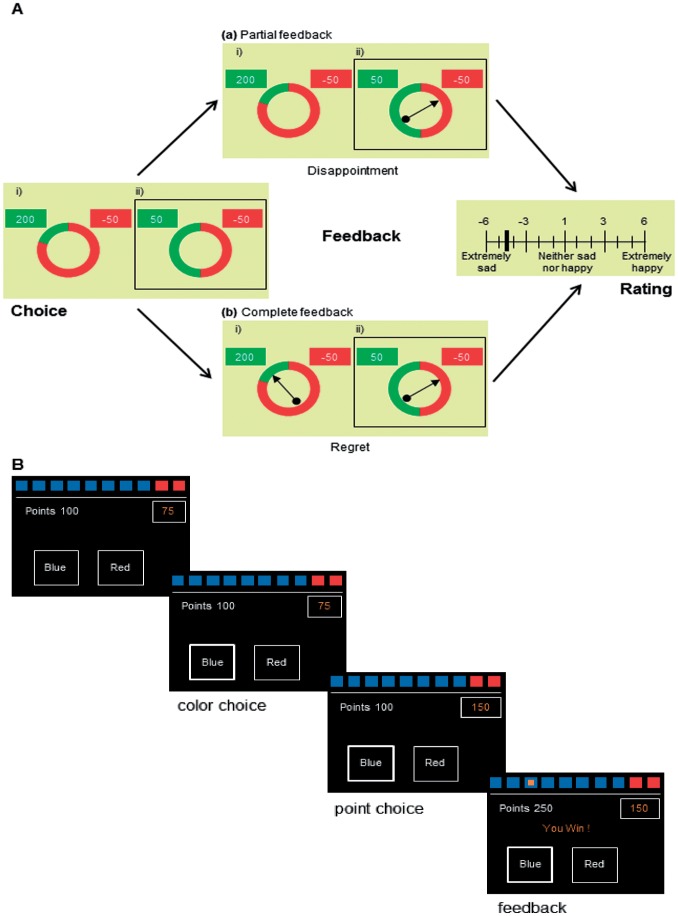
We assessed 72 relapsing-remitting MS (RRMS) patients with mild to moderate disease and 38 healthy controls in two DM tasks involving risk with explicit rules: (1) The Wheel of Fortune (WOF), which probes the anticipated affects of decisions outcomes on future choices; and (2) The Cambridge Gamble Task (CGT) which measures risk taking. Participants also underwent a neuropsychological and emotional assessment, and skin conductance responses (SCRs) were recorded.
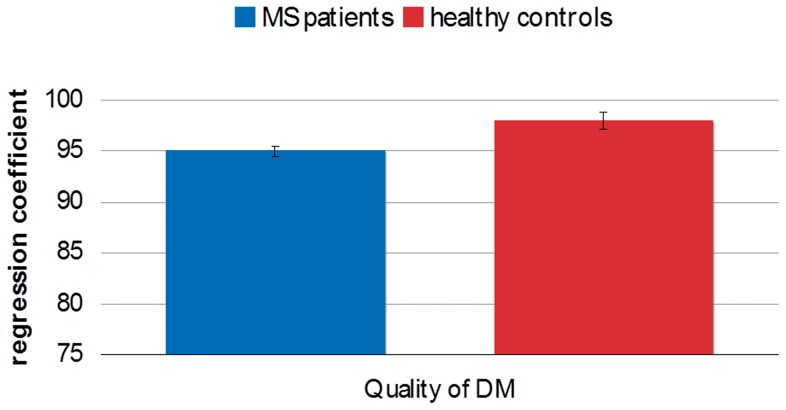
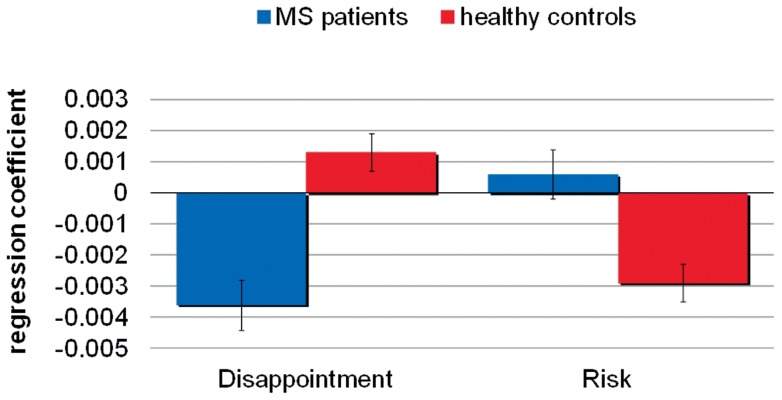
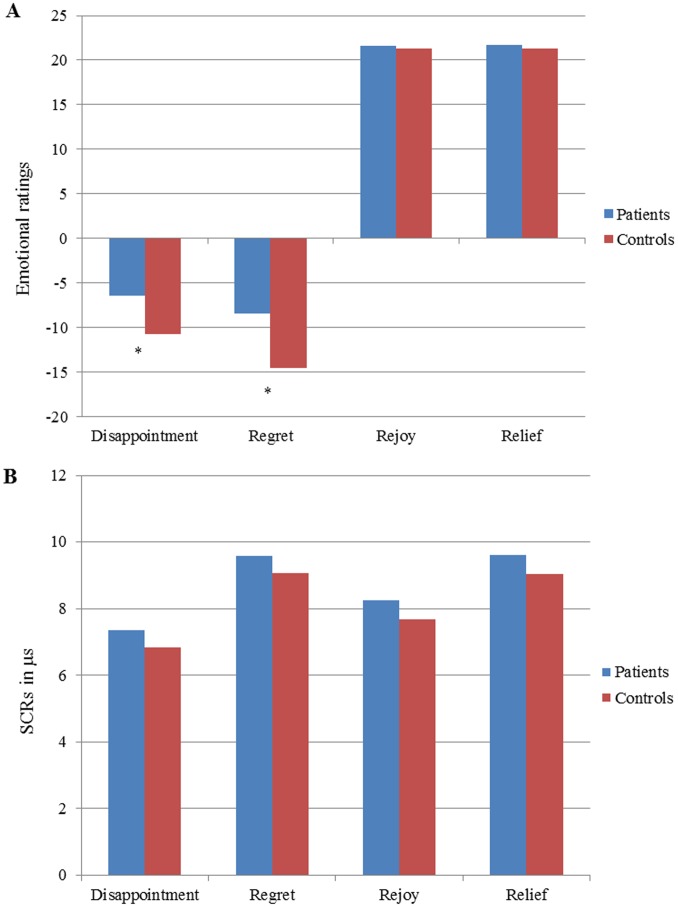
In the WOF, RRMS patients showed deficits in integrating positive counterfactual information (p<0.005) and greater risk aversion (p<0.001). They reported less negative affect than controls (disappointment: p = 0.007; regret: p = 0.01), although their implicit emotional reactions as measured by post-choice SCRs did not differ. In the CGT, RRMS patients differed from controls in quality of DM (p = 0.01) and deliberation time (p = 0.0002), the latter difference being correlated with attention scores. Such changes did not result in overall decreases in performance (total gains).
The quality of DM under risk was modified by MS in both tasks. The reduction in the expression of disappointment coexisted with an increased risk aversion in the WOF and alexithymia features. These concomitant emotional alterations may have implications for better understanding the components of explicit DM and for the clinical support of MS patients.
决策(DM)缺陷通常与前额叶皮质损伤有关,但也可能发生在多发性硬化症(MS)中。目前尚无数据表明 MS 对评估明确风险下 DM 的任务有何影响,因为不同的情绪和认知成分是可以区分的。
我们评估了 72 例缓解-复发型 MS(RRMS)患者和 38 名健康对照者在两项涉及明确规则风险的 DM 任务中的表现:(1)命运之轮(WOF),它探查了决策结果对未来选择的预期影响;(2)剑桥赌博任务(CGT),测量风险承受能力。参与者还接受了神经心理学和情绪评估,并记录了皮肤电反应(SCR)。
在 WOF 中,RRMS 患者在整合积极反事实信息方面存在缺陷(p<0.005),并且风险规避程度更高(p<0.001)。与对照组相比,他们报告的负面情绪较少(失望:p = 0.007;后悔:p = 0.01),尽管他们通过选择后 SCR 测量的隐性情绪反应没有差异。在 CGT 中,RRMS 患者在 DM 质量(p = 0.01)和深思熟虑时间(p = 0.0002)方面与对照组存在差异,后一差异与注意力评分相关。这些变化并没有导致整体表现下降(总收益)。
在两项任务中,MS 都改变了风险下 DM 的质量。在 WOF 中,失望感的表达减少,同时风险规避增加,并且出现了躯体化障碍特征。这些伴随的情绪改变可能对更好地理解明确 DM 的组成部分以及为 MS 患者提供临床支持具有重要意义。