CNRS, Université Paul Sabatier, ENFA, UMR 5174 EDB, Laboratoire Évolution & Diversité Biologique, Toulouse, France.
PLoS One. 2012;7(12):e50840. doi: 10.1371/journal.pone.0050840. Epub 2012 Dec 5.
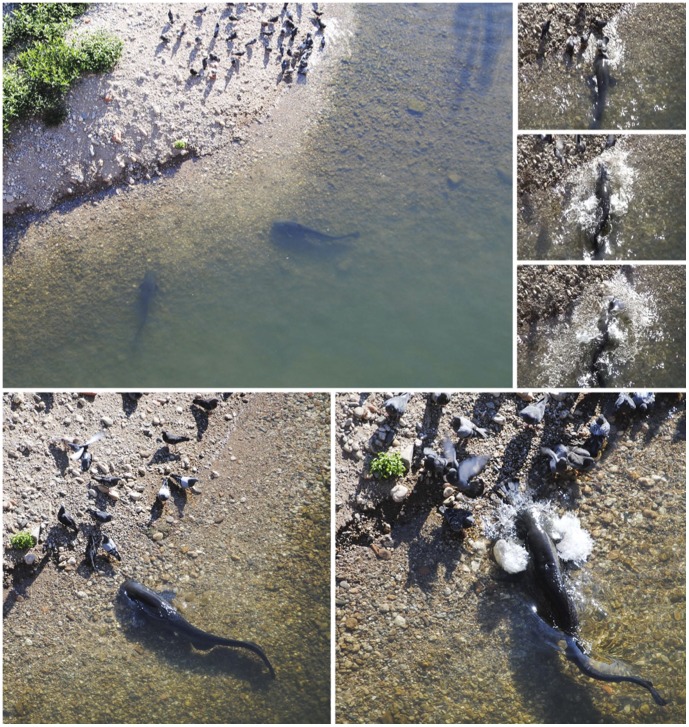
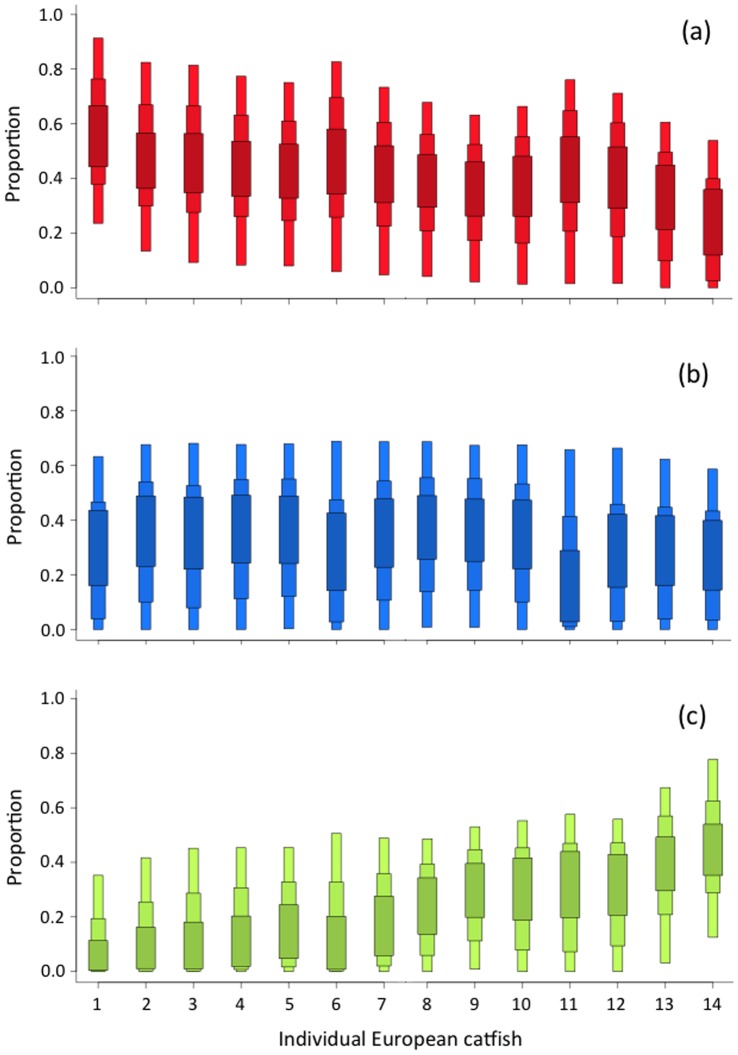
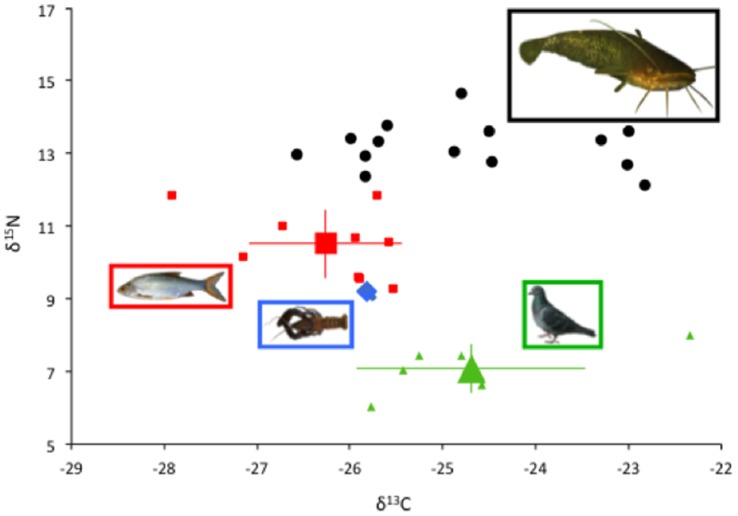
The behavioral strategies developed by predators to capture and kill their prey are fascinating, notably for predators that forage for prey at, or beyond, the boundaries of their ecosystem. We report here the occurrence of a beaching behavior used by an alien and large-bodied freshwater predatory fish (Silurus glanis) to capture birds on land (i.e. pigeons, Columbia livia). Among a total of 45 beaching behaviors observed and filmed, 28% were successful in bird capture. Stable isotope analyses (δ(13)C and δ(15)N) of predators and their putative prey revealed a highly variable dietary contribution of land birds among individuals. Since this extreme behavior has not been reported in the native range of the species, our results suggest that some individuals in introduced predator populations may adapt their behavior to forage on novel prey in new environments, leading to behavioral and trophic specialization to actively cross the water-land interface.
捕食者为捕捉和杀死猎物而发展出的行为策略令人着迷,特别是对于那些在其生态系统的边界内外猎食猎物的捕食者而言。我们在这里报告了一种外来的大型淡水捕食鱼类(Silurus glanis)在陆地上捕捉鸟类(即鸽子,Columba livia)时所使用的滩涂行为。在总共观察和拍摄到的 45 种滩涂行为中,有 28%的行为成功地捕捉到了鸟类。对捕食者及其潜在猎物的稳定同位素分析(δ(13)C 和 δ(15)N)表明,个体之间的陆地鸟类在饮食中的贡献具有高度的可变性。由于这种极端行为在该物种的原生范围内尚未有报道,我们的结果表明,引入的捕食者种群中的一些个体可能会适应行为,以在新环境中猎食新的猎物,从而导致行为和营养特化,以主动跨越水-陆界面。