Department of Biomedical Sciences, Center for Pharmacogenomics and Molecular Therapy, University of Rhode Island, Kingston, RI 02881, USA.
Biochem Pharmacol. 2013 Feb 1;85(3):439-47. doi: 10.1016/j.bcp.2012.11.026. Epub 2012 Dec 7.
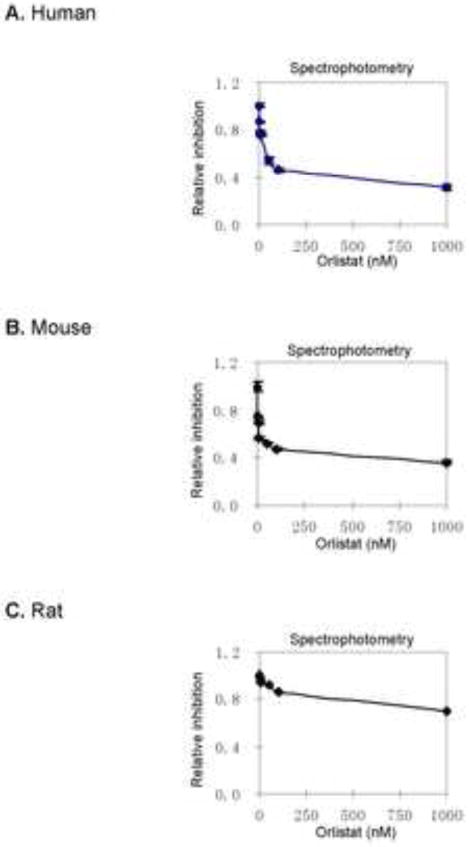
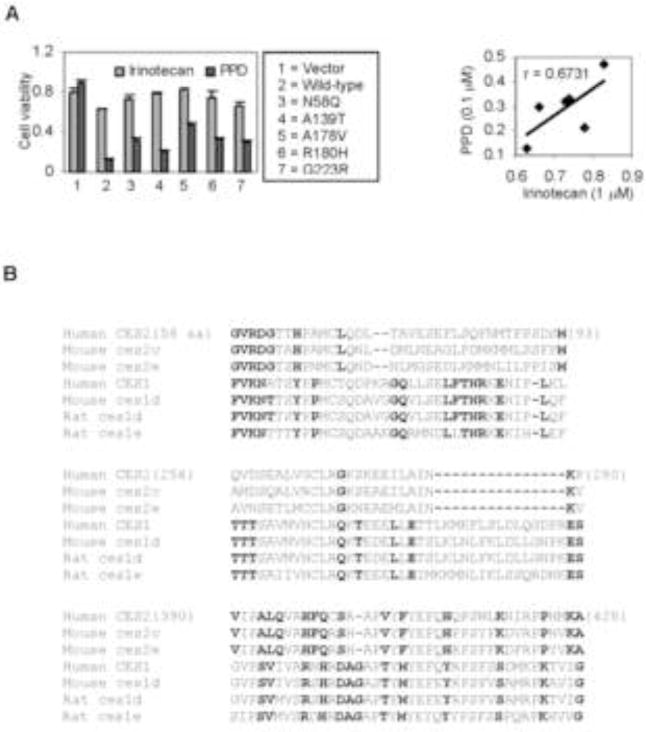
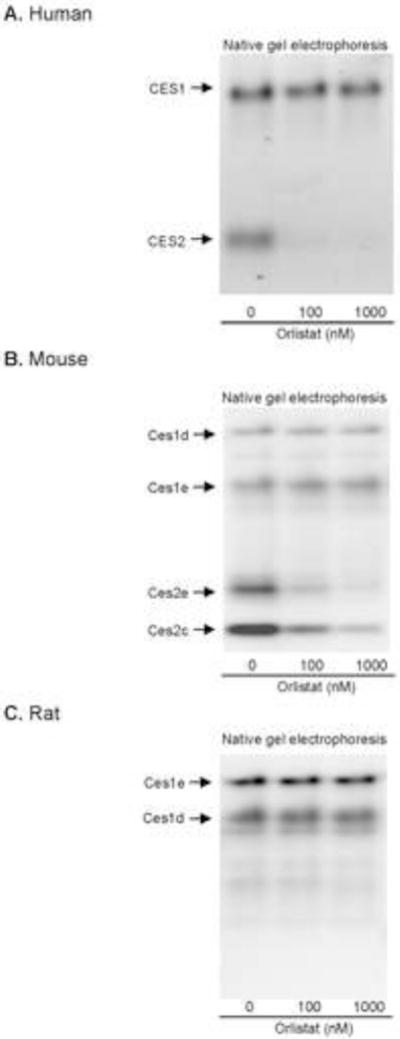
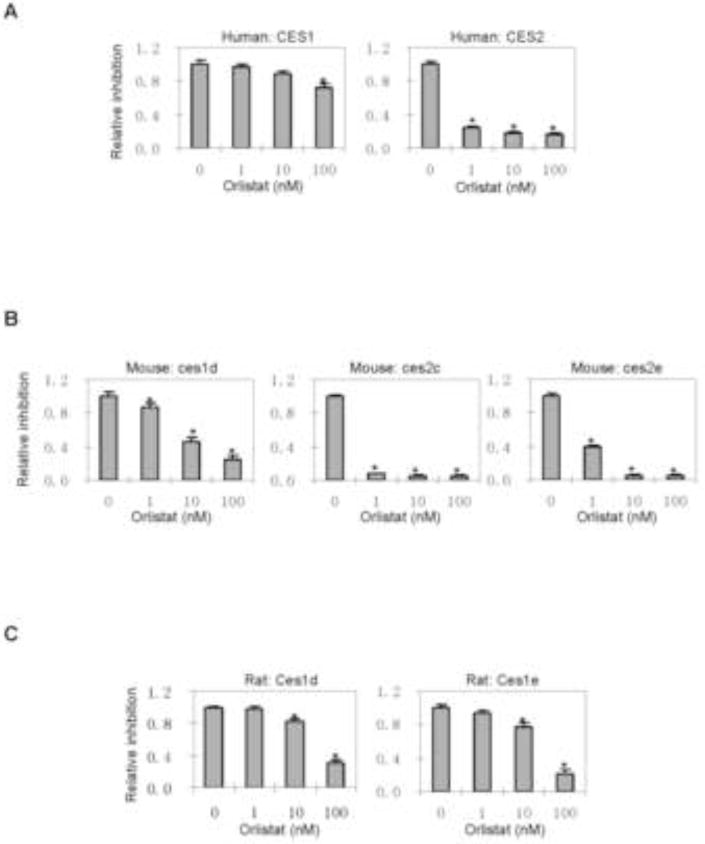
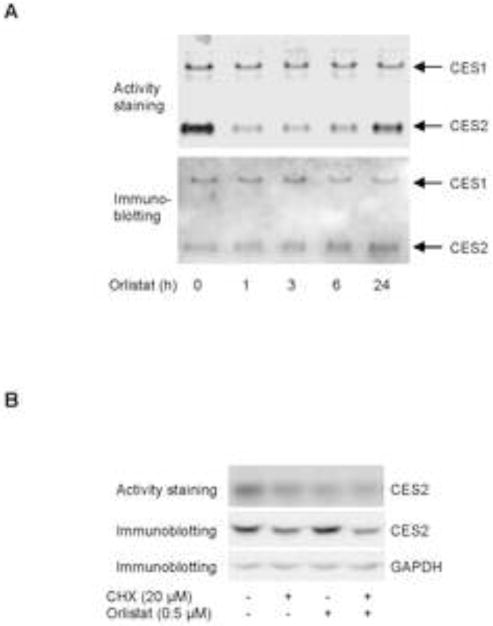
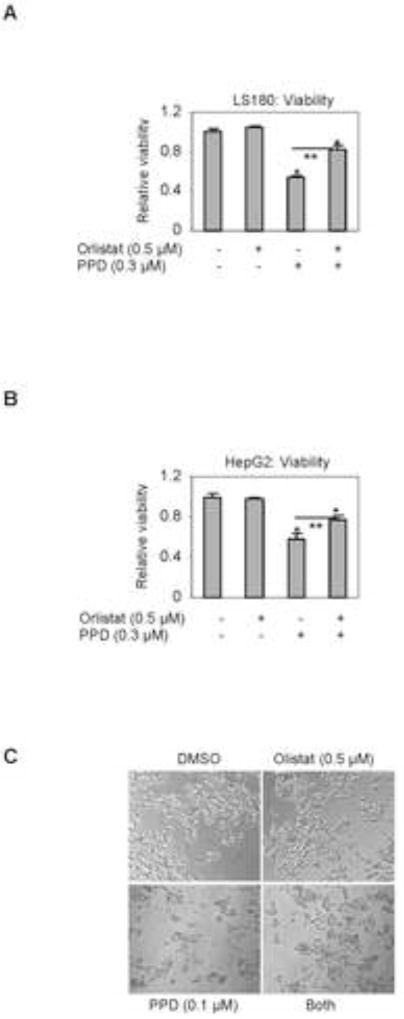
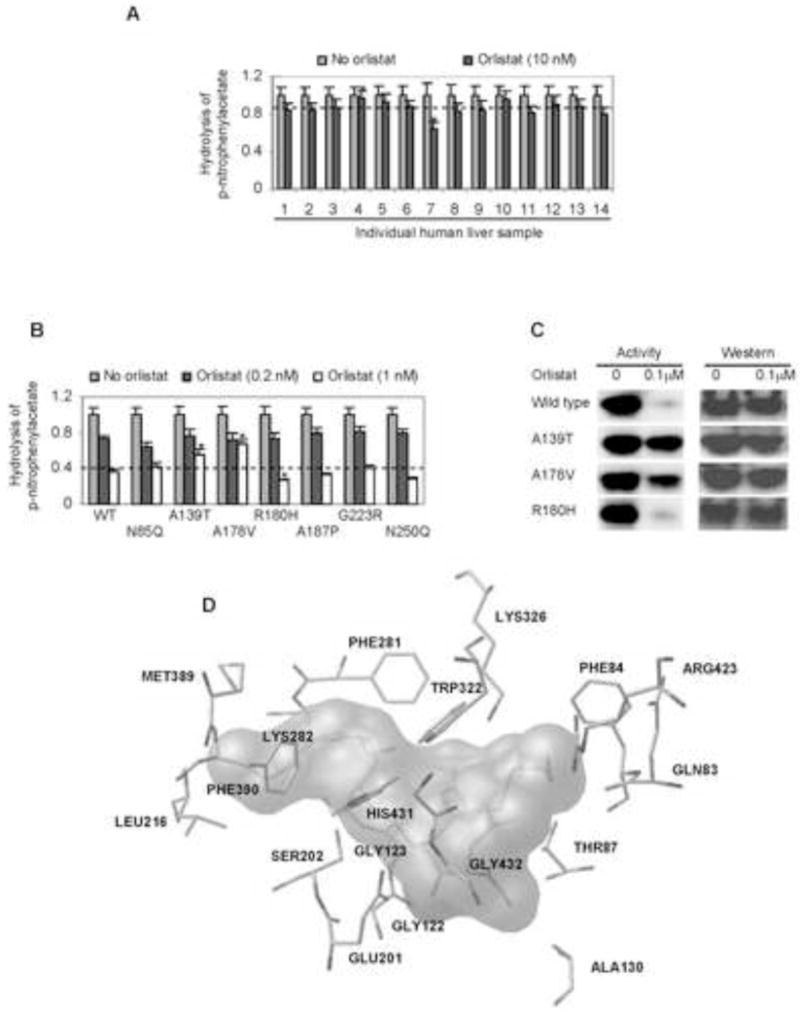
Orlistat has been the most used anti-obesity drug and the mechanism of its action is to reduce lipid absorption by inhibiting gastrointestinal lipases. These enzymes, like carboxylesterases (CESs), structurally belong to the α/β hydrolase fold superfamily. Lipases and CESs are functionally related as well. Some CESs (e.g., human CES1) have been shown to hydrolyze lipids. This study was designed to test the hypothesis that orlistat inhibits CESs with higher potency toward CES1 than CES2, a carboxylesterase with little lipase activity. Liver microsomes and recombinant CESs were tested for the inhibition of the hydrolysis of standard substrates and the anticancer prodrugs pentyl carbamate of p-aminobenzyl carbamate of doxazolidine (PPD) and irinotecan. Contrary to the hypothesis, orlistat at 1 nM inhibited CES2 activity by 75% but no inhibition on CES1, placing CES2 one of the most sensitive targets of orlistat. The inhibition varied among some CES2 polymorphic variants. Pretreatment with orlistat reduced the cell killing activity of PPD. Certain mouse but not rat CESs were also highly sensitive. CES2 is responsible for the hydrolysis of many common drugs and abundantly expressed in the gastrointestinal track and liver. Inhibition of this carboxylesterase probably presents a major source for altered therapeutic activity of these medicines if co-administered with orlistat. In addition, orlistat has been linked to various types of organ toxicities, and this study provides an alternative target potentially involved in these toxicological responses.
奥利司他是最常用的抗肥胖药物,其作用机制是通过抑制胃肠道脂肪酶来减少脂质吸收。这些酶,如羧酸酯酶(CESs),在结构上属于α/β水解酶折叠超家族。脂肪酶和 CESs在功能上也有关联。一些 CESs(如人 CES1)已被证明能水解脂质。本研究旨在验证以下假设:奥利司他抑制 CESs 的活性比 CES2 更强,CES2 是一种脂酶活性较低的羧酸酯酶。肝微粒体和重组 CESs 被用于测试抑制标准底物水解和抗癌前药戊基氨基甲酸对氨基苯甲酰基氨基恶唑烷(PPD)和伊立替康的水解。与假设相反,1 nM 的奥利司他可抑制 CES2 活性 75%,但对 CES1 无抑制作用,这使 CES2 成为奥利司他最敏感的靶标之一。抑制作用在一些 CES2 多态变体中有所不同。奥利司他预处理可降低 PPD 的细胞杀伤活性。某些小鼠而非大鼠 CESs 也高度敏感。CES2 负责许多常见药物的水解,在胃肠道和肝脏中大量表达。如果与奥利司他同时使用,这种羧酸酯酶的抑制可能会改变这些药物的治疗活性,成为一个主要的来源。此外,奥利司他与各种类型的器官毒性有关,本研究提供了一个潜在涉及这些毒理学反应的替代靶标。