International Center for Medical Research of Franceville, Franceville, Gabon,
Curr Top Microbiol Immunol. 2013;365:337-53. doi: 10.1007/82_2012_304.
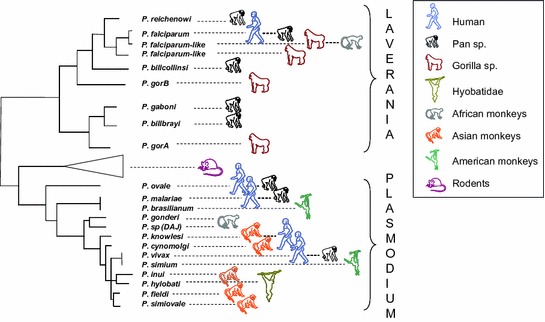
Humans and nonhuman primates are phylogenetically (i.e., genetically) related and share pathogens that can jump from one species to another. The specific strategies of three groups of pathogens for crossing the species barrier among primates will be discussed. In Africa, gorillas and chimpanzees have succumbed for years to simultaneous epizootics (i.e.. "multi-emergence") of Ebola virus in places where they are in contact with Chiropters, which could be animal reservoirs of these viruses. Human epidemics often follow these major outbreaks. Simian immunodeficiency viruses (SIVs) have an ancient history of coevolution and many interspecific exchanges with their natural hosts. Chimpanzee and gorilla SIVs have crossed the species barrier at different times and places, leading to the emergence of HIV-1 and HIV-2. Other retroviruses, such as the Simian T-Lymphotropic Viruses and Foamiviruses, have also a unique ancient or recent history of crossing the species barrier. The identification of gorilla Plasmodium parasites that are genetically close to P. falciparum suggests that gorillas were the source of the deadly human P. falciparum. Nonhuman plasmodium species that can infect humans represent an underestimated risk.
人类和非人类灵长类动物在进化上(即遗传上)是相关的,并且共享可以从一个物种跳跃到另一个物种的病原体。将讨论三组病原体跨越灵长类物种屏障的具体策略。在非洲,大猩猩和黑猩猩多年来一直受到埃博拉病毒在它们与 Chiropters 接触的地方同时爆发(即“多爆发”)的影响,Chiropters 可能是这些病毒的动物宿主。人类流行病经常紧随这些重大疫情之后。猴免疫缺陷病毒(SIV)与它们的天然宿主有着古老的共同进化史和许多种间交流。黑猩猩和大猩猩 SIV 在不同的时间和地点跨越了物种屏障,导致 HIV-1 和 HIV-2 的出现。其他逆转录病毒,如猴 T 淋巴细胞病毒和 Foamiviruses,也具有跨越物种屏障的独特古老或近代历史。鉴定出与恶性疟原虫遗传上接近的大猩猩疟原虫寄生虫表明,大猩猩是致命的人类恶性疟原虫的来源。能够感染人类的非人类疟原虫物种代表了一个被低估的风险。