Institute of Physical Activity Sciences and Sports, Post-Graduate Program in Human Movement Sciences, Cruzeiro do Sul University, São Paulo, Brazil.
PLoS One. 2012;7(12):e50390. doi: 10.1371/journal.pone.0050390. Epub 2012 Dec 11.
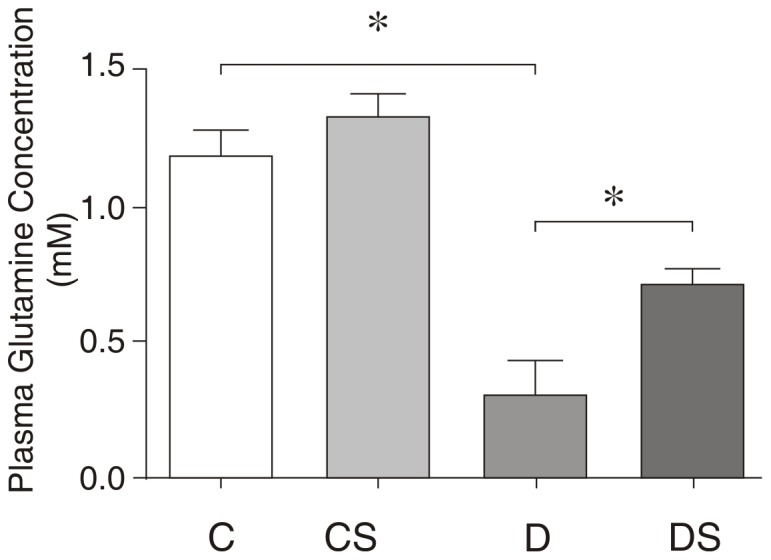
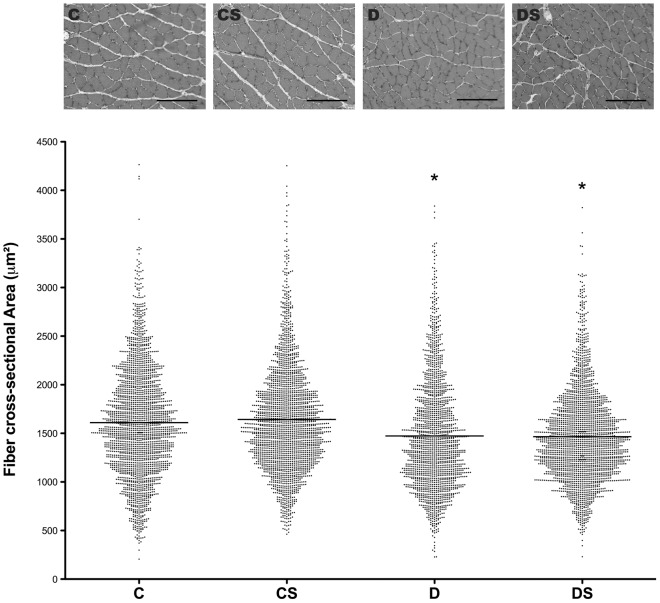
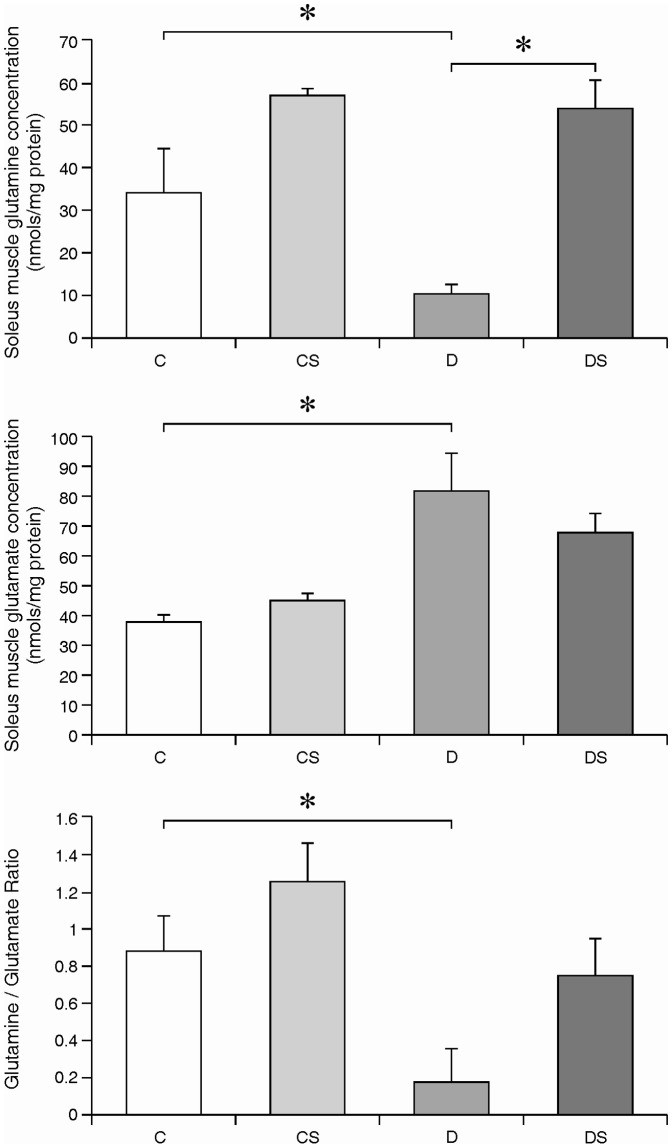
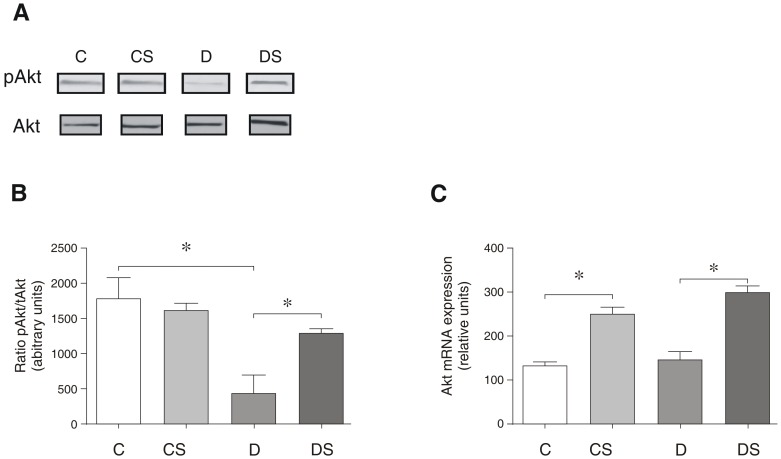
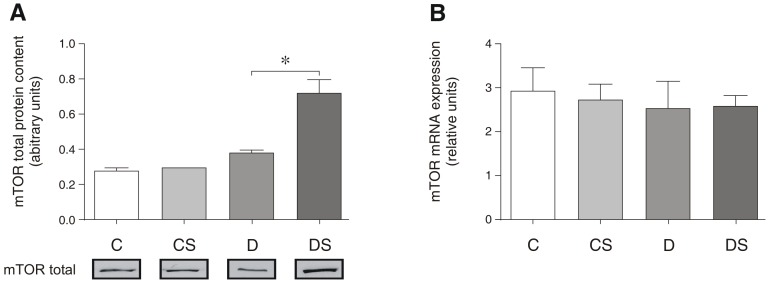
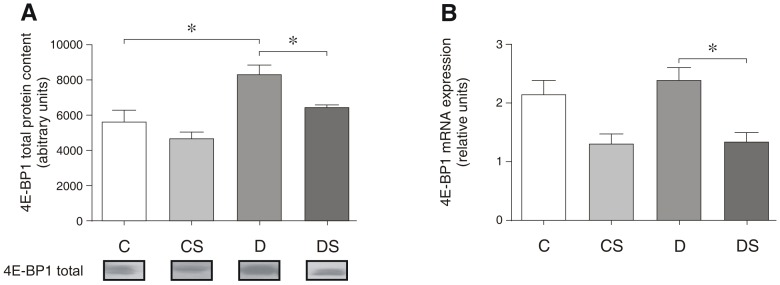
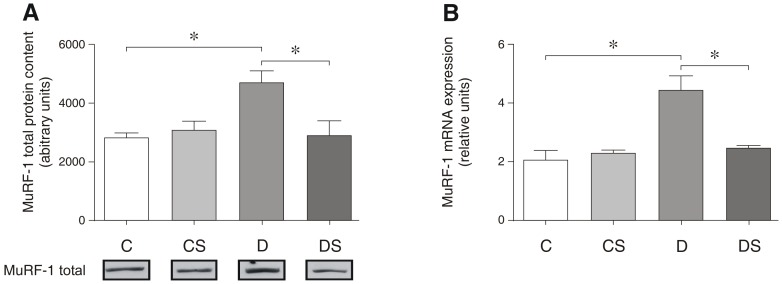
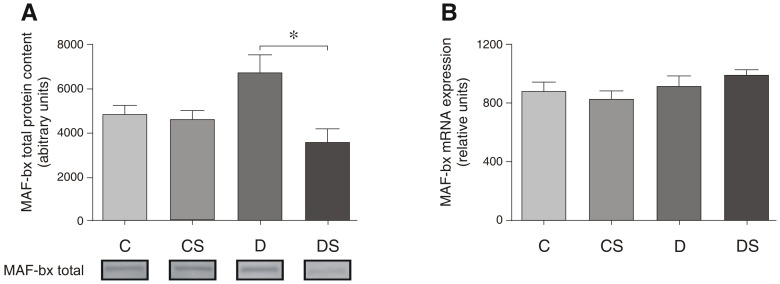
In this study, we investigated the effect of glutamine (Gln) supplementation on the signaling pathways regulating protein synthesis and protein degradation in the skeletal muscle of rats with streptozotocin (STZ)-induced diabetes. The expression levels of key regulatory proteins in the synthetic pathways (Akt, mTOR, GSK3 and 4E-BP1) and the degradation pathways (MuRF-1 and MAFbx) were determined using real-time PCR and Western blotting in four groups of male Wistar rats; 1) control, non-supplemented with glutamine; 2) control, supplemented with glutamine; 3) diabetic, non-supplemented with glutamine; and 4) diabetic, supplemented with glutamine. Diabetes was induced by the intravenous injection of 65 mg/kg bw STZ in citrate buffer (pH 4.2); the non-diabetic controls received only citrate buffer. After 48 hours, diabetes was confirmed in the STZ-treated animals by the determination of blood glucose levels above 200 mg/dL. Starting on that day, a solution of 1 g/kg bw Gln in phosphate buffered saline (PBS) was administered daily via gavage for 15 days to groups 2 and 4. Groups 1 and 3 received only PBS for the same duration. The rats were euthanized, and the soleus muscles were removed and homogenized in extraction buffer for the subsequent measurement of protein and mRNA levels. The results demonstrated a significant decrease in the muscle Gln content in the diabetic rats, and this level increased toward the control value in the diabetic rats receiving Gln. In addition, the diabetic rats exhibited a reduced mRNA expression of regulatory proteins in the protein synthesis pathway and increased expression of those associated with protein degradation. A reduction in the skeletal muscle mass in the diabetic rats was observed and was alleviated partially with Gln supplementation. The data suggest that glutamine supplementation is potentially useful for slowing the progression of muscle atrophy in patients with diabetes.
在这项研究中,我们研究了谷氨酰胺(Gln)补充对链脲佐菌素(STZ)诱导的糖尿病大鼠骨骼肌中调节蛋白质合成和蛋白质降解的信号通路的影响。使用实时 PCR 和 Western 印迹法测定了四个雄性 Wistar 大鼠组中合成途径(Akt、mTOR、GSK3 和 4E-BP1)和降解途径(MuRF-1 和 MAFbx)的关键调节蛋白的表达水平;1)对照组,未补充谷氨酰胺;2)对照组,补充谷氨酰胺;3)糖尿病组,未补充谷氨酰胺;和 4)糖尿病组,补充谷氨酰胺。糖尿病通过静脉注射柠檬酸缓冲液(pH 4.2)中的 65mg/kg bw STZ 诱导;非糖尿病对照组仅接受柠檬酸缓冲液。在 STZ 处理动物的血糖水平超过 200mg/dL 后 48 小时,确认糖尿病。从那天开始,通过灌胃每天给 2 组和 4 组 1g/kg bw Gln 在磷酸盐缓冲盐水(PBS)中的溶液,持续 15 天。1 组和 3 组在相同的时间内仅接受 PBS。处死大鼠,取出比目鱼肌并在提取缓冲液中匀浆,用于随后测量蛋白质和 mRNA 水平。结果表明,糖尿病大鼠的肌肉 Gln 含量显著降低,而接受 Gln 的糖尿病大鼠的 Gln 含量增加至接近对照值。此外,糖尿病大鼠的蛋白质合成途径中调节蛋白的 mRNA 表达减少,与蛋白质降解相关的表达增加。观察到糖尿病大鼠的骨骼肌质量减少,并用 Gln 补充部分缓解。数据表明,谷氨酰胺补充可能有助于减缓糖尿病患者肌肉萎缩的进展。