Department of Pharmacology, College of Health Sciences, Kwame Nkrumah University of Science & Technology, Kumasi, Ghana.
Indian J Pharmacol. 2012 Nov-Dec;44(6):765-73. doi: 10.4103/0253-7613.103299.
Various parts of Trichilia monadelpha (Thonn) JJ De Wilde (Fam. Meliaceae) are used in Ghanaian traditional medicine for the treatment of painful and inflammatory conditions. The present study examined the analgesic properties of the petroleum ether (PEE), ethyl acetate (EAE), and the hydro-ethanolic (HAE) extract of the stem bark of the plant in murine models.
PEE, EAE, and HAE were assessed in chemical (acetic acid-induced abdominal writhing and formalin tests), thermal (hot plate test), and mechanical (Randall-Selitto paw pressure test) pain models. The possible mechanisms of the antinociceptive action were also examined with various antagonists in the formalin test.
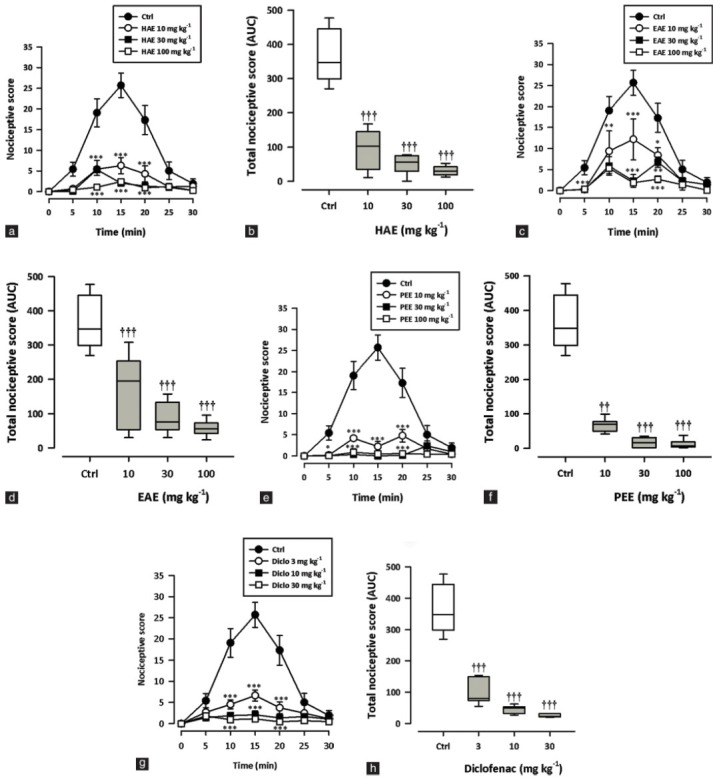
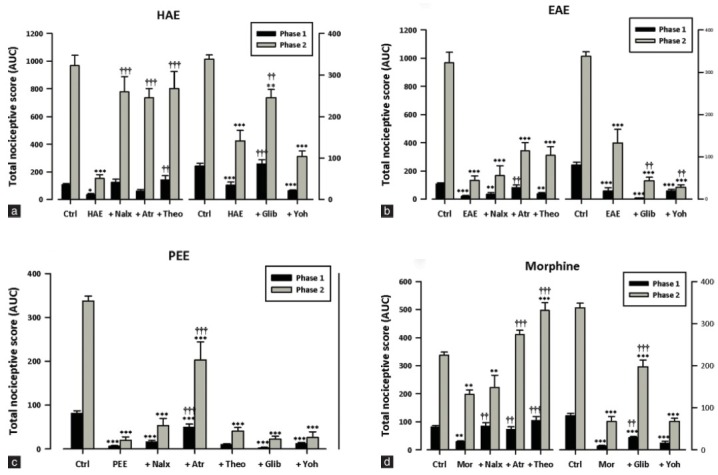
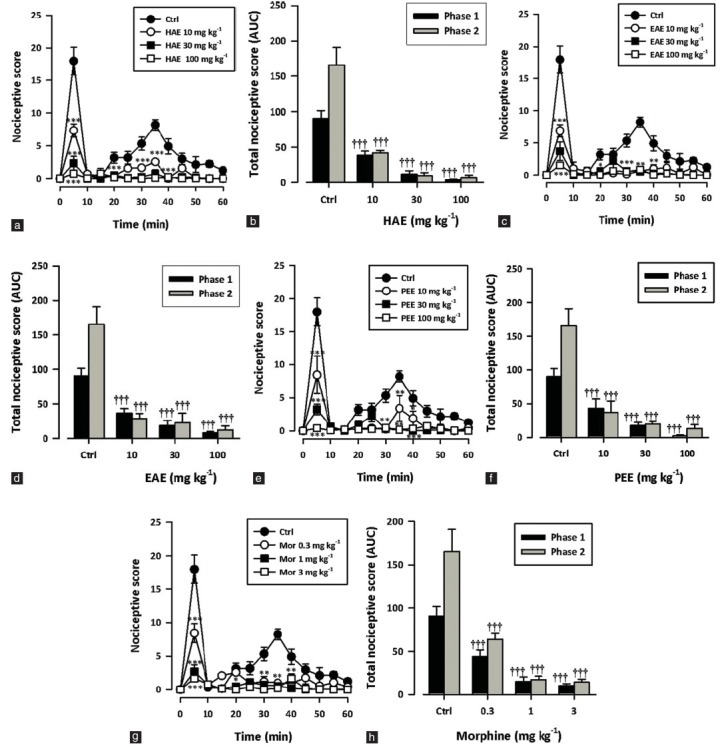
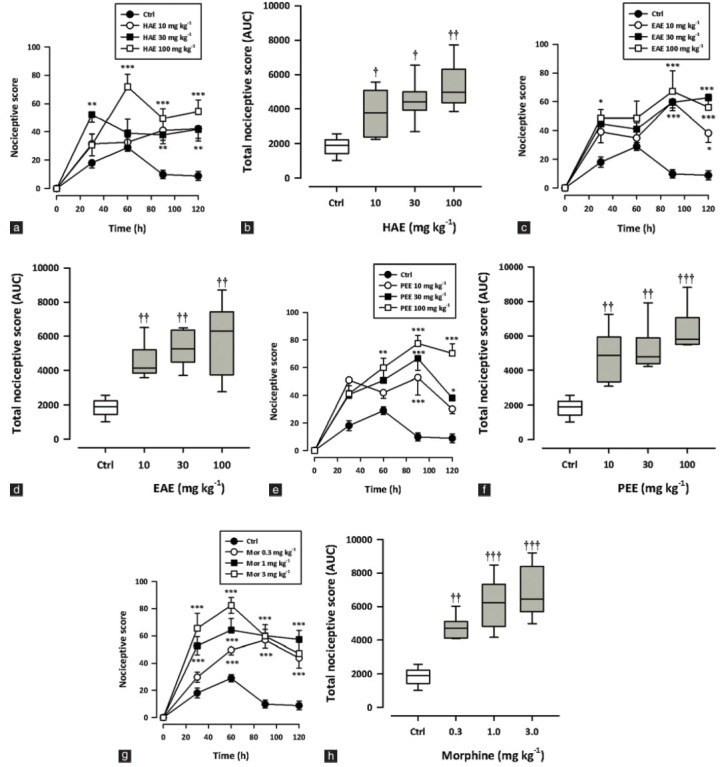
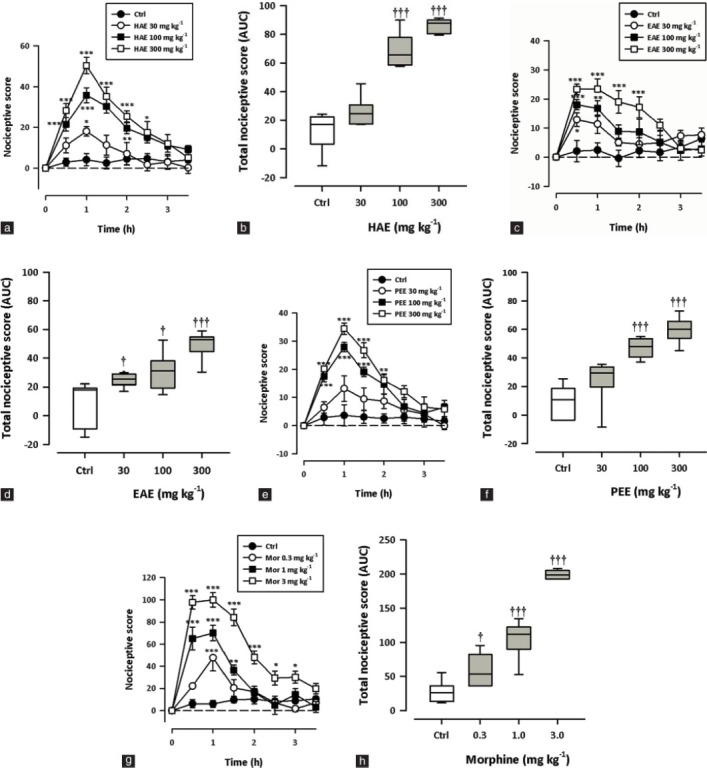
HAE, EAE, and PEE, each at doses of 10-100 mg/kg orally, and the positive controls (morphine and diclofenac) elicited significant dose-dependent antinociceptive activity in the chemical (acetic acid abdominal writhing and formalin tests), thermal (hot plate test), and mechanical (Randall-Selitto paw pressure test) pain models in rodents. The antinociceptive effect of HAE was partly or wholly reversed by systemic administration of atropine, naloxone, and glibenclamide. The antinociceptive effects of EAE and PEE were inhibited by atropine.
The extracts HAE, EAE, and PEE caused dose-related antinociception in chemical, thermal, and mechanical models of pain in animals. The mechanism of action of HAE involves an interaction with muscarinic cholinergic, adenosinergic, opioidergic pathways, and ATP-sensitive K+ channels while that of EAE and PEE involve the muscarinic cholinergic system.
特立尼达单胞菌(Thonn)JJ 德怀尔德(Fam. Meliaceae)的不同部位在加纳传统医学中用于治疗疼痛和炎症性疾病。本研究在小鼠模型中检查了该植物茎皮的石油醚(PEE)、乙酸乙酯(EAE)和水-乙醇(HAE)提取物的镇痛特性。
在化学(醋酸诱导的腹部扭体和福马林试验)、热(热板试验)和机械(兰德尔-塞利托爪压力试验)疼痛模型中评估了 PEE、EAE 和 HAE。在福马林试验中,还使用各种拮抗剂检查了抗伤害作用的可能机制。
HAE、EAE 和 PEE,口服剂量为 10-100mg/kg,阳性对照(吗啡和双氯芬酸)在化学(醋酸腹部扭体和福马林试验)、热(热板试验)和机械(兰德尔-塞利托爪压力试验)疼痛模型中均表现出显著的剂量依赖性镇痛活性。在大鼠中。HAE 的镇痛作用部分或完全被系统给予阿托品、纳洛酮和格列本脲逆转。EAE 和 PEE 的镇痛作用被阿托品抑制。
HAE、EAE 和 PEE 提取物在动物的化学、热和机械疼痛模型中引起剂量相关的镇痛作用。HAE 的作用机制涉及与毒蕈碱乙酰胆碱能、腺苷能、阿片能途径和 ATP 敏感性 K+通道的相互作用,而 EAE 和 PEE 的作用机制涉及毒蕈碱乙酰胆碱能系统。