Department of Pharmaceutical and Biomedical Sciences, School of Pharmacy, University of Salerno, Fisciano, Italy.
PLoS One. 2012;7(12):e52051. doi: 10.1371/journal.pone.0052051. Epub 2012 Dec 14.
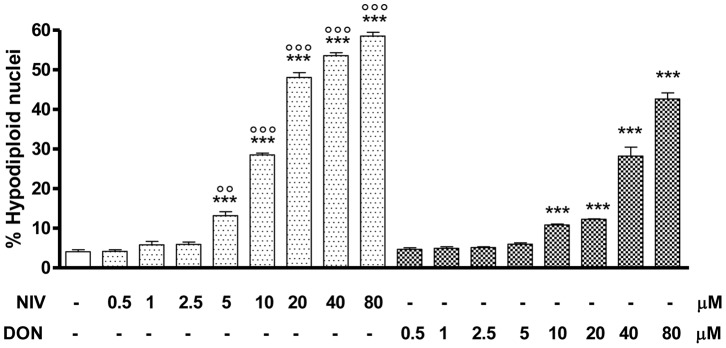
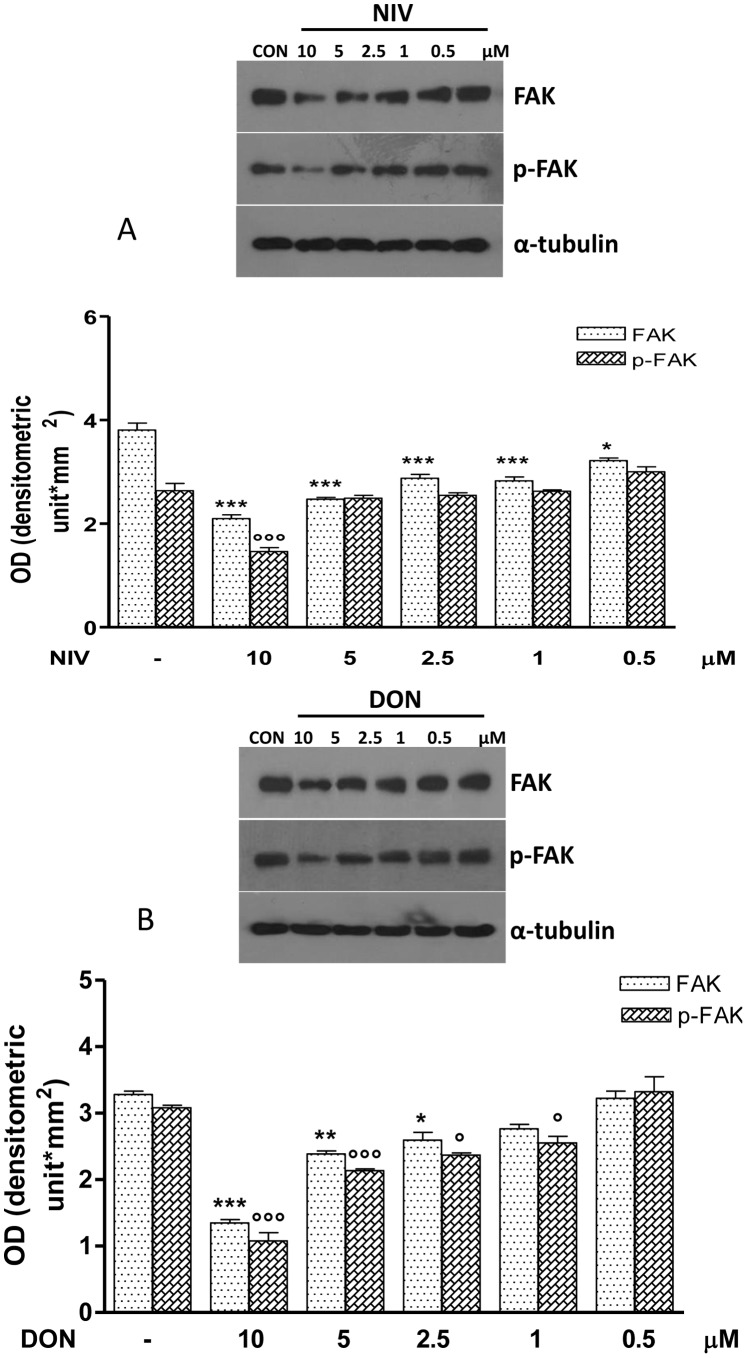
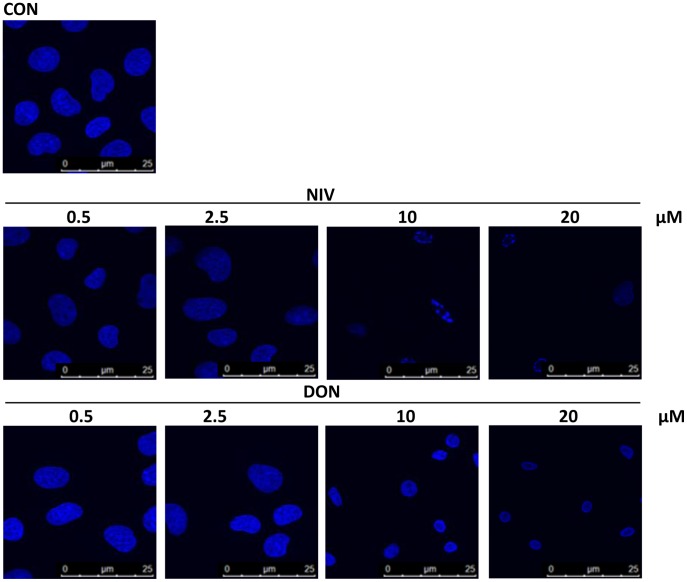
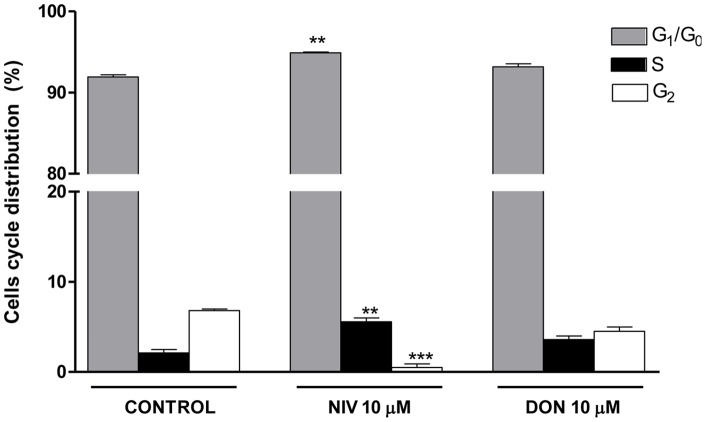
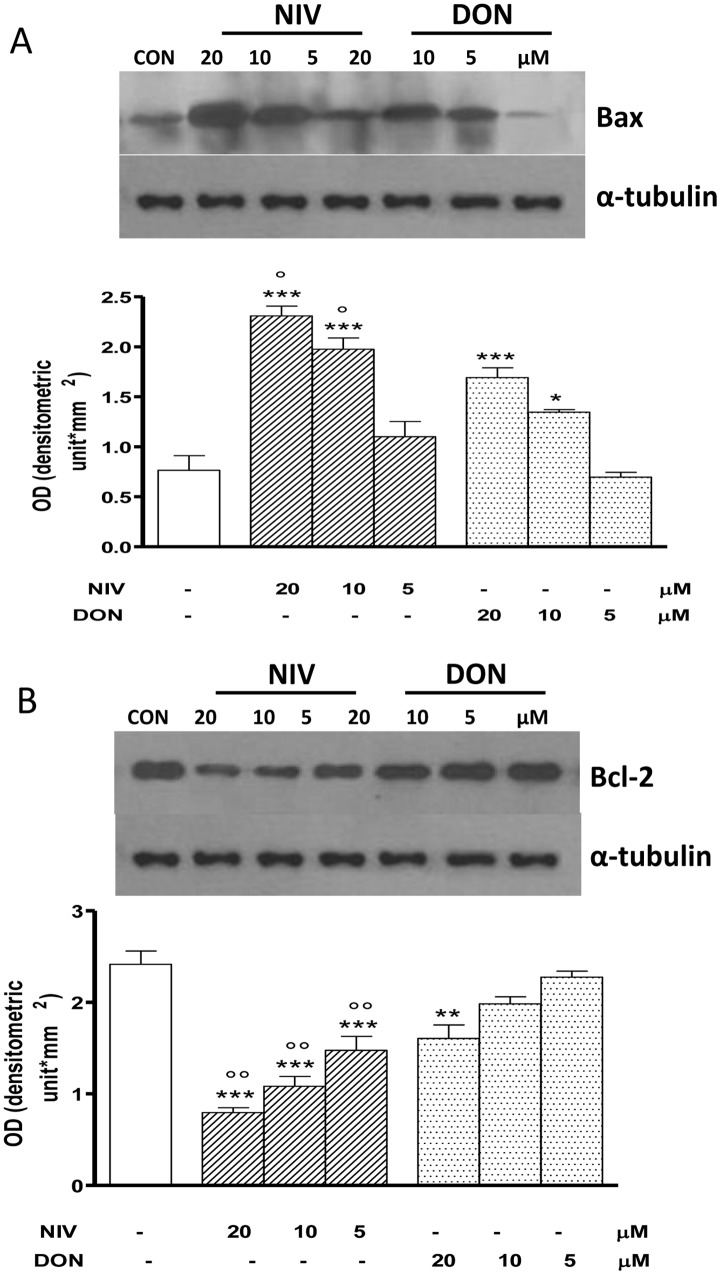
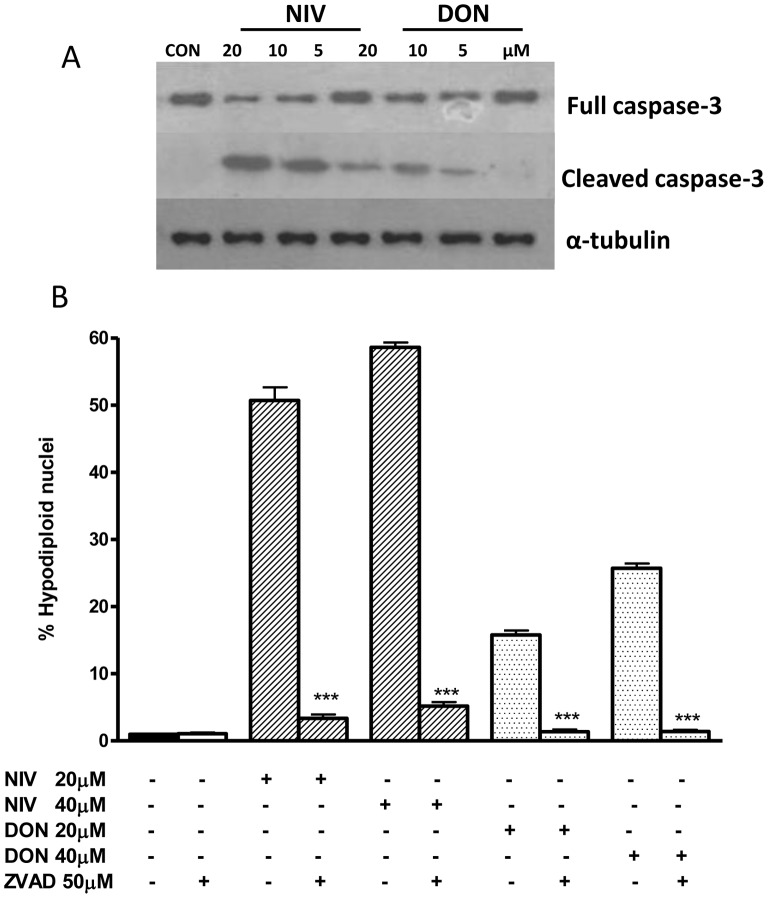
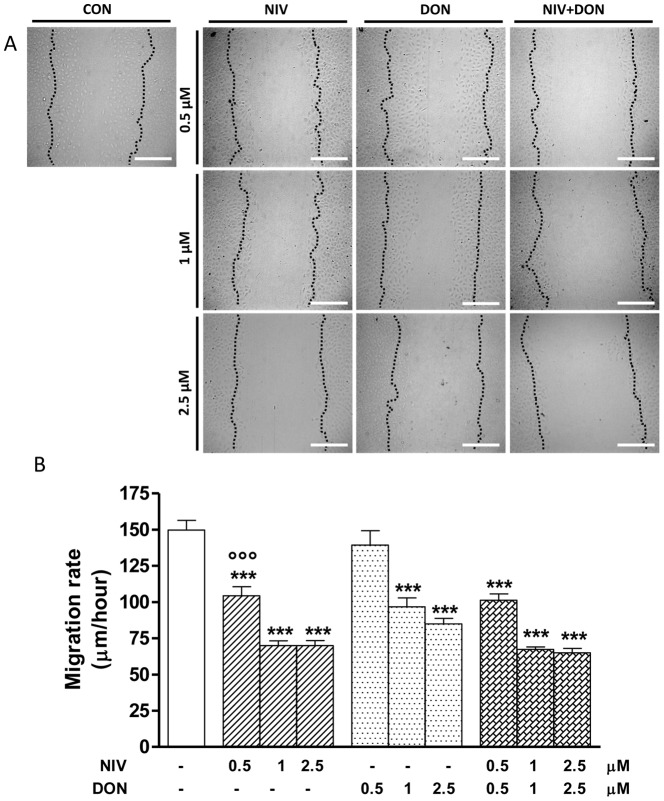
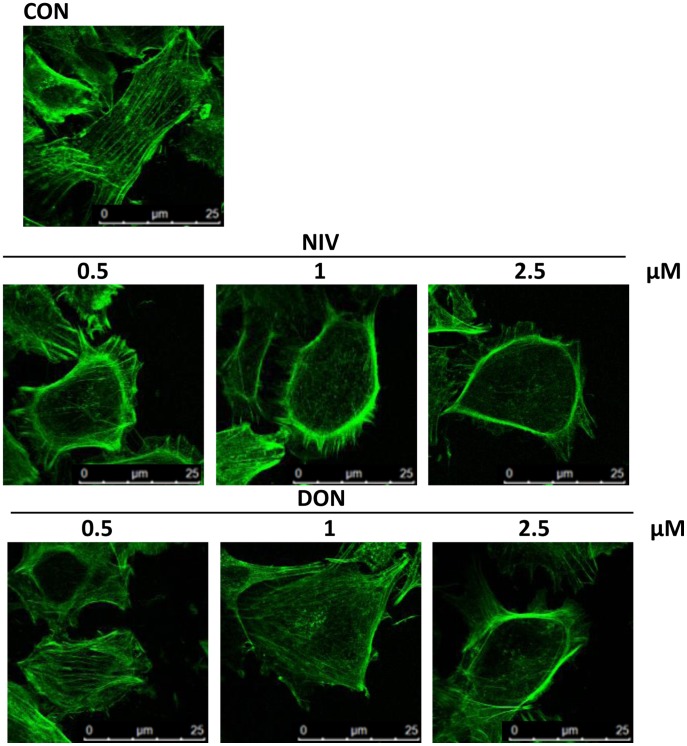
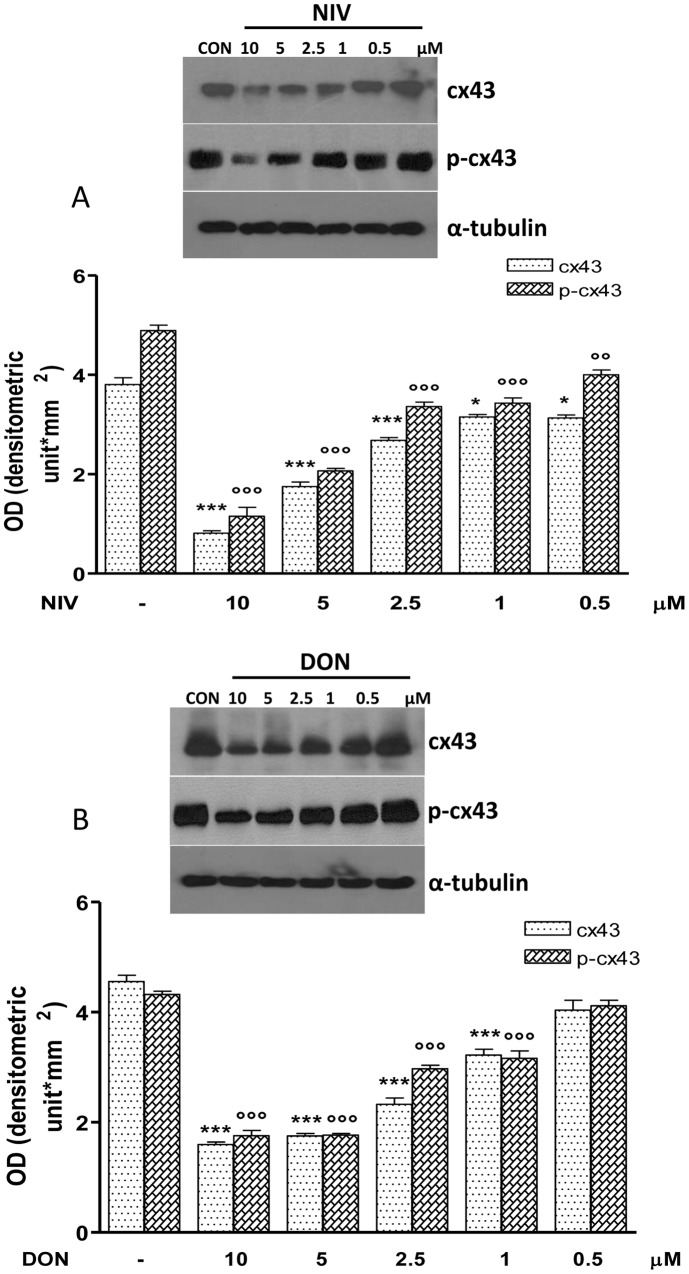
The integrity of the gastrointestinal tract represents a crucial first level defence against ingested toxins. Among them, Nivalenol is a trichotecenes mycotoxin frequently found on cereals and processed grains; when it contaminates human food and animal feed it is often associated with another widespread contaminant, Deoxynivalenol. Following their ingestion, intestinal epithelial cells are exposed to concentrations of these trichothecenes high enough to cause mycotoxicosis. In this study we have investigated the effects of Nivalenol and Deoxynivalenol on intestinal cells in an in vitro model system utilizing the non-tumorigenic rat intestinal epithelial cell line IEC-6. Both Nivalenol and Deoxynivalenol (5-80 µM) significantly affected IEC-6 viability through a pro-apoptotic process which mainly involved the following steps: (i) Bax induction; (ii) Bcl-2 inhibition, and (iii) caspase-3 activation. Moreover, treatment with Nivalenol produced a significant cell cycle arrest of IEC-6 cells, primarily at the G(0)/G(1) interphase and in the S phase, with a concomitant reduction in the fraction of cells in G(2). Interestingly, when administered at lower concentrations (0.1-2.5 µM), both Nivalenol and Deoxynivalenol affected epithelial cell migration (restitution), representing the initial step in gastrointestinal wound healing in the gut. This reduced motility was associated with significant remodelling of the actin cytoskeleton, and changes in expression of connexin-43 and focal adhesion kinase. The concentration range of Nivalenol or Deoxynivalenol we have tested is comparable with the mean estimated daily intake of consumers eating contaminated food. Thus, our results further highlight the risks associated with intake of even low levels of these toxins.
胃肠道的完整性代表了对抗摄入毒素的第一道重要防线。其中,伏马菌素是一种经常存在于谷物和加工谷物中的单端孢霉烯族真菌毒素;当它污染人类食物和动物饲料时,它通常与另一种广泛存在的污染物脱氧雪腐镰刀菌烯醇有关。在摄入这些毒素后,肠道上皮细胞会暴露在足以引起霉菌中毒的高浓度的这些单端孢霉烯中。在这项研究中,我们利用非肿瘤大鼠肠上皮细胞系 IEC-6 在体外模型系统中研究了伏马菌素和脱氧雪腐镰刀菌烯醇对肠道细胞的影响。伏马菌素和脱氧雪腐镰刀菌烯醇(5-80 μM)都通过一种主要涉及以下步骤的促凋亡过程显著影响 IEC-6 的活力:(i)Bax 诱导;(ii)Bcl-2 抑制;(iii)caspase-3 激活。此外,伏马菌素处理导致 IEC-6 细胞的细胞周期显著停滞,主要在 G0/G1 期和 S 期,同时细胞在 G2 期的比例减少。有趣的是,当以较低浓度(0.1-2.5 μM)给药时,伏马菌素和脱氧雪腐镰刀菌烯醇都影响上皮细胞迁移(修复),这是胃肠道伤口愈合的初始步骤。这种运动能力的降低与肌动蛋白细胞骨架的显著重塑以及连接蛋白 43 和粘着斑激酶表达的变化有关。我们测试的伏马菌素或脱氧雪腐镰刀菌烯醇的浓度范围与食用受污染食物的消费者估计的每日平均摄入量相当。因此,我们的结果进一步强调了摄入这些毒素即使是低水平也存在的风险。