Department of First Clinical Medical College, Heilongjiang University of Chinese Medicine, Harbin, China.
Department of Obstetrics and Gynecology, Key Laboratory and Unit of Infertility in Chinese Medicine, First Affiliated Hospital, Heilongjiang University of Chinese Medicine, Harbin, China.
Front Endocrinol (Lausanne). 2023 Aug 1;14:1172481. doi: 10.3389/fendo.2023.1172481. eCollection 2023.
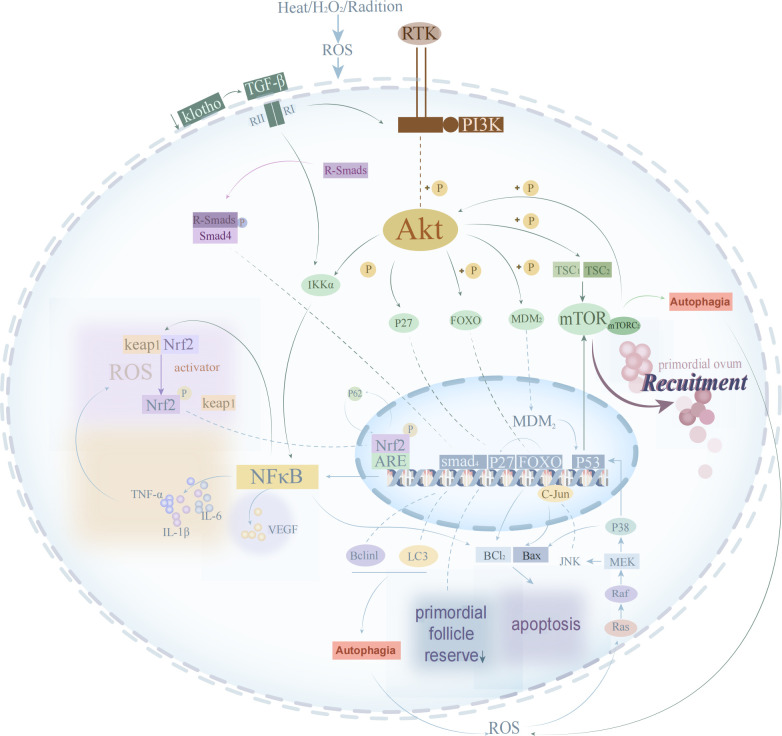
Normal levels of reactive oxygen species (ROS) play an important role in regulating follicular growth, angiogenesis and sex hormone synthesis in ovarian tissue. When the balance between ROS and antioxidants is disrupted, however, it can cause serious consequences of oxidative stress (OS), and the quantity and quality of oocytes will decline. Therefore, this review discusses the interrelationship between OS and premature ovarian insufficiency (POI), the potential mechanisms and the methods by which antioxidants can improve POI through controlling the level of OS. We found that OS can mediate changes in genetic materials, signal pathways, transcription factors and ovarian microenvironment, resulting in abnormal apoptosis of ovarian granulosa cells (GCs) and abnormal meiosis as well as decreased mitochondrial Deoxyribonucleic Acid(mtDNA) and other changes, thus accelerating the process of ovarian aging. However, antioxidants, mesenchymal stem cells (MSCs), biological enzymes and other antioxidants can delay the disease process of POI by reducing the ROS level .
正常水平的活性氧(ROS)在调节卵巢组织中的卵泡生长、血管生成和性激素合成方面发挥着重要作用。然而,当 ROS 和抗氧化剂之间的平衡被打破时,就会导致氧化应激(OS)的严重后果,卵子的数量和质量都会下降。因此,本文讨论了 OS 与卵巢早衰(POI)之间的相互关系、潜在机制,以及抗氧化剂如何通过控制 OS 水平来改善 POI。我们发现,OS 可以介导遗传物质、信号通路、转录因子和卵巢微环境的变化,导致卵巢颗粒细胞(GCs)异常凋亡和减数分裂异常,以及线粒体脱氧核糖核酸(mtDNA)减少等变化,从而加速卵巢衰老的进程。然而,抗氧化剂、间充质干细胞(MSCs)、生物酶和其他抗氧化剂可以通过降低 ROS 水平来延缓 POI 的疾病进程。