Centre for Cancer Research and Cell Biology, Queen's University Belfast, Northern Ireland, UK.
Cell Death Dis. 2012 Dec 20;3(12):e449. doi: 10.1038/cddis.2012.186.
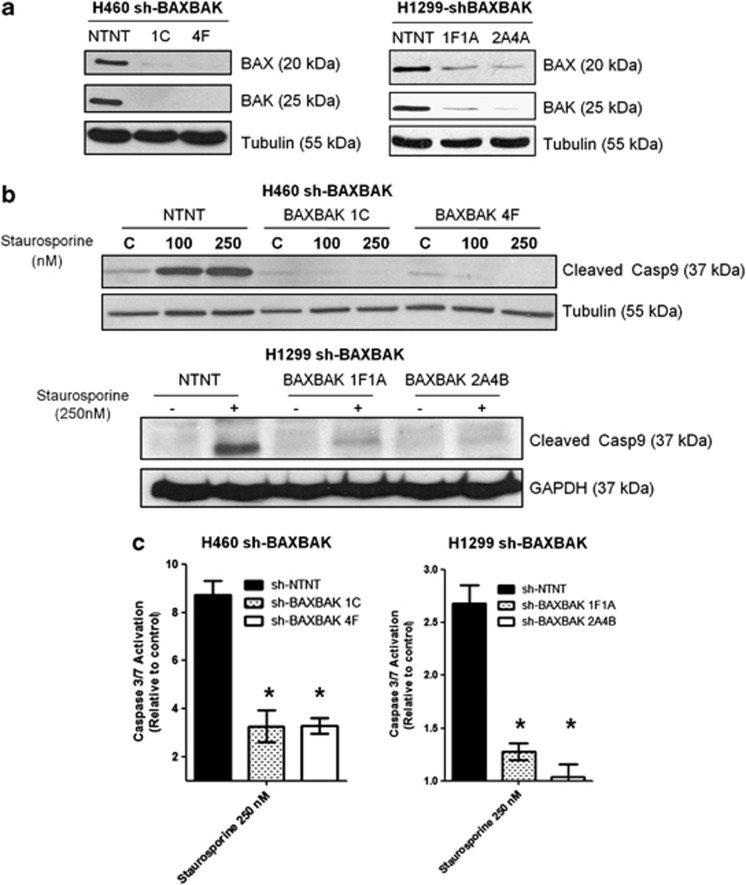
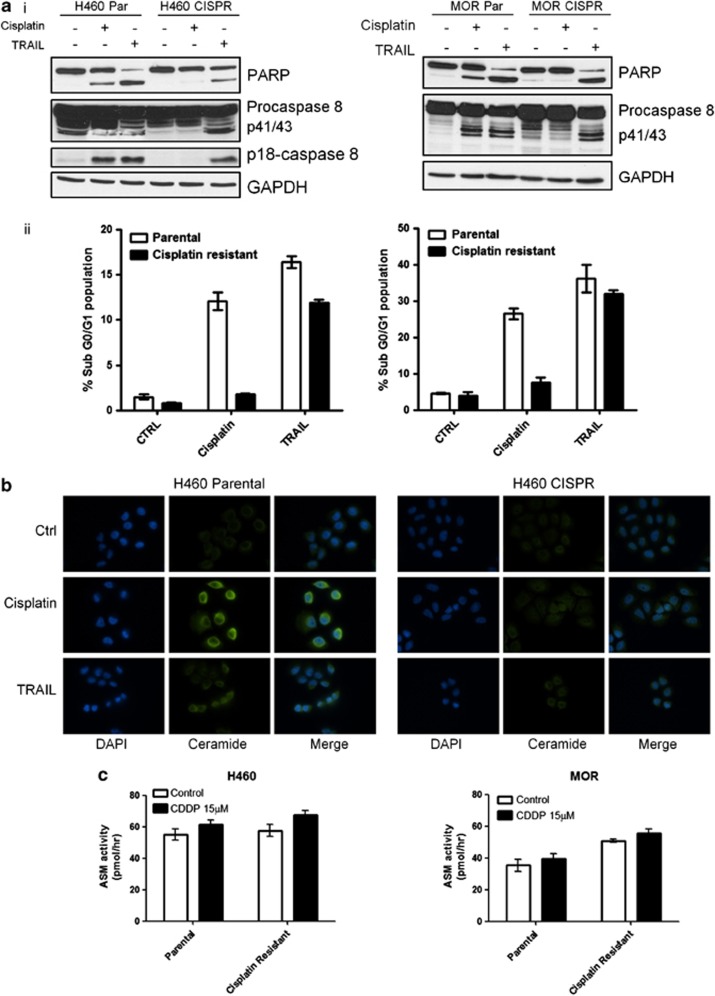
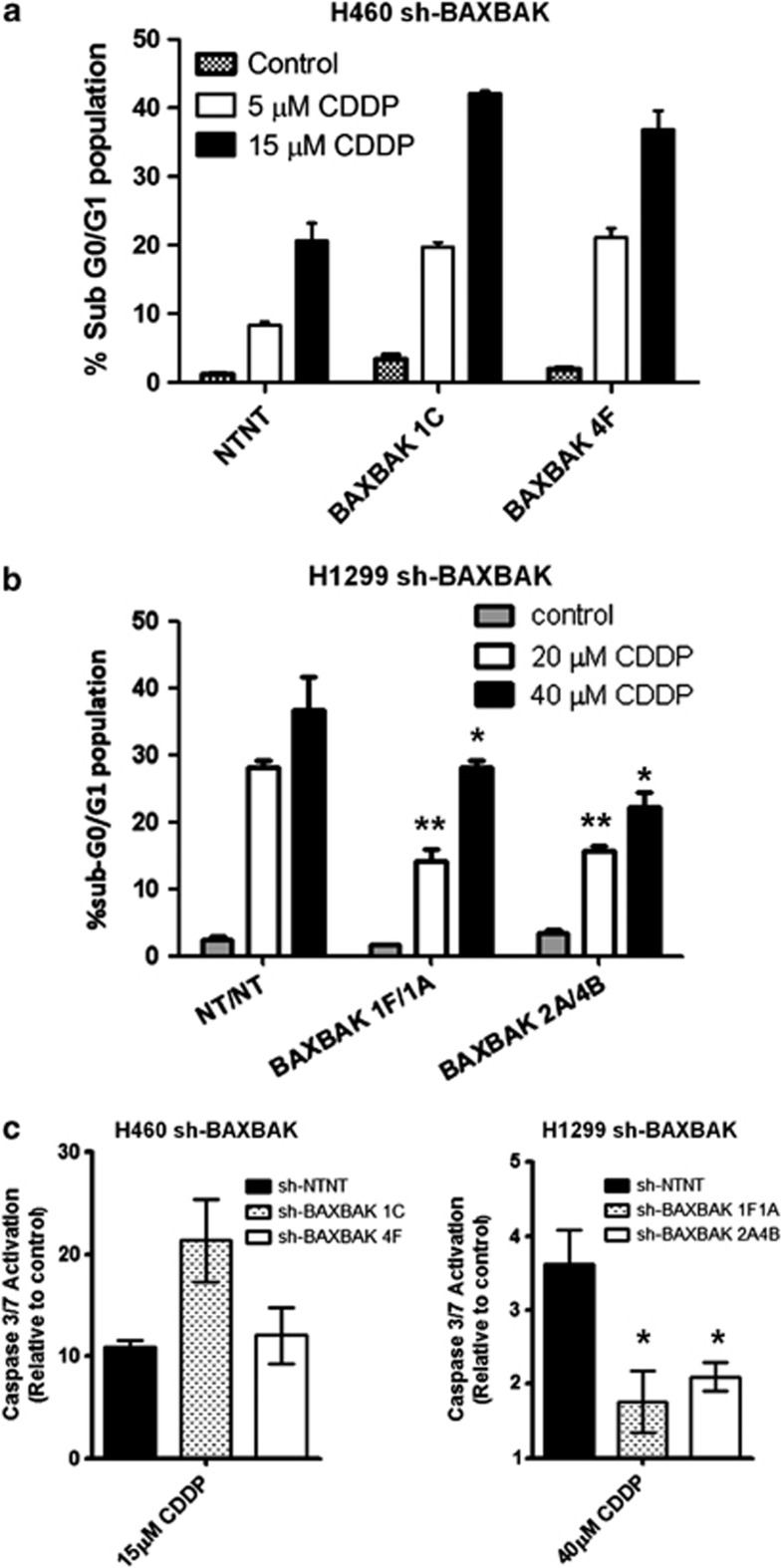
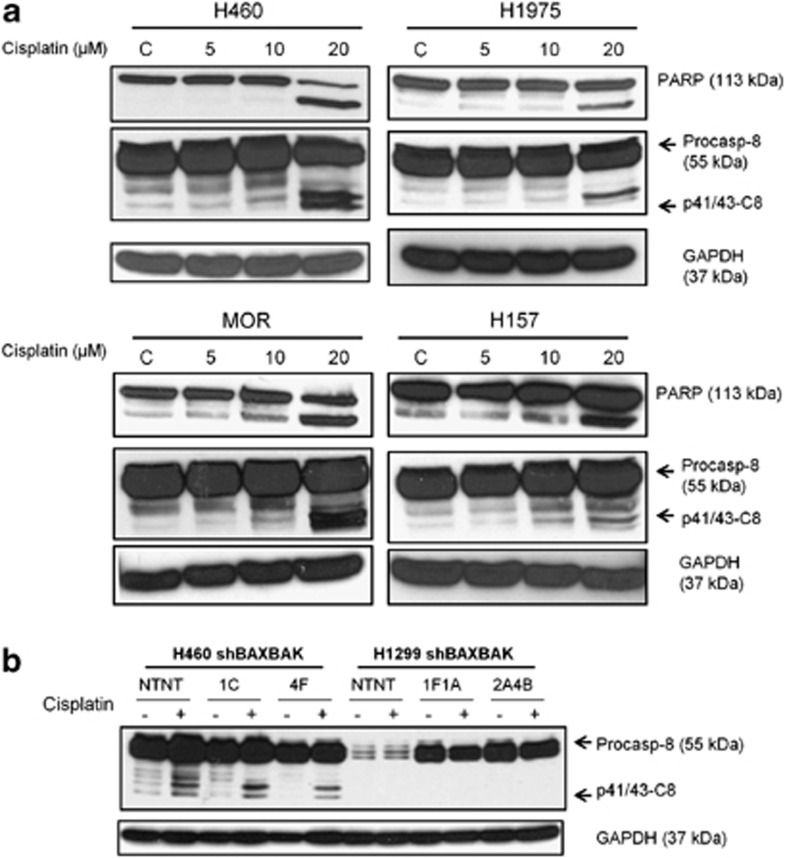
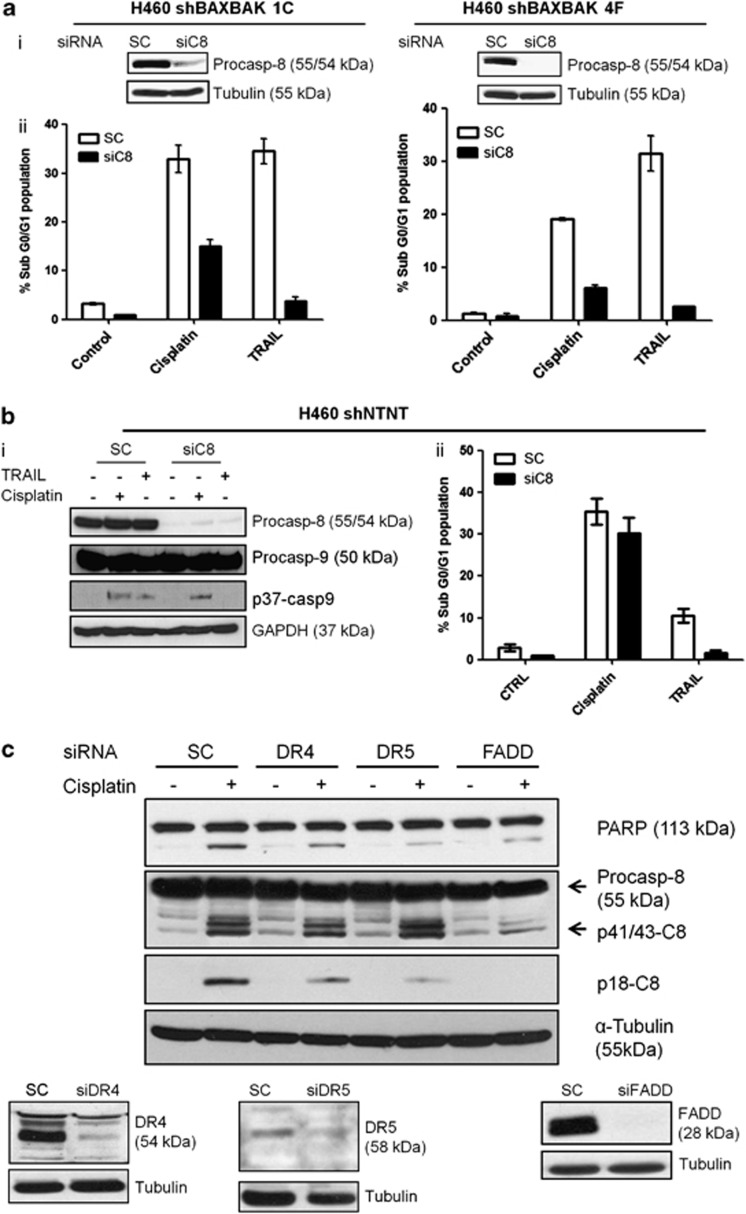
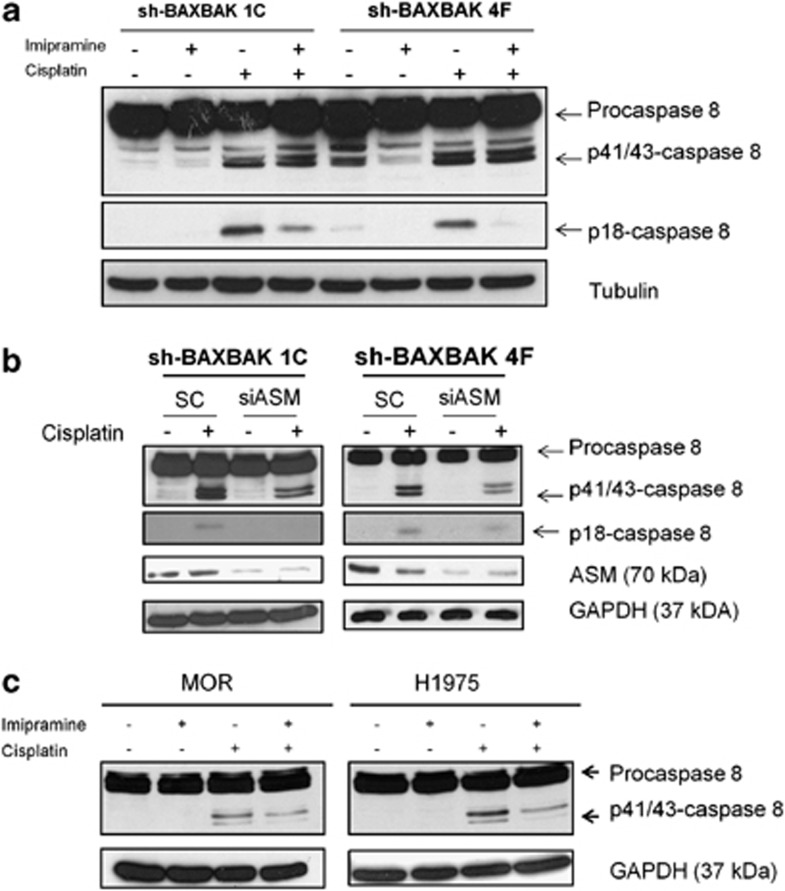
Failure to efficiently induce apoptosis contributes to cisplatin resistance in non-small-cell lung cancer (NSCLC). Although BCL-2-associated X protein (BAX) and BCL-2 antagonist killer (BAK) are critical regulators of the mitochondrial apoptosis pathway, their requirement has not been robustly established in relation to cisplatin. Here, we show that cisplatin can efficiently bypass mitochondrial apoptosis block caused by loss of BAX and BAK, via activation of the extrinsic death receptor pathway in some model cell lines. Apoptosis resistance following cisplatin can only be observed when both extrinsic and intrinsic pathways are blocked, consistent with redundancy between mitochondrial and death receptor pathways in cisplatin-induced apoptosis. In H460 NSCLC cells, caspase-8 cleavage was shown to be induced by cisplatin and is dependent on death receptor 4, death receptor 5, Fas-associated protein with death domain, acid sphingomyelinase and ceramide synthesis. In contrast, cisplatin-resistant cells fail to activate caspase-8 via this pathway despite conserving sensitivity to death ligand-driven activation. Accordingly, caspase-8 activation block acquired during cisplatin resistance, can be bypassed by death receptor agonism.
未能有效地诱导细胞凋亡导致非小细胞肺癌(NSCLC)对顺铂耐药。尽管 BCL-2 相关 X 蛋白(BAX)和 BCL-2 拮抗剂杀伤(BAK)是线粒体凋亡途径的关键调节因子,但它们与顺铂的关系尚未得到强有力的证实。在这里,我们表明顺铂可以通过在一些模型细胞系中激活外在死亡受体途径,有效地绕过由 BAX 和 BAK 缺失引起的线粒体凋亡阻滞。只有当外在和内在途径都被阻断时,才能观察到顺铂后的凋亡抵抗,这与线粒体和死亡受体途径在顺铂诱导的凋亡中存在冗余一致。在 H460 NSCLC 细胞中,顺铂诱导了胱天蛋白酶-8 的切割,并且依赖于死亡受体 4、死亡受体 5、含死亡域的 Fas 相关蛋白、酸性鞘磷脂酶和神经酰胺合成。相比之下,尽管对死亡配体驱动的激活保持敏感,但耐药细胞无法通过该途径激活胱天蛋白酶-8。因此,在顺铂耐药过程中获得的胱天蛋白酶-8 激活阻断可以通过死亡受体激动剂绕过。