Kim Woojun, Kim Su-Hyun, Huh So-Young, Kim Ho Jin
Department of Neurology, The Catholic University of Korea, Seoul, Republic of Korea.
Mult Scler Int. 2012;2012:735486. doi: 10.1155/2012/735486. Epub 2012 Dec 3.
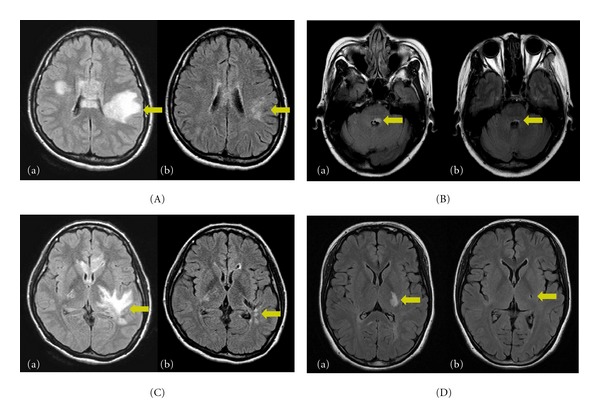
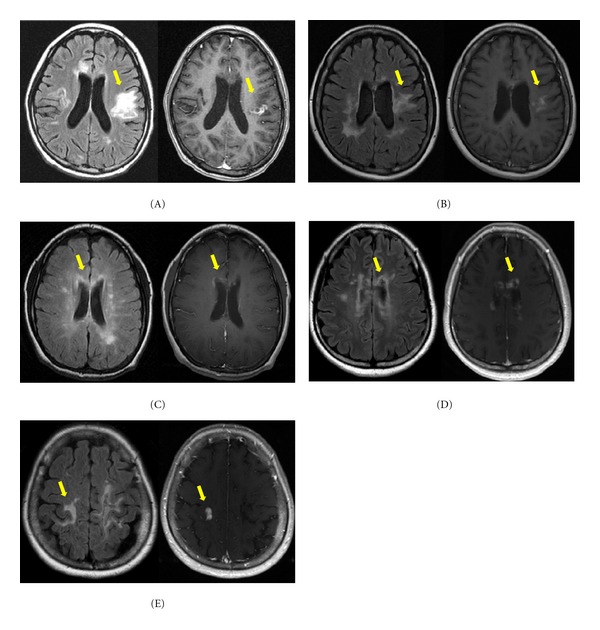
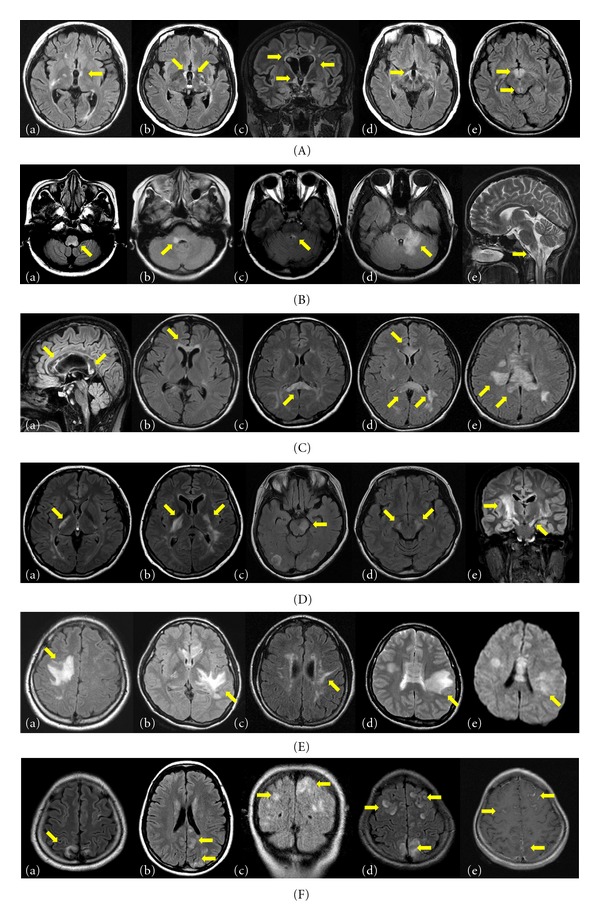
Neuromyelitis optica (NMO) is an idiopathic inflammatory syndrome of the central nervous system that is characterized by severe attacks of optic neuritis (ON) and myelitis. Until recently, NMO was considered a disease without brain involvement. However, since the discovery of NMO-IgG/antiaqaporin-4 antibody, the concept of NMO was broadened to NMO spectrum disorder (NMOSD), and brain lesions are commonly recognized. Furthermore, some patients present with brain symptoms as their first manifestation and develop recurrent brain symptoms without ON or myelitis. Brain lesions with characteristic locations and configurations can be helpful in the diagnosis of NMOSD. Due to the growing recognition of brain abnormalities in NMOSD, these have been included in the NMO and NMOSD diagnostic criteria or guidelines. Recent technical developments such as diffusion tensor imaging, MR spectroscopy, and voxel-based morphometry reveal new findings related to brain abnormalities in NMOSD that were not identified using conventional MRI. This paper focuses on the incidence and characteristics of the brain lesions found in NMOSD and the symptoms that they cause. Recent studies using advanced imaging techniques are also introduced.
视神经脊髓炎(NMO)是一种中枢神经系统特发性炎症综合征,其特征为严重的视神经炎(ON)和脊髓炎发作。直到最近,NMO还被认为是一种不涉及脑部的疾病。然而,自从发现NMO-IgG/抗水通道蛋白4抗体以来,NMO的概念已扩展到视神经脊髓炎谱系障碍(NMOSD),脑部病变也被普遍认识到。此外,一些患者以脑部症状作为首发表现,并出现反复的脑部症状,而无ON或脊髓炎。具有特征性位置和形态的脑部病变有助于NMOSD的诊断。由于对NMOSD中脑部异常的认识不断增加,这些异常已被纳入NMO和NMOSD的诊断标准或指南中。最近的技术发展,如扩散张量成像、磁共振波谱和基于体素的形态测量学,揭示了与NMOSD中脑部异常相关的新发现,这些发现在使用传统MRI时未被识别。本文重点关注NMOSD中发现的脑部病变的发生率和特征以及它们所引起的症状。还介绍了使用先进成像技术的最新研究。