Department of Veterinary Integrative Biosciences, Texas A&M University, College Station, Texas, USA.
PLoS Genet. 2012;8(12):e1003139. doi: 10.1371/journal.pgen.1003139. Epub 2012 Dec 20.
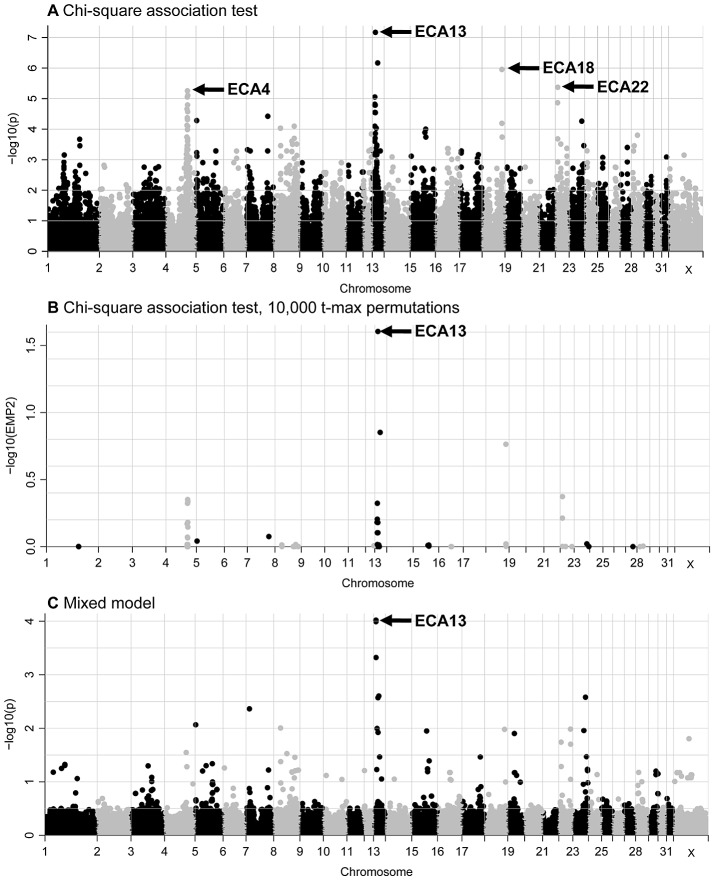
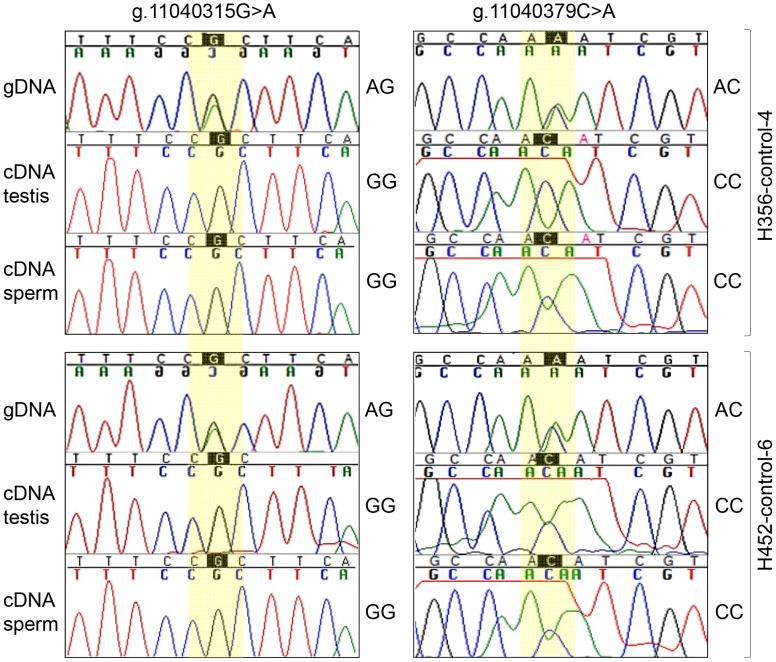
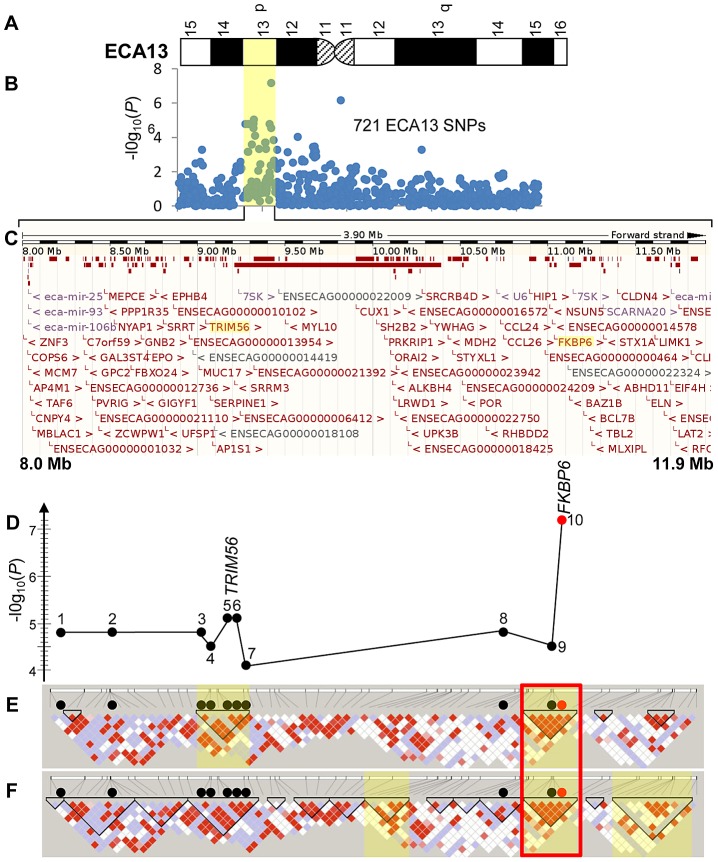
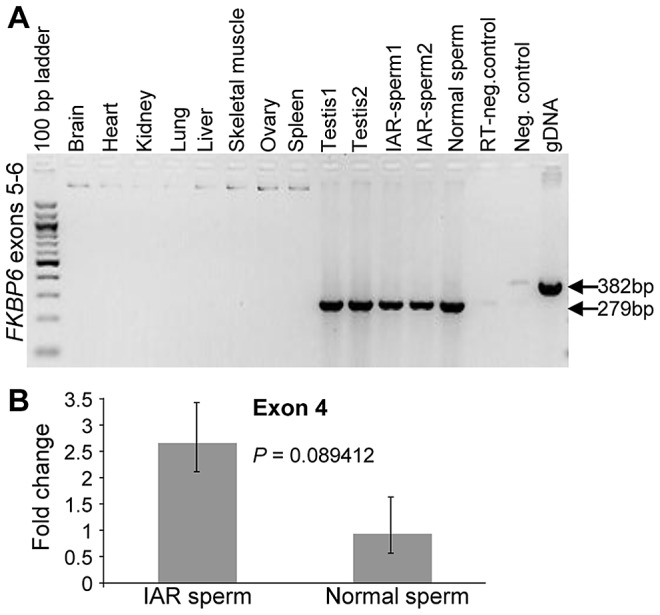
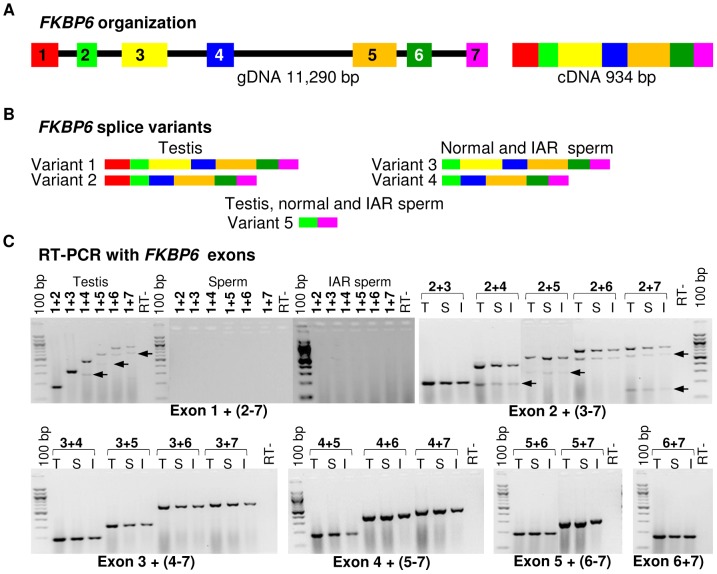
Impaired acrosomal reaction (IAR) of sperm causes male subfertility in humans and animals. Despite compelling evidence about the genetic control over acrosome biogenesis and function, the genomics of IAR is as yet poorly understood, providing no molecular tools for diagnostics. Here we conducted Equine SNP50 Beadchip genotyping and GWAS using 7 IAR-affected and 37 control Thoroughbred stallions. A significant (P<6.75E-08) genotype-phenotype association was found in horse chromosome 13 in FK506 binding protein 6 (FKBP6). The gene belongs to the immunophilins FKBP family known to be involved in meiosis, calcium homeostasis, clathrin-coated vesicles, and membrane fusions. Direct sequencing of FKBP6 exons in cases and controls identified SNPs g.11040315G>A and g.11040379C>A (p.166H>N) in exon 4 that were significantly associated with the IAR phenotype both in the GWAS cohort (n = 44) and in a large multi-breed cohort of 265 horses. All IAR stallions were homozygous for the A-alleles, while this genotype was found only in 2% of controls. The equine FKBP6 was exclusively expressed in testis and sperm and had 5 different transcripts, of which 4 were novel. The expression of this gene in AC/AG heterozygous controls was monoallelic, and we observed a tendency for FKBP6 up-regulation in IAR stallions compared to controls. Because exon 4 SNPs had no effect on the protein structure, it is likely that FKBP6 relates to the IAR phenotype via regulatory or modifying functions. In conclusion, FKBP6 was considered a susceptibility gene of incomplete penetrance for IAR in stallions and a candidate gene for male subfertility in mammals. FKBP6 genotyping is recommended for the detection of IAR-susceptible individuals among potential breeding stallions. Successful use of sperm as a source of DNA and RNA propagates non-invasive sample procurement for fertility genomics in animals and humans.
精子顶体反应受损(IAR)导致人类和动物的男性不育。尽管有大量证据表明顶体发生和功能受遗传控制,但 IAR 的基因组学仍知之甚少,没有为诊断提供分子工具。在这里,我们使用 7 头 IAR 受影响的和 37 头对照的纯种公马进行了 Equine SNP50 Beadchip 基因分型和全基因组关联研究。在马 13 号染色体上发现了 FK506 结合蛋白 6(FKBP6)的显著(P<6.75E-08)基因型-表型关联。该基因属于免疫亲和素 FKBP 家族,已知其参与减数分裂、钙稳态、网格蛋白包被小泡和膜融合。在病例和对照中直接对 FKBP6 外显子进行测序,发现外显子 4 中的 g.11040315G>A 和 g.11040379C>A(p.166H>N)两个 SNP 与 IAR 表型显著相关,这两个 SNP 在 GWAS 队列(n = 44)和 265 匹马的大型多品种队列中均如此。所有 IAR 种马均为 A-等位基因纯合子,而这种基因型仅在 2%的对照中发现。马 FKBP6 仅在睾丸和精子中表达,有 5 种不同的转录本,其中 4 种是新的。AC/AG 杂合对照中该基因的表达是单等位基因的,我们观察到 IAR 种马与对照相比 FKBP6 有上调的趋势。因为外显子 4 的 SNP 对蛋白质结构没有影响,所以 FKBP6 很可能通过调节或修饰功能与 IAR 表型相关。总之,FKBP6 被认为是种马 IAR 不完全外显的易感基因,也是哺乳动物男性不育的候选基因。建议对潜在种马进行 FKBP6 基因分型,以检测易感个体。成功地将精子作为 DNA 和 RNA 的来源,为动物和人类的生育基因学提供了非侵入性样本采集。