• 文献检索
  • 文档翻译
  • 深度研究
  • 学术资讯
  • Suppr Zotero 插件Zotero 插件
  • 邀请有礼
  • 套餐&价格
  • 历史记录
应用&插件
Suppr Zotero 插件Zotero 插件浏览器插件Mac 客户端Windows 客户端微信小程序
定价
高级版会员购买积分包购买API积分包
服务
文献检索文档翻译深度研究API 文档MCP 服务
关于我们
关于 Suppr公司介绍联系我们用户协议隐私条款
关注我们

Suppr 超能文献

核心技术专利:CN118964589B侵权必究
粤ICP备2023148730 号-1Suppr @ 2026

文献检索

告别复杂PubMed语法,用中文像聊天一样搜索,搜遍4000万医学文献。AI智能推荐,让科研检索更轻松。

立即免费搜索

文件翻译

保留排版,准确专业,支持PDF/Word/PPT等文件格式,支持 12+语言互译。

免费翻译文档

深度研究

AI帮你快速写综述,25分钟生成高质量综述,智能提取关键信息,辅助科研写作。

立即免费体验

中国黄河中游地区 7800 年前开始的小米和水稻混合早期农业。

Early mixed farming of millet and rice 7800 years ago in the Middle Yellow River region, China.

机构信息

Key Laboratory of Cenozoic Geology and Environment, Institute of Geology and Geophysics, Chinese Academy of Sciences, Beijing, China.

出版信息

PLoS One. 2012;7(12):e52146. doi: 10.1371/journal.pone.0052146. Epub 2012 Dec 17.

DOI:10.1371/journal.pone.0052146
PMID:23284907
原文链接:https://pmc.ncbi.nlm.nih.gov/articles/PMC3524165/
Abstract

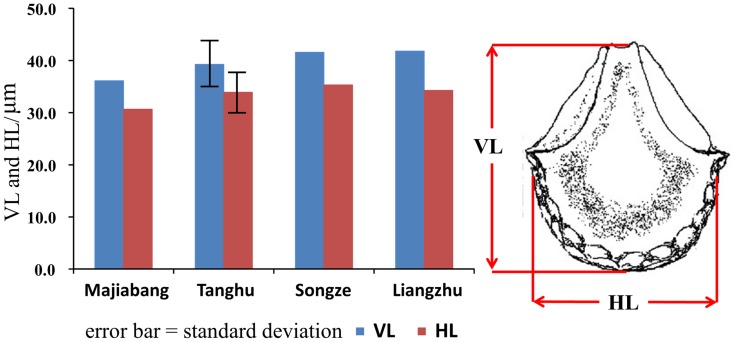
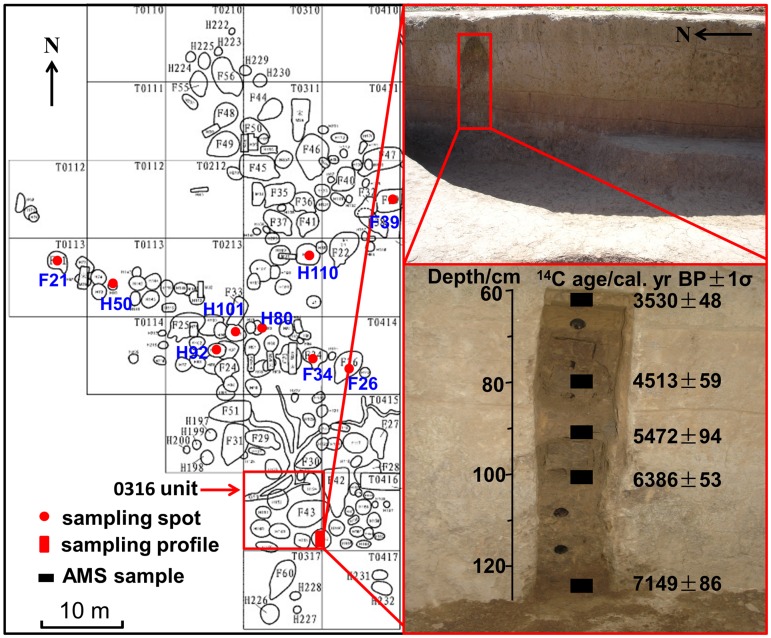
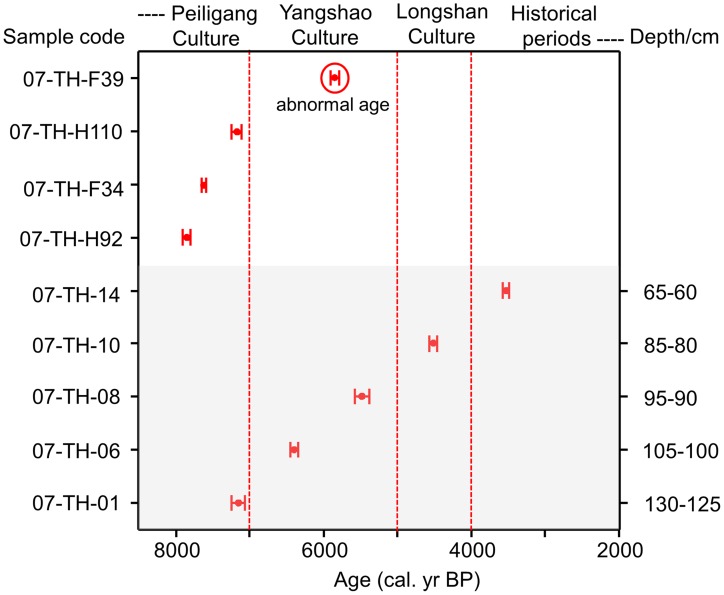
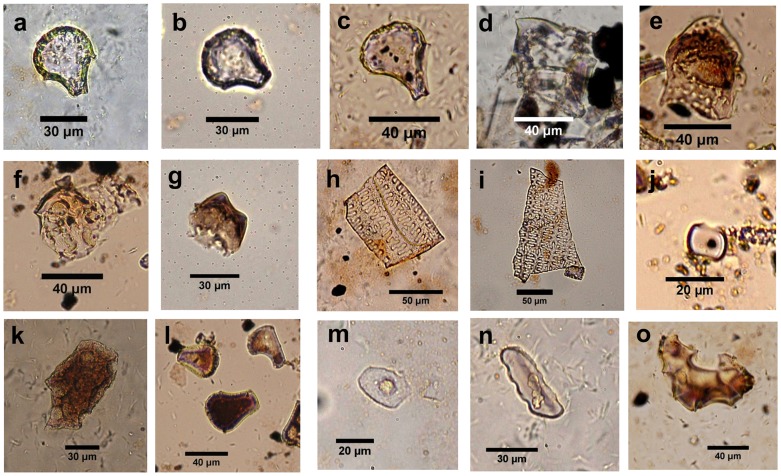
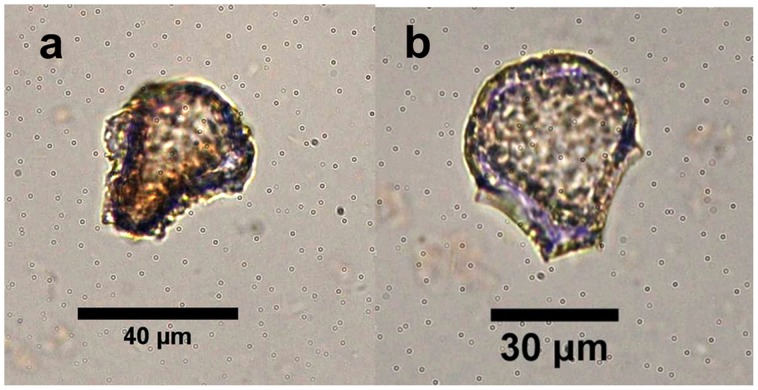
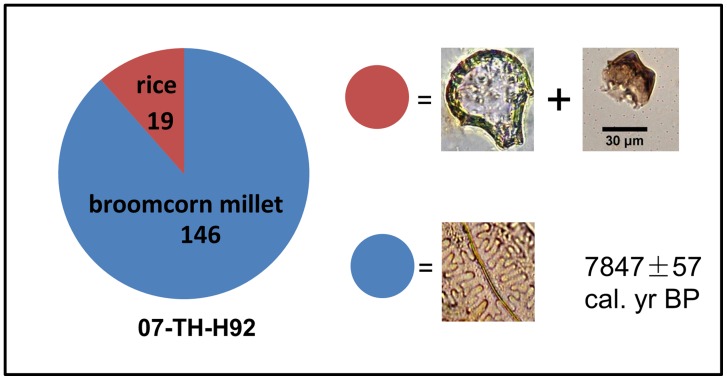
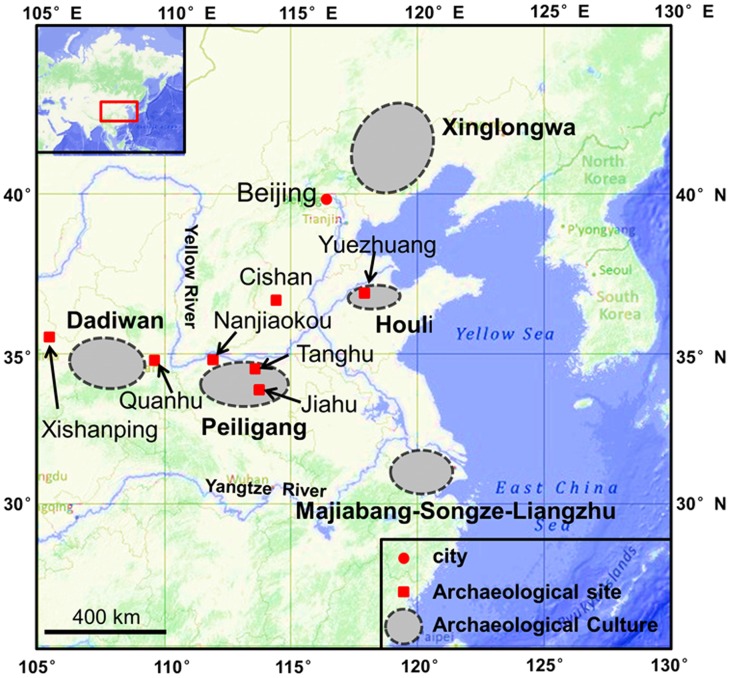
The Peiligang Culture (9000-7000 cal. yr BP) in the Middle Yellow River region, North China, has long been considered representative of millet farming. It is still unclear, however, if broomcorn millet or foxtail millet was the first species domesticated during the Peiligang Culture. Furthermore, it is also unknown whether millet was cultivated singly or together with rice at the same period. In this study, phytolith analysis of samples from the Tanghu archaeological site reveals early crop information in the Middle Yellow River region, China. Our results show that broomcorn millet was the early dry farming species in the Peiligang Culture at 7800 cal. yr BP, while rice cultivation took place from 7800 to 4500 cal. yr BP. Our data provide new evidence of broomcorn millet and rice mixed farming at 7800 cal. yr BP in the Middle Yellow River region, which has implications for understanding the domestication process of the two crops, and the formation and continuance of the Ancient Yellow River Civilization.

摘要

黄河中游地区的裴李岗文化(9000-7000 cal. yr BP)长期以来一直被认为是小米农业的代表。然而,在裴李岗文化时期,哪种小米(黍或稷)首先被驯化,以及同期是否单独种植小米还是与水稻一起种植,目前仍不清楚。在这项研究中,对唐湖遗址样本的植硅体分析揭示了中国黄河中游地区早期的作物信息。我们的结果表明,黍是 7800 cal. yr BP 裴李岗文化中的早期旱地作物,而水稻的种植则发生在 7800 到 4500 cal. yr BP。我们的数据提供了新的证据,表明在 7800 cal. yr BP 的黄河中游地区存在黍和水稻的混合种植,这对理解这两种作物的驯化过程以及古代黄河文明的形成和延续具有重要意义。
https://cdn.ncbi.nlm.nih.gov/pmc/blobs/e02d/3524165/e9bdf387e7c1/pone.0052146.g007.jpg
https://cdn.ncbi.nlm.nih.gov/pmc/blobs/e02d/3524165/6e0d810c5e0e/pone.0052146.g001.jpg
https://cdn.ncbi.nlm.nih.gov/pmc/blobs/e02d/3524165/1748fbb64315/pone.0052146.g002.jpg
https://cdn.ncbi.nlm.nih.gov/pmc/blobs/e02d/3524165/77bce5c65fca/pone.0052146.g003.jpg
https://cdn.ncbi.nlm.nih.gov/pmc/blobs/e02d/3524165/d2e5c501df1b/pone.0052146.g004.jpg
https://cdn.ncbi.nlm.nih.gov/pmc/blobs/e02d/3524165/8eeda0ff103f/pone.0052146.g005.jpg
https://cdn.ncbi.nlm.nih.gov/pmc/blobs/e02d/3524165/30d7e52d90c7/pone.0052146.g006.jpg
https://cdn.ncbi.nlm.nih.gov/pmc/blobs/e02d/3524165/e9bdf387e7c1/pone.0052146.g007.jpg
https://cdn.ncbi.nlm.nih.gov/pmc/blobs/e02d/3524165/6e0d810c5e0e/pone.0052146.g001.jpg
https://cdn.ncbi.nlm.nih.gov/pmc/blobs/e02d/3524165/1748fbb64315/pone.0052146.g002.jpg
https://cdn.ncbi.nlm.nih.gov/pmc/blobs/e02d/3524165/77bce5c65fca/pone.0052146.g003.jpg
https://cdn.ncbi.nlm.nih.gov/pmc/blobs/e02d/3524165/d2e5c501df1b/pone.0052146.g004.jpg
https://cdn.ncbi.nlm.nih.gov/pmc/blobs/e02d/3524165/8eeda0ff103f/pone.0052146.g005.jpg
https://cdn.ncbi.nlm.nih.gov/pmc/blobs/e02d/3524165/30d7e52d90c7/pone.0052146.g006.jpg
https://cdn.ncbi.nlm.nih.gov/pmc/blobs/e02d/3524165/e9bdf387e7c1/pone.0052146.g007.jpg

相似文献

1
Early mixed farming of millet and rice 7800 years ago in the Middle Yellow River region, China.中国黄河中游地区 7800 年前开始的小米和水稻混合早期农业。
PLoS One. 2012;7(12):e52146. doi: 10.1371/journal.pone.0052146. Epub 2012 Dec 17.
2
Earliest domestication of common millet (Panicum miliaceum) in East Asia extended to 10,000 years ago.东亚最早对黍(Panicum miliaceum)的驯化可追溯到一万年前。
Proc Natl Acad Sci U S A. 2009 May 5;106(18):7367-72. doi: 10.1073/pnas.0900158106. Epub 2009 Apr 21.
3
Broomcorn and foxtail millet were cultivated in Taiwan about 5000 years ago.大约5000年前,台湾就开始种植黍和粟了。
Bot Stud. 2017 Dec;58(1):3. doi: 10.1186/s40529-016-0158-2. Epub 2017 Jan 2.
4
Early millet use in northern China.中国北方的早期小米使用。
Proc Natl Acad Sci U S A. 2012 Mar 6;109(10):3726-30. doi: 10.1073/pnas.1115430109. Epub 2012 Feb 21.
5
Plants and people from the Early Neolithic to Shang periods in North China.中国北方新石器时代早期至商代的植物与人类
Proc Natl Acad Sci U S A. 2007 Jan 16;104(3):1087-92. doi: 10.1073/pnas.0609763104. Epub 2007 Jan 9.
6
Genetic evidence for a western Chinese origin of broomcorn millet ().黍稷起源于中国西部的遗传学证据。
Holocene. 2018 Dec;28(12):1968-1978. doi: 10.1177/0959683618798116. Epub 2018 Sep 14.
7
Phytolith analysis for differentiating between broomcorn millet (Panicum miliaceum) and its weed/feral type (Panicum ruderale).利用植硅体分析区分谷子(粟,Panicum miliaceum)与其杂草/野生型(狗尾草,Panicum ruderale)。
Sci Rep. 2018 Aug 29;8(1):13022. doi: 10.1038/s41598-018-31467-6.
8
New AMS C dates track the arrival and spread of broomcorn millet cultivation and agricultural change in prehistoric Europe.新的 AMS C 测年数据追踪了史前欧洲黍稷种植和农业变革的传入和传播。
Sci Rep. 2020 Aug 13;10(1):13698. doi: 10.1038/s41598-020-70495-z.
9
Reclamation in southern China: The early Chu's agriculture revealed by macro-plant remains from the Wanfunao site (ca. 1000-770 BCE).中国南方的垦殖:万家坳遗址(约公元前1000年至770年)出土的宏观植物遗存所揭示的早期楚国农业
Front Plant Sci. 2022 Aug 2;13:942366. doi: 10.3389/fpls.2022.942366. eCollection 2022.
10
From Early Domesticated Rice of the Middle Yangtze Basin to Millet, Rice and Wheat Agriculture: Archaeobotanical Macro-Remains from Baligang, Nanyang Basin, Central China (6700-500 BC).从中扬子流域的早期驯化水稻到粟、稻和小麦农业:中国中部南阳盆地八里岗的考古植物宏观遗存(公元前6700年至公元前500年)
PLoS One. 2015 Oct 13;10(10):e0139885. doi: 10.1371/journal.pone.0139885. eCollection 2015.

引用本文的文献

1
Bioclimatic and masticatory influences on human cranial diversity verified by analysis of 3D morphometric homologous models.生物气候和咀嚼对人类颅面多样性的影响,通过分析 3D 形态计量学同源模型得到验证。
Sci Rep. 2024 Nov 4;14(1):26663. doi: 10.1038/s41598-024-76715-0.
2
Climate and cultural evolution drove Holocene cropland change in the Huai River Valley, China.气候与文化演变驱动了中国淮河流域全新世农田的变化。
iScience. 2024 Sep 5;27(10):110841. doi: 10.1016/j.isci.2024.110841. eCollection 2024 Oct 18.
3
Population genetic admixture and evolutionary history in the Shandong Peninsula inferred from integrative modern and ancient genomic resources.

本文引用的文献

1
Phytolith analysis for differentiating between foxtail millet (Setaria italica) and green foxtail (Setaria viridis).利用植硅体分析区分谷子(Setaria italica)和野黍(Setaria viridis)
PLoS One. 2011 May 6;6(5):e19726. doi: 10.1371/journal.pone.0019726.
2
Earliest domestication of common millet (Panicum miliaceum) in East Asia extended to 10,000 years ago.东亚最早对黍(Panicum miliaceum)的驯化可追溯到一万年前。
Proc Natl Acad Sci U S A. 2009 May 5;106(18):7367-72. doi: 10.1073/pnas.0900158106. Epub 2009 Apr 21.
3
Agricultural origins and the isotopic identity of domestication in northern China.
整合现代和古代基因组资源推断山东半岛的人口遗传混合和进化历史。
BMC Genomics. 2024 Jun 18;25(1):611. doi: 10.1186/s12864-024-10514-9.
4
Cultivation and morphology of jujube (Ziziphus Jujuba Mill.) in the Qi River Basin of Northern China during the Neolithic Period.中国北方齐河流域新石器时期枣(枣属酸枣)的栽培与形态
Sci Rep. 2024 Jan 27;14(1):2305. doi: 10.1038/s41598-024-52260-8.
5
Genomic formation of Tibeto-Burman speaking populations in Guizhou, Southwest China.中国西南贵州地区说藏缅语族群的基因组形成。
BMC Genomics. 2023 Nov 7;24(1):672. doi: 10.1186/s12864-023-09767-7.
6
A Journey to the West: The Ancient Dispersal of Rice Out of East Asia.《西游记》:水稻古代从东亚传播出去的历程
Rice (N Y). 2021 Sep 25;14(1):83. doi: 10.1186/s12284-021-00518-4.
7
House mouse Mus musculus dispersal in East Eurasia inferred from 98 newly determined complete mitochondrial genome sequences.从 98 个新确定的完整线粒体基因组序列推断,东亚家鼠 Mus musculus 的扩散。
Heredity (Edinb). 2021 Jan;126(1):132-147. doi: 10.1038/s41437-020-00364-y. Epub 2020 Sep 15.
8
Bulliform Phytolith Size of Rice and Its Correlation With Hydrothermal Environment: A Preliminary Morphological Study on Species in Southern China.水稻泡状植硅体大小及其与水热环境的关系:中国南方物种的初步形态学研究
Front Plant Sci. 2019 Aug 22;10:1037. doi: 10.3389/fpls.2019.01037. eCollection 2019.
9
Stable isotope and dental caries data reveal abrupt changes in subsistence economy in ancient China in response to global climate change.稳定同位素和龋齿数据揭示了古代中国在应对全球气候变化时,生计经济的突然变化。
PLoS One. 2019 Jul 22;14(7):e0218943. doi: 10.1371/journal.pone.0218943. eCollection 2019.
10
Genetic evidence for a western Chinese origin of broomcorn millet ().黍稷起源于中国西部的遗传学证据。
Holocene. 2018 Dec;28(12):1968-1978. doi: 10.1177/0959683618798116. Epub 2018 Sep 14.
中国北方的农业起源与驯化的同位素特征
Proc Natl Acad Sci U S A. 2009 Apr 7;106(14):5523-8. doi: 10.1073/pnas.0809960106. Epub 2009 Mar 23.
4
The domestication process and domestication rate in rice: spikelet bases from the Lower Yangtze.水稻的驯化过程与驯化速率:来自长江下游地区的小穗基部
Science. 2009 Mar 20;323(5921):1607-10. doi: 10.1126/science.1166605.
5
Phytoliths analysis for the discrimination of Foxtail millet (Setaria italica) and Common millet (Panicum miliaceum).用于区分谷子(狗尾草属)和黍(黍属)的植硅体分析
PLoS One. 2009;4(2):e4448. doi: 10.1371/journal.pone.0004448. Epub 2009 Feb 12.
6
Phytolith Arialysis. An Archaeological and Geological Perspective. Dolores R. Piperno. Academic Press, San Diego, CA, 1987. xiv, 280 pp., illus. $49.《植物硅酸体分析:考古学与地质学视角》。多洛雷斯·R·派珀诺著。学术出版社,加利福尼亚州圣地亚哥,1987年。共xiv页,280页正文,有插图。售价49美元。
Science. 1988 Sep 23;241(4873):1694. doi: 10.1126/science.241.4873.1694-a.
7
Plants and people from the Early Neolithic to Shang periods in North China.中国北方新石器时代早期至商代的植物与人类
Proc Natl Acad Sci U S A. 2007 Jan 16;104(3):1087-92. doi: 10.1073/pnas.0609763104. Epub 2007 Jan 9.
8
Culinary archaeology: Millet noodles in Late Neolithic China.烹饪考古学:中国新石器时代晚期的小米面条
Nature. 2005 Oct 13;437(7061):967-8. doi: 10.1038/437967a.