Department of Respiratory Medicine, Jinling Hospital, Nanjing University School of Medicine, Nanjing, China.
PLoS One. 2012;7(12):e53449. doi: 10.1371/journal.pone.0053449. Epub 2012 Dec 28.
Malignant pleural effusion (MPE) is a common complication of lung cancer. One widely used treatment for MPE is Endostar, a recombined humanized endostatin based treatment. However, the mechanism of this treatment is still unclear. The aim of this study was to investigate the effects of Endostar in mice with MPE.
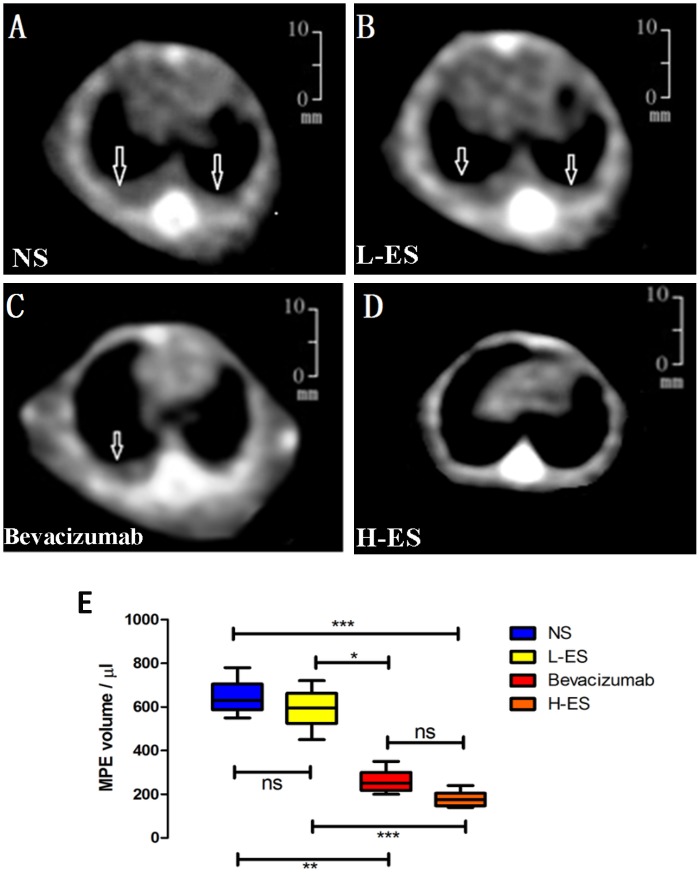
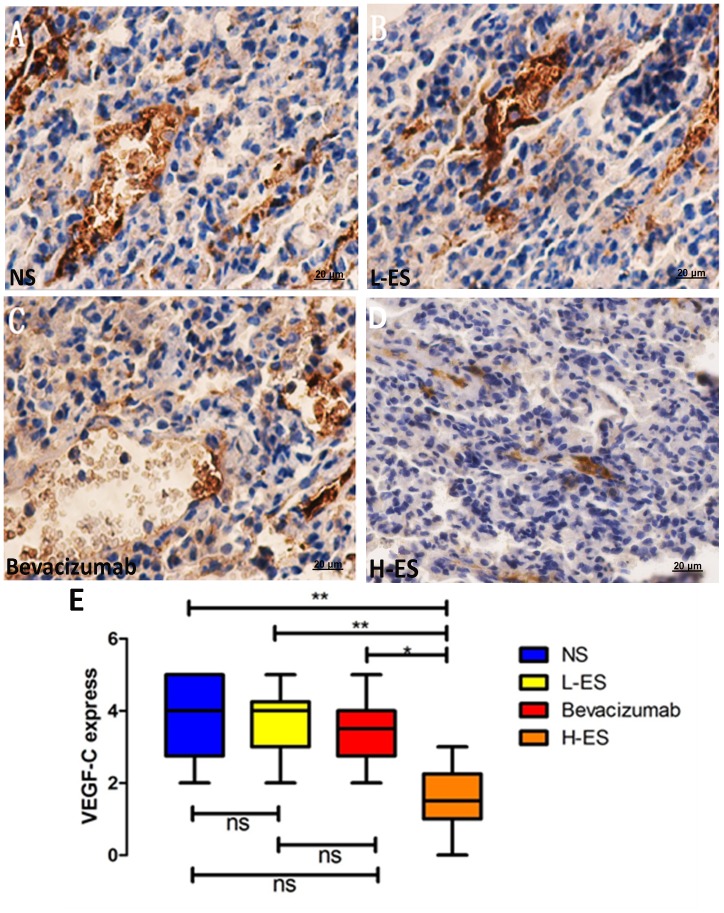
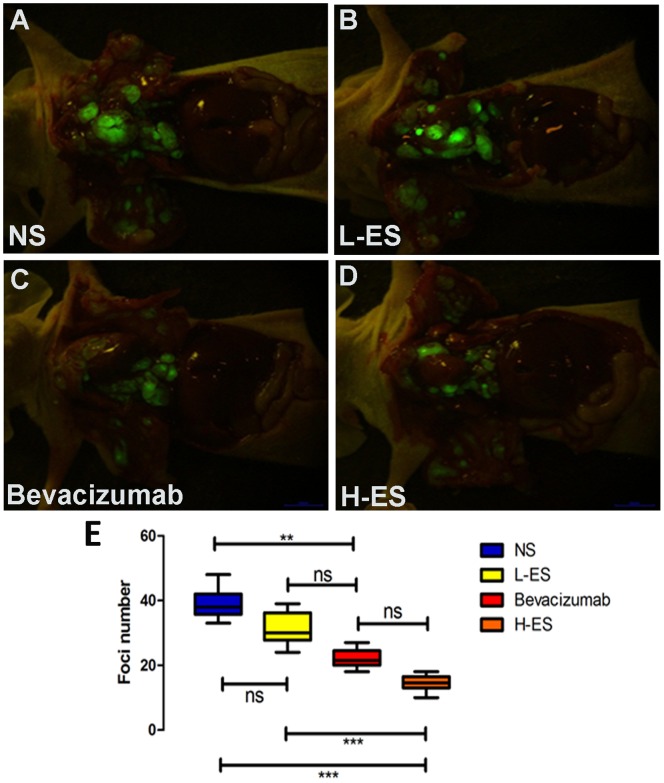
Lewis lung carcinoma (LLC) cell line expressing enhanced green fluorescent protein (EGFP) was injected into pleural cavity to establish MPE mice model. Mice were randomly divided into four groups. High dose of Endostar (30 mg/kg), low dose of Endostar (8 mg/kg), normal saline, or Bevacizumab (5 mg/kg) was respectively injected into pleural cavity three times with 3-day interval in each group. Transverse computed tomography (CT) was performed to observe pleural fluid formation 14 days after LLC cells injection. Mice were anesthetized and sacrificed 3 days after final administration. The volume of pleural effusion n was measured using 1 ml syringe. Micro blood vessel density (MVD), Lymphatic micro vessel density (LMVD), the expression level of vascular endothelial growth factor A (VEGF-A) and VEGF-C were observed by immunohistochemistry (IHC) staining.
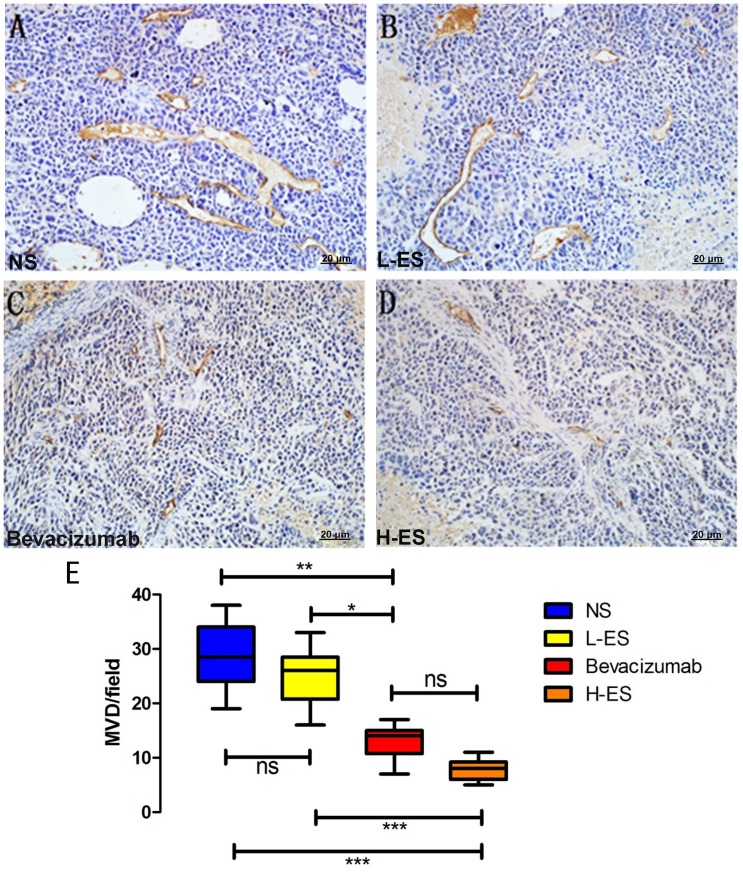
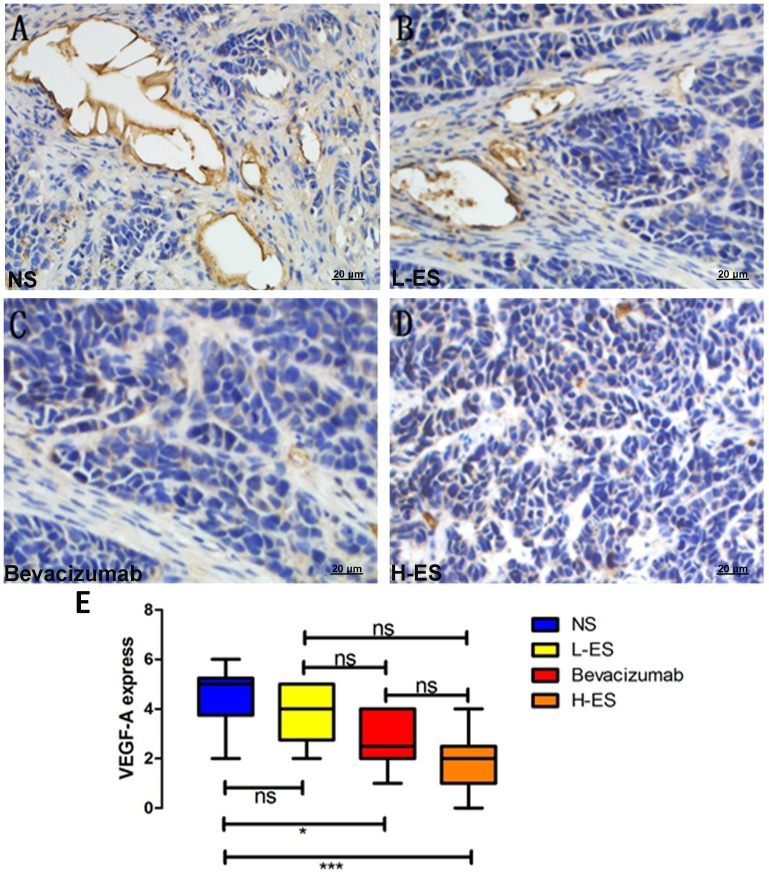
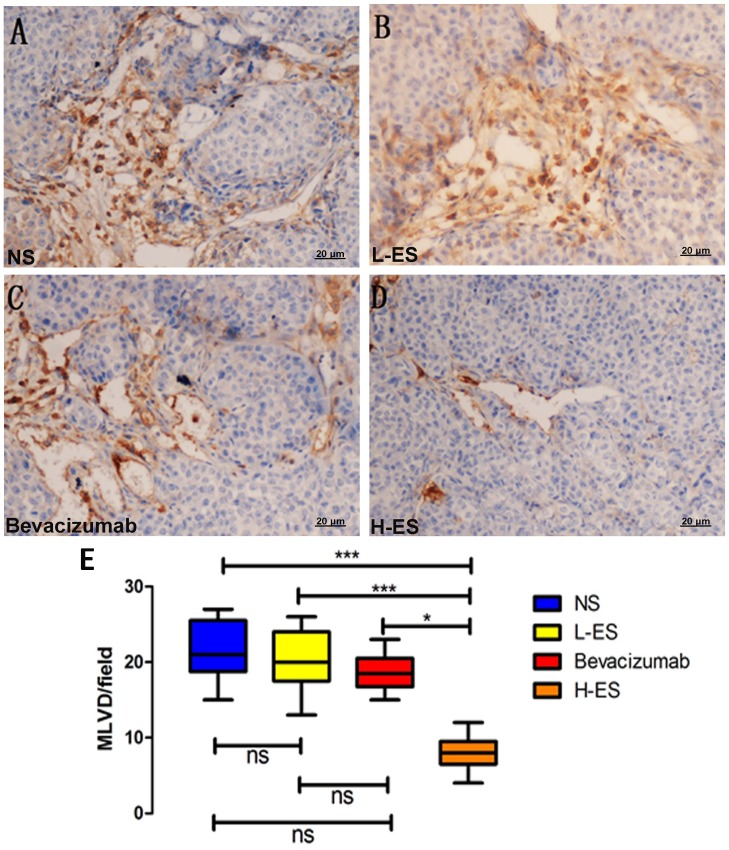
The volume of pleural effusion as well as the number of pleural tumor foci, MVD and the expression of VEGF-A were significantly reduced in high dose of Endostar treat group. More importantly, LMVD and the expression of VEGF-C were markedly lower in treat group than those in the other three control groups.
Our work demonstrated that Endostar played an efficient anti-cancer role in MPE through its suppressive effect on angiogenesis and lymphangiogenesis, which provided a certain theoretical basis for the effectiveness of Endostar on the MPE treatment.
恶性胸腔积液(MPE)是肺癌的常见并发症。一种广泛用于治疗 MPE 的方法是恩度,一种基于重组人血管内皮抑制素的治疗方法。然而,这种治疗方法的机制尚不清楚。本研究旨在探讨恩度在 MPE 小鼠中的作用。
将表达增强型绿色荧光蛋白(EGFP)的 Lewis 肺癌(LLC)细胞系注入胸腔,建立 MPE 小鼠模型。将小鼠随机分为四组。高剂量恩度(30mg/kg)、低剂量恩度(8mg/kg)、生理盐水或贝伐单抗(5mg/kg)分别在每组中每 3 天注射 3 次。注入 LLC 细胞后 14 天进行横断位计算机断层扫描(CT)观察胸腔积液形成情况。末次给药后 3 天麻醉并处死小鼠。用 1ml 注射器测量胸腔积液量。免疫组织化学(IHC)染色观察微血管密度(MVD)、淋巴管微血管密度(LMVD)、血管内皮生长因子 A(VEGF-A)和 VEGF-C 的表达水平。
高剂量恩度治疗组胸腔积液量、胸腔肿瘤灶数、MVD 及 VEGF-A 的表达均明显降低。更重要的是,治疗组 LMVD 和 VEGF-C 的表达明显低于其他三组对照组。
本研究表明,恩度通过抑制血管生成和淋巴管生成在 MPE 中发挥有效的抗癌作用,为恩度治疗 MPE 的有效性提供了一定的理论基础。