School of Pharmacy, Suresh Gyan Vihar University, Jaipur, India; Department of Pharmacology, Manipal College of Medical Sciences (MCOMS), Pokhara, Nepal.
BMC Int Health Hum Rights. 2013 Jan 3;13:3. doi: 10.1186/1472-698X-13-3.
Unsafe injection practices and injection overuse are widespread in developing countries harming the patient and inviting risks to the health care workers. In Nepal, there is a dearth of documented information about injection practices so the present study was carried out: a) to determine whether the selected government health facilities satisfy the conditions for safe injections in terms of staff training, availability of sterile injectable equipment and their proper disposal after use and b) to assess knowledge and attitudes of healthcare workers in these health care facilities with regard to injection safety.
A descriptive cross-sectional mixed type (qualitative and quantitative) survey was carried out from 18th May to 16th June 2012. In-depth interviews with the in-charges were conducted using a semi-structured questionnaire. Observation of the health facilities using a structured observation tool was done. The data were analysed manually by summarizing, tabulating and presenting in various formats.
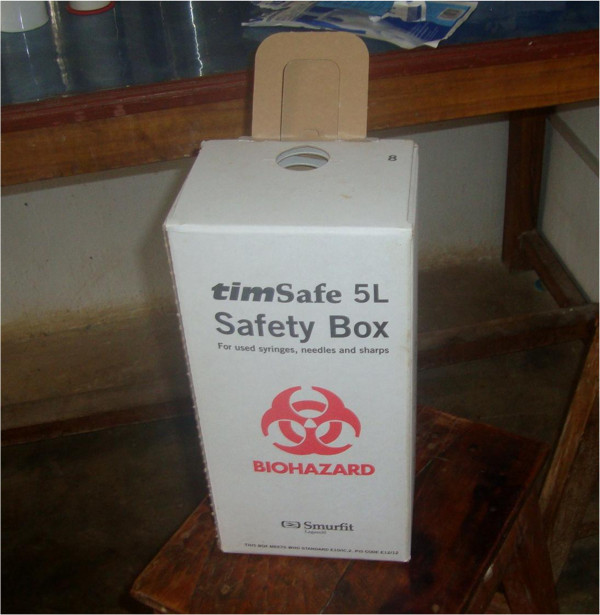
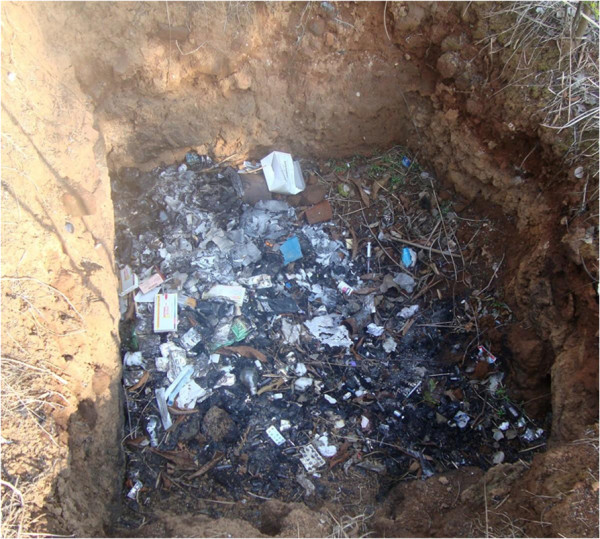
The in-charges (eight males, two females) who participated in the study ranged in age from 30 to 50 years with a mean age of 37.8 years. Severe infection followed by pain was the most important cause for injection use with injection Gentamicin being most commonly prescribed. New single use (disposable) injections and auto-disable syringes were used to inject curative drugs and vaccines respectively. Sufficient safety boxes were also supplied to dispose the used syringe. All health care workers had received full course of Hepatitis B vaccine and were knowledgeable about at least one pathogen transmitted through unsafe injection practices. Injection safety management policy and waste disposal guideline was not available for viewing in any of the facilities. The office staff who disposed the bio-medical wastes did so without taking any safety measures. Moreover, none of these staff had received any formal training in waste management.
Certain safe injection practices were noticed in the studied health care facilities but there remain a number of grey areas where unsafe practices still persists placing patient and health workers at risk of associated hazards. Training concentrating on injection safety, guidelines to dispose biomedical waste and monitoring of the activity is needed.
不安全的注射操作和过度注射在发展中国家普遍存在,这不仅危害患者,也对医护人员的健康构成威胁。尼泊尔缺乏关于注射操作的记录信息,因此进行了本项研究:a)确定选定的政府卫生机构在员工培训、无菌可注射设备的供应以及使用后适当处理方面是否符合安全注射条件;b)评估这些卫生保健机构中医疗保健工作者在注射安全方面的知识和态度。
2012 年 5 月 18 日至 6 月 16 日进行了描述性横断面混合类型(定性和定量)调查。使用半结构化问卷对负责人进行深入访谈。使用结构化观察工具对卫生机构进行观察。通过总结、制表和以各种格式呈现数据进行手动分析。
参与研究的负责人(8 名男性,2 名女性)年龄在 30 至 50 岁之间,平均年龄为 37.8 岁。严重感染和疼痛是注射的最重要原因,最常开的注射药物是庆大霉素。新的一次性(一次性)注射器和自毁式注射器分别用于注射治疗药物和疫苗。还提供了足够的安全盒来处理用过的注射器。所有医护人员均全程接种了乙肝疫苗,并且至少了解一种通过不安全注射操作传播的病原体。没有一个设施可以查看注射安全管理政策和废物处理指南。处理生物医学废物的办公室工作人员在处理废物时没有采取任何安全措施。此外,这些工作人员都没有接受过废物管理方面的正式培训。
在所研究的卫生保健机构中观察到了某些安全注射操作,但仍存在一些不安全操作仍然存在的灰色地带,这使患者和医护人员面临相关危害的风险。需要进行集中培训,内容包括注射安全、生物医学废物处理指南以及活动监测。