Genomics & Immunity, NIAMS, National Institutes of Health, Bethesda, MD 20892, USA.
Cell Rep. 2013 Jan 31;3(1):138-47. doi: 10.1016/j.celrep.2012.12.006. Epub 2013 Jan 3.
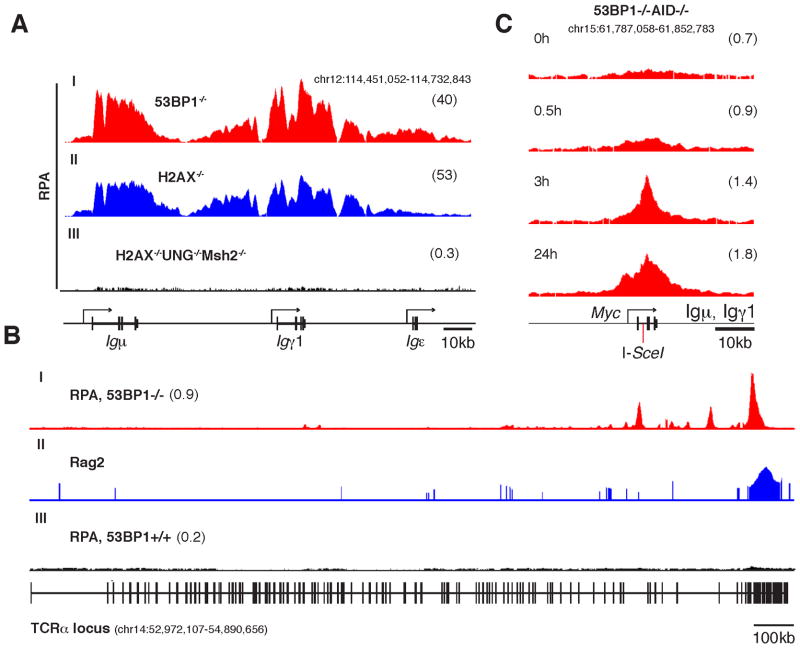
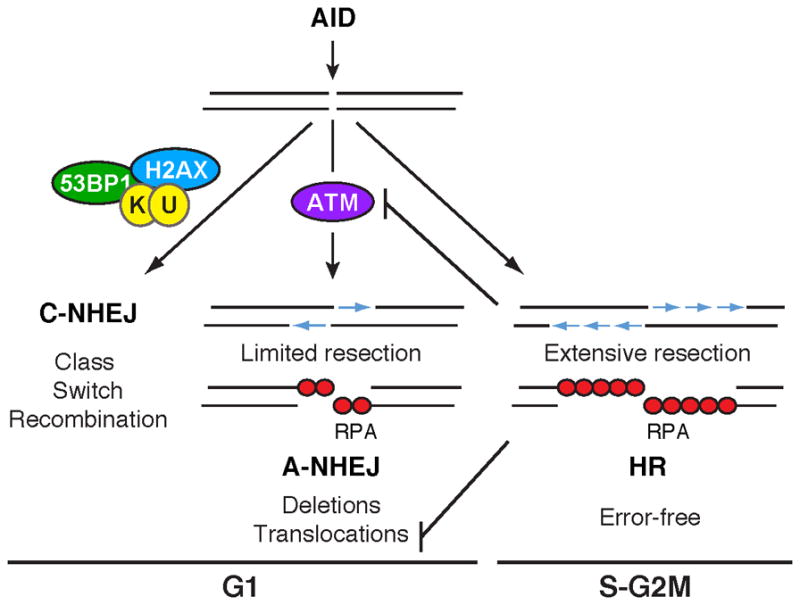
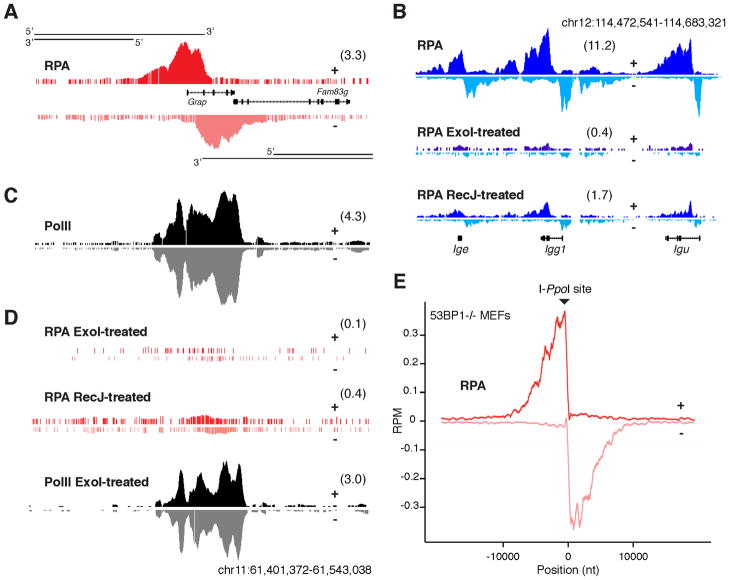
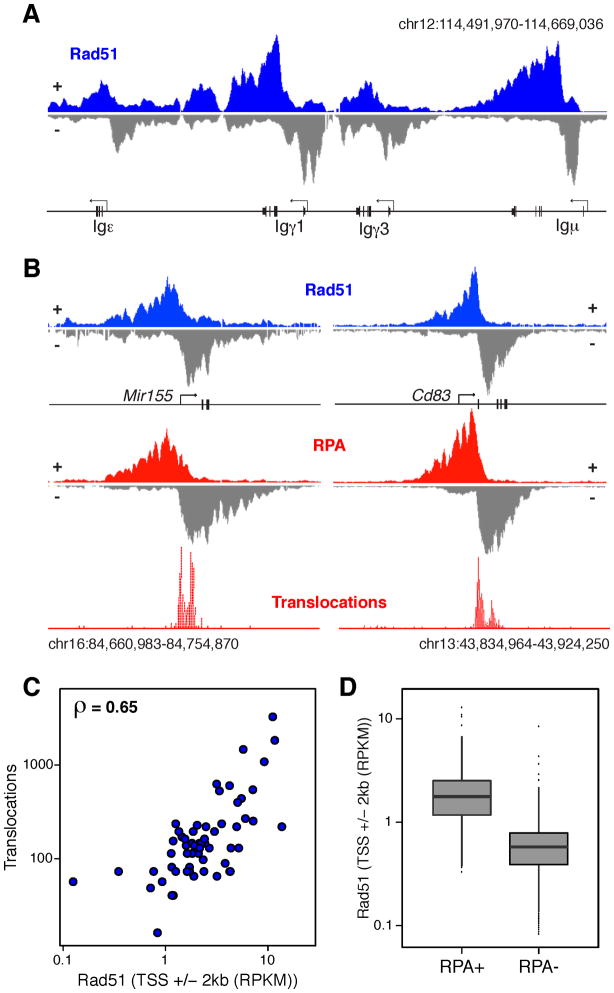
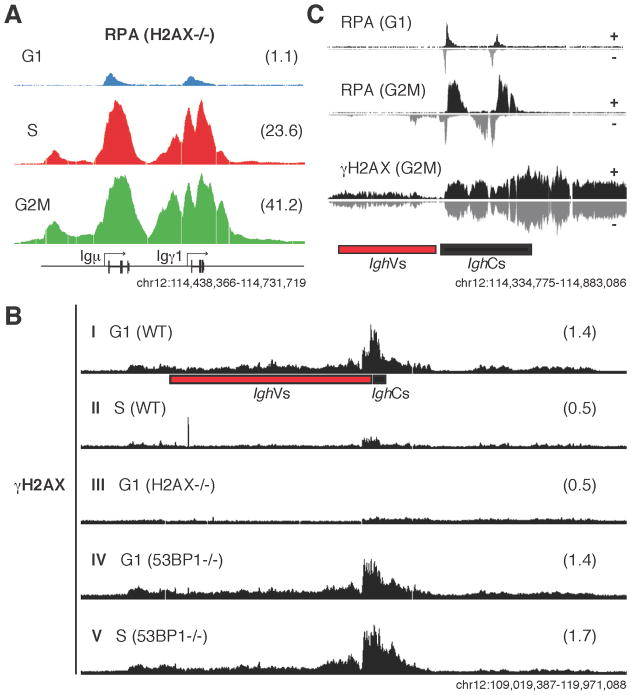
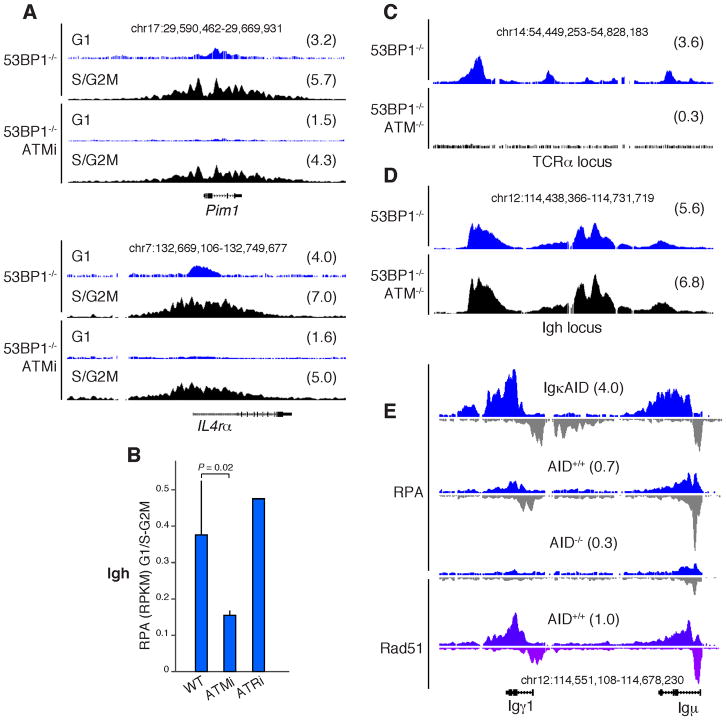
Activation-induced cytidine deaminase (AID) promotes chromosomal translocations by inducing DNA double-strand breaks (DSBs) at immunoglobulin (Ig) genes and oncogenes in the G1 phase. RPA is a single-stranded DNA (ssDNA)-binding protein that associates with resected DSBs in the S phase and facilitates the assembly of factors involved in homologous repair (HR), such as Rad51. Notably, RPA deposition also marks sites of AID-mediated damage, but its role in Ig gene recombination remains unclear. Here, we demonstrate that RPA associates asymmetrically with resected ssDNA in response to lesions created by AID, recombination-activating genes (RAG), or other nucleases. Small amounts of RPA are deposited at AID targets in G1 in an ATM-dependent manner. In contrast, recruitment in the S-G2/M phase is extensive, ATM independent, and associated with Rad51 accumulation. In the S-G2/M phase, RPA increases in nonhomologous-end-joining-deficient lymphocytes, where there is more extensive DNA-end resection. Thus, most RPA recruitment during class switch recombination represents salvage of unrepaired breaks by homology-based pathways during the S-G2/M phase of the cell cycle.
激活诱导胞嘧啶脱氨酶(AID)通过在 G1 期诱导免疫球蛋白(Ig)基因和癌基因中的 DNA 双链断裂(DSB),促进染色体易位。RPA 是一种单链 DNA(ssDNA)结合蛋白,它与 S 期切除的 DSB 结合,并促进同源修复(HR)相关因子的组装,如 Rad51。值得注意的是,RPA 的沉积也标志着 AID 介导的损伤部位,但它在 Ig 基因重组中的作用尚不清楚。在这里,我们证明 RPA 不对称地与 AID、重组激活基因(RAG)或其他核酶产生的损伤所产生的切除 ssDNA 结合。少量的 RPA 在 G1 期以 ATM 依赖的方式沉积在 AID 靶点上。相比之下,在 S-G2/M 期的募集则是广泛的、ATM 非依赖性的,并且与 Rad51 的积累相关。在 S-G2/M 期,非同源末端连接缺陷的淋巴细胞中 RPA 增加,其中 DNA 末端切除更为广泛。因此,在类别转换重组过程中,大多数 RPA 的募集代表了在细胞周期的 S-G2/M 期通过同源途径对未修复的断裂进行挽救。