Department of Polymer Science, The University of Akron, Akron, OH 44325-3909, USA.
Acta Biomater. 2013 Apr;9(4):6095-104. doi: 10.1016/j.actbio.2012.12.028. Epub 2013 Jan 2.
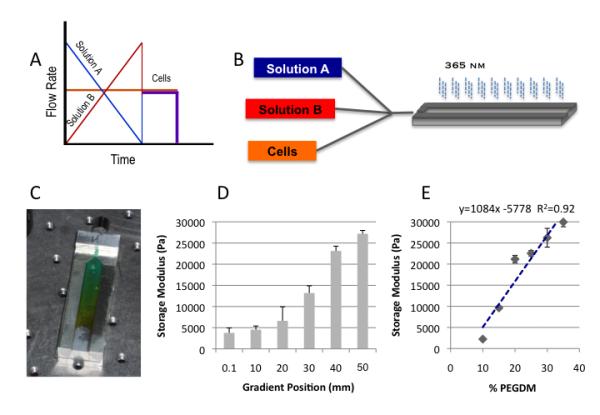
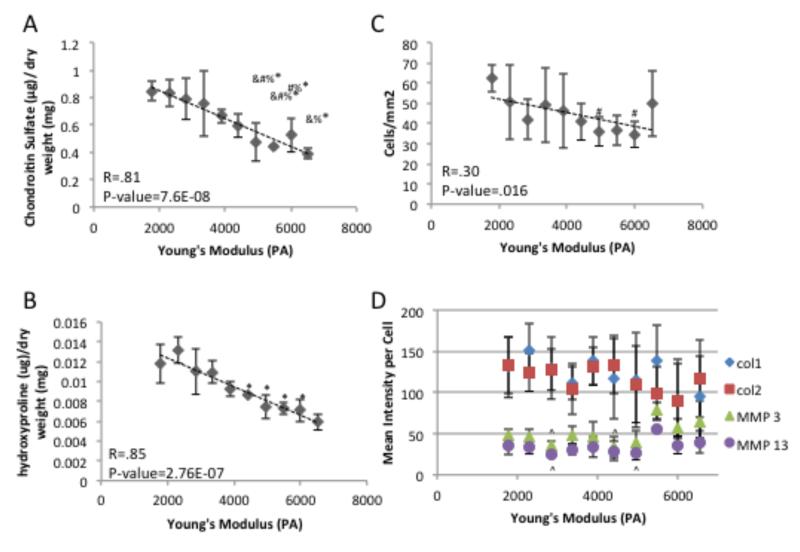
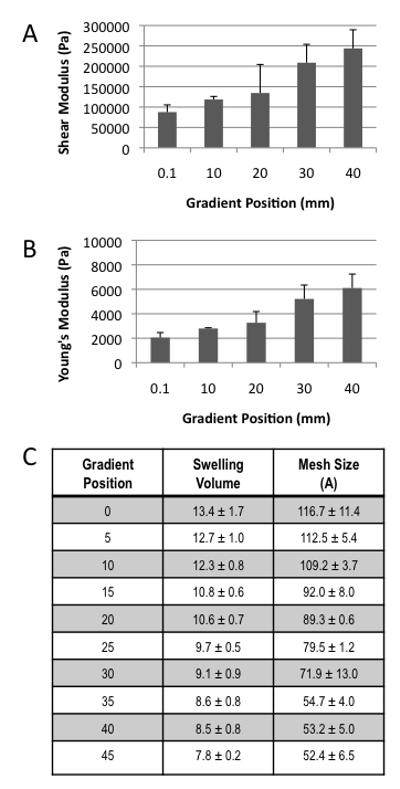
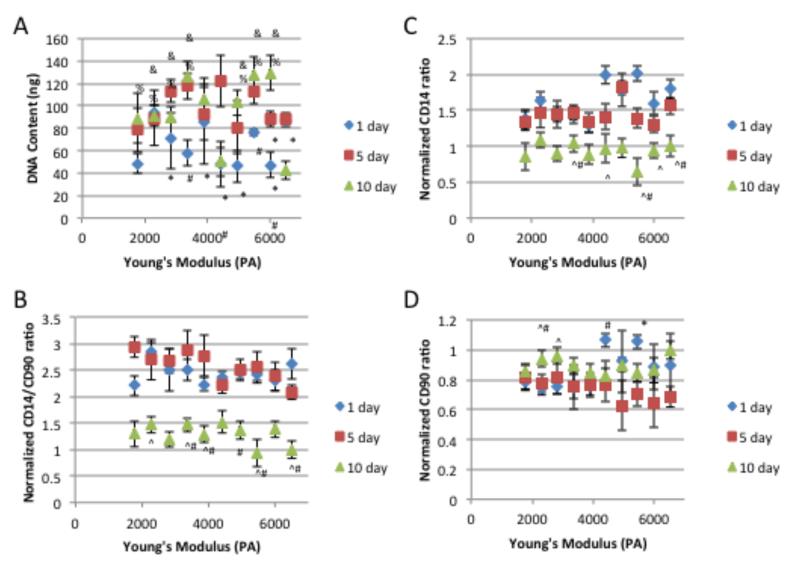
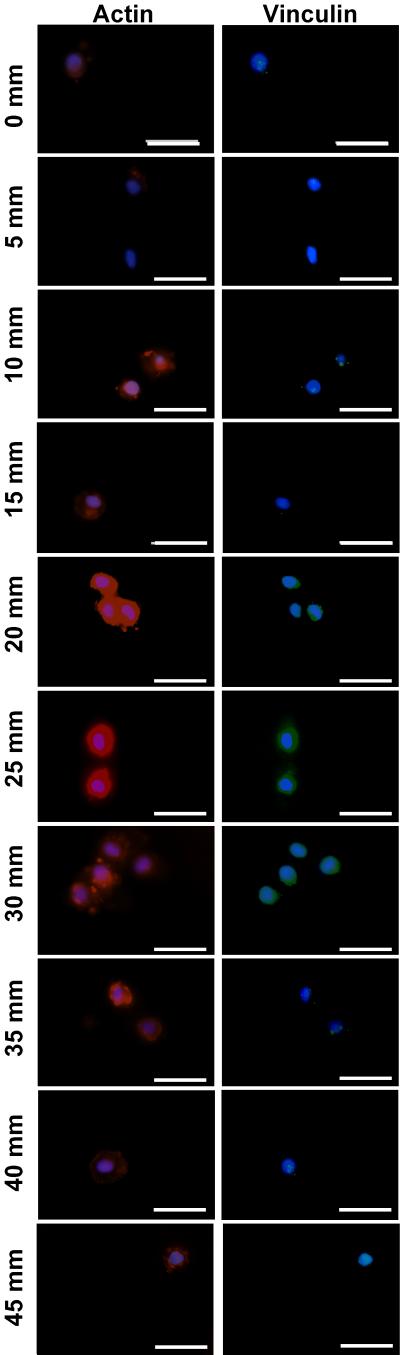
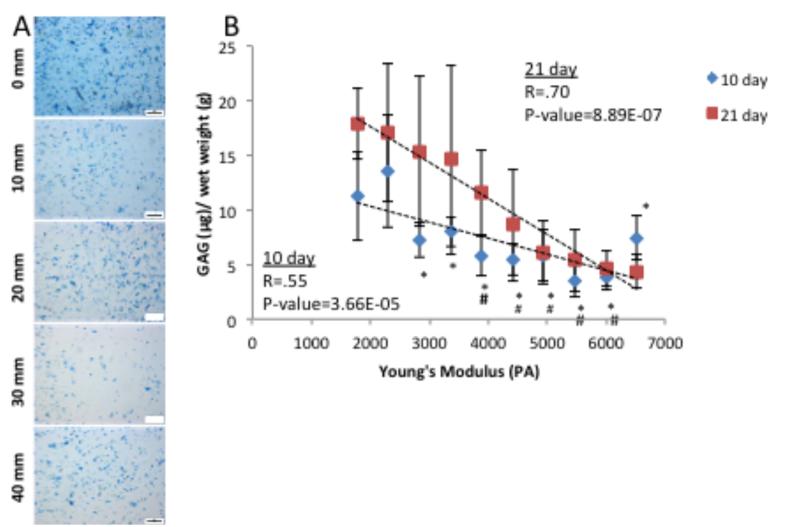
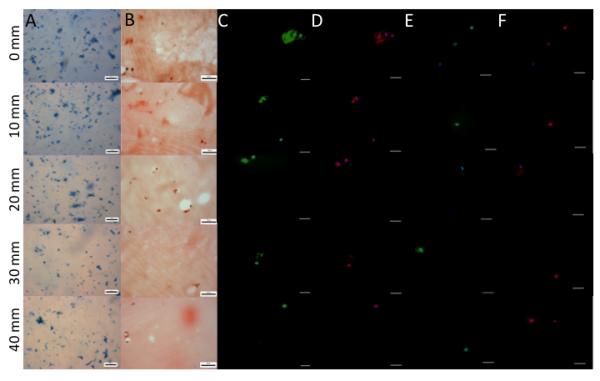
Efficient ex vivo methods for expanding primary human chondrocytes while maintaining the phenotype is critical to advancing the sourcing of autologous cells for tissue engineering applications. While there has been significant research reported in the literature, systematic approaches are necessary to determine and optimize the chemical and mechanical scaffold properties for hyaline cartilage generation using limited cell numbers. Functionalized hydrogels possessing continuous variations in physico-chemical properties are, therefore, an efficient three-dimensional platform for studying several properties simultaneously. Herein we describe a polyethylene glycol dimethacrylate (PEGDM) hydrogel system with a modulus gradient (27,000-3800 Pa) containing a uniform concentration of arginine-glycine-aspartic acid (RGD) peptide to enhance cell adhesion in order to correlate primary human osteoarthritic chondrocyte proliferation, phenotype maintenance, and extracellular matrix (ECM) production with hydrogel properties. Cell number and chondrogenic phenotype (CD14:CD90 ratios) were found to decline in regions with a higher storage modulus (>13,100 Pa), while regions with a lower storage modulus maintained their cell number and phenotype. Over 3 weeks culture hydrogel regions possessing a lower Young's modulus experienced an increase in ECM content (200%) compared with regions with a higher storage modulus. Variations in the amount and organization of the cytoskeletal markers actin and vinculin were observed within the modulus gradient, which are indicative of differences in chondrogenic phenotype maintenance and ECM expression. Thus scaffold mechanical properties have a significant impact in modulating human osteoarthritic chondrocyte behavior and tissue formation.
高效的原代人软骨细胞体外扩增方法,同时保持表型,对于推进组织工程应用中自体细胞的来源至关重要。虽然文献中有大量研究报道,但为了使用有限数量的细胞生成透明软骨,有必要采用系统方法来确定和优化化学和机械支架特性。因此,具有连续变化的物理化学特性的功能化水凝胶是研究多个特性的有效三维平台。在此,我们描述了一种聚乙二醇二甲基丙烯酸酯(PEGDM)水凝胶系统,其模量梯度(~27000-3800 Pa)中含有均匀浓度的精氨酸-甘氨酸-天冬氨酸(RGD)肽,以增强细胞黏附,从而将原代人骨关节炎软骨细胞的增殖、表型维持和细胞外基质(ECM)产生与水凝胶特性相关联。发现细胞数量和软骨分化表型(CD14:CD90 比值)在具有较高储能模量(>13100 Pa)的区域下降,而具有较低储能模量的区域保持其细胞数量和表型。在 3 周的培养中,具有较低杨氏模量的水凝胶区域的 ECM 含量增加了约 200%(与具有较高储能模量的区域相比)。在模量梯度内观察到细胞骨架标志物肌动蛋白和 vinculin 的数量和组织的变化,这表明软骨分化表型维持和 ECM 表达存在差异。因此,支架的机械性能对调节人骨关节炎软骨细胞的行为和组织形成有重要影响。