School of Public Health, Department of Health Sciences, University of Genoa, Genoa, Italy.
Psychol Res Behav Manag. 2012;5:185-90. doi: 10.2147/PRBM.S37714. Epub 2012 Dec 20.
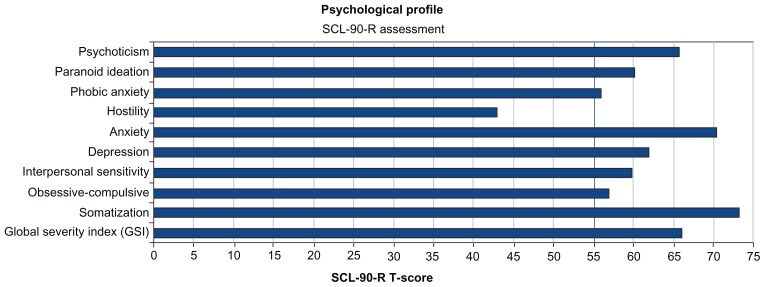
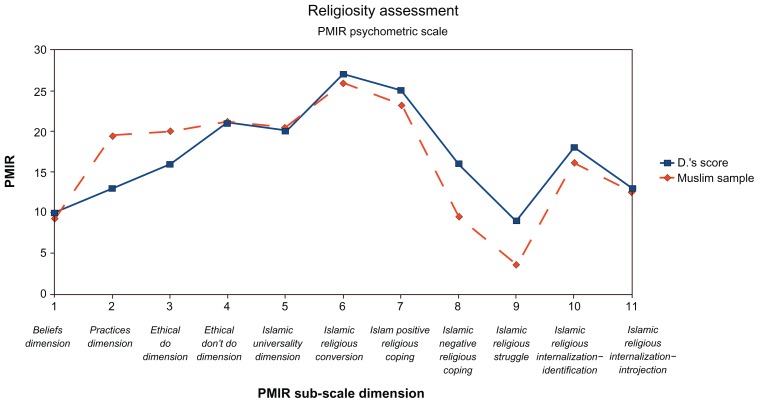
This clinical case report shows how important it is for a psychiatrist to have a knowledge of the cultural and religious context of the patient, in order to understand fully his or her complaints. Culture and religion, in fact, are not neutral, but convey symbols, meanings, and myths that should be properly explored to shed light on the patient's inner world. Patient D was a 19-year-old Muslim Italo-Tunisian girl, who consulted a psychiatrist for anxiety and panic attacks, and reported being possessed by djinns (ie, "evil creatures", as described in the Qur'an). A culturally informed interview was carried out, together with administration of psychometric scales, including the Symptom Checklist-90 Revised and Psychological Measure of Islamic Religiousness. Based on her scores and the results of this multidimensional assessment, patient D was treated with transcultural psychotherapy and fluoxetine. After a year of follow-up, she reported no further episodes of panic disorder. For proper assessment and treatment, a combined anthropological, sociological, and psychopathological approach was necessary.
本临床病例报告表明,精神科医生了解患者的文化和宗教背景非常重要,以便充分理解他/她的诉求。文化和宗教实际上并非中立,而是传递着符号、意义和神话,这些都需要进行适当的探索,以揭示患者的内心世界。患者 D 是一名 19 岁的穆斯林意大利-突尼斯女孩,因焦虑和惊恐发作咨询精神科医生,并报告自己被精灵附身(即《古兰经》中描述的“邪恶生物”)。进行了一次文化知情访谈,并同时进行了心理测量量表的管理,包括症状清单-90 修订版和心理测量的伊斯兰宗教信仰。基于她的得分和这种多维评估的结果,对患者 D 进行了跨文化心理治疗和氟西汀治疗。经过一年的随访,她报告没有再出现惊恐障碍发作。为了进行适当的评估和治疗,需要结合人类学、社会学和精神病理学的方法。