Department of Biomedical Sciences, University of Copenhagen, The Panum Institute, Copenhagen, Denmark.
Int J Obes (Lond). 2013 Sep;37(9):1161-8. doi: 10.1038/ijo.2012.208. Epub 2013 Jan 8.
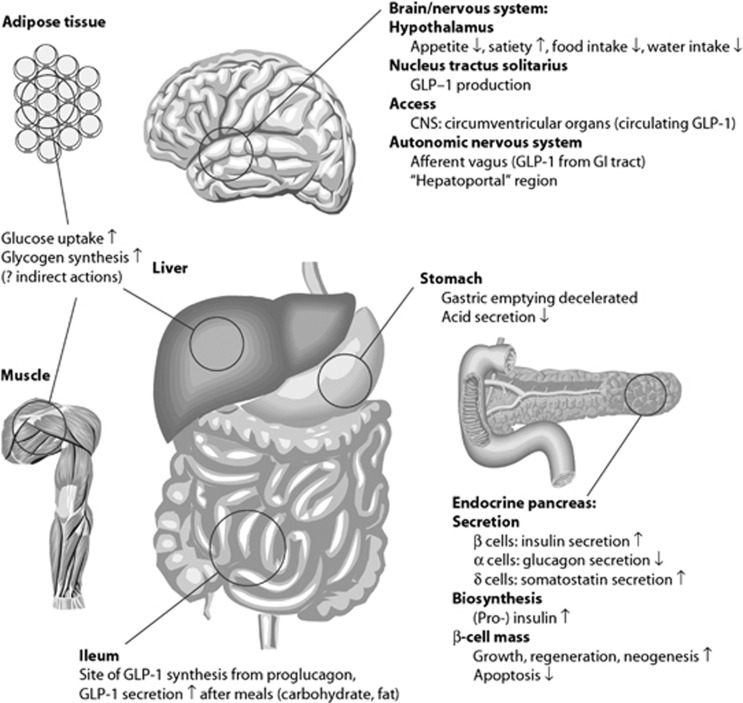
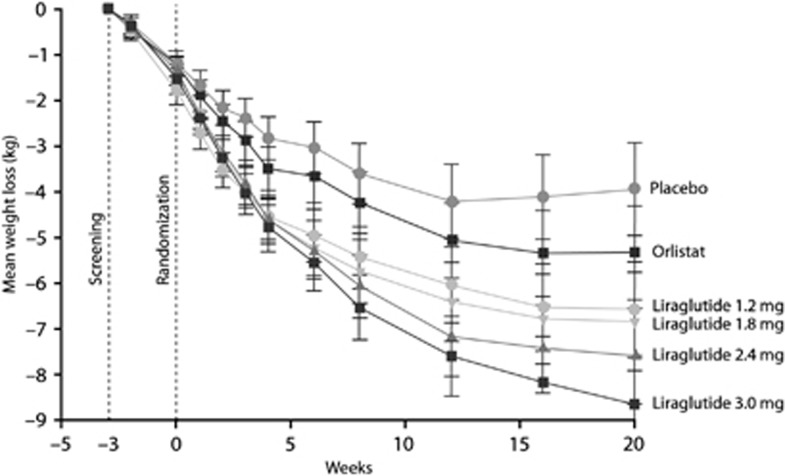
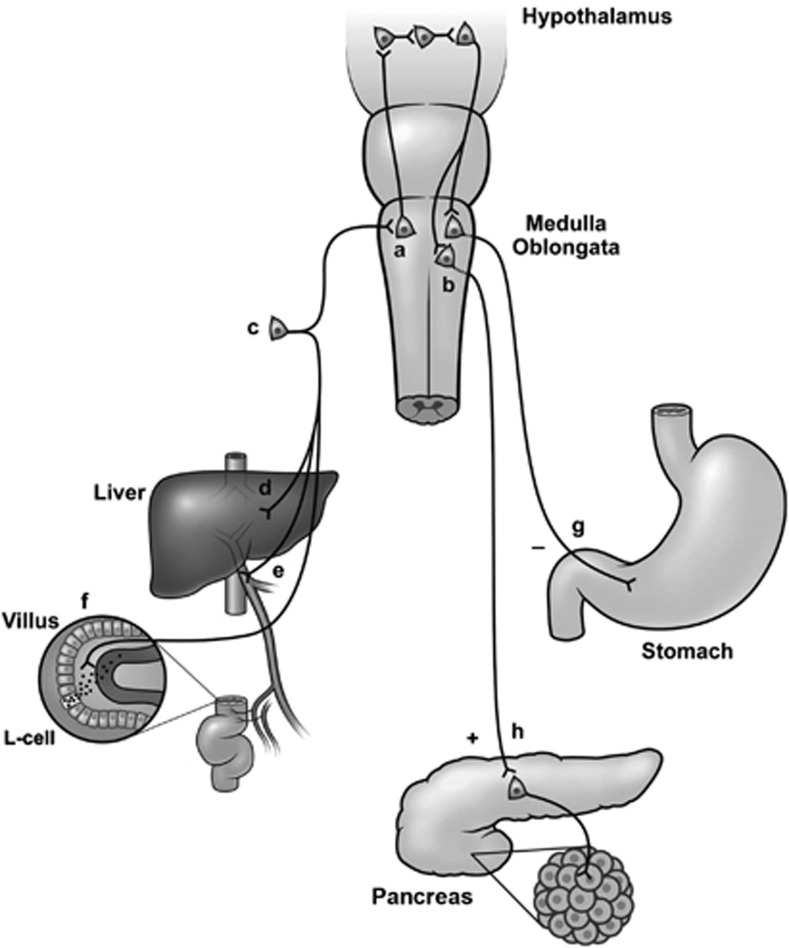
Recent research has indicated that appetite-regulating hormones from the gut may have therapeutic potential. The incretin hormone, glucagon-like peptide-1 (GLP-1), appears to be involved in both peripheral and central pathways mediating satiation. Several studies have also indicated that GLP-1 levels and responses to meals may be altered in obese subjects. Clinical trial results have shown further that two GLP-1 receptor agonists (GLP-1 RAs), exenatide and liraglutide, which are approved for the treatment of hyperglycemia in patients with type 2 diabetes, also produce weight loss in overweight subjects without diabetes. Thus, GLP-1 RAs may provide a new option for pharmacological treatment of obesity.
最近的研究表明,来自肠道的调节食欲的激素可能具有治疗潜力。肠促胰岛素激素,胰高血糖素样肽-1(GLP-1),似乎参与介导饱腹感的外周和中枢途径。几项研究还表明,肥胖受试者的 GLP-1 水平和对膳食的反应可能会发生改变。临床试验结果还进一步表明,两种 GLP-1 受体激动剂(GLP-1 RAs),艾塞那肽和利拉鲁肽,已被批准用于治疗 2 型糖尿病患者的高血糖症,也可使无糖尿病的超重受试者减轻体重。因此,GLP-1 RAs 可能为肥胖的药物治疗提供新的选择。