Department of Anatomy, School of Medicine, College of Medicine, Taipei Medical University, Taipei, Taiwan.
PLoS One. 2013;8(1):e53444. doi: 10.1371/journal.pone.0053444. Epub 2013 Jan 2.
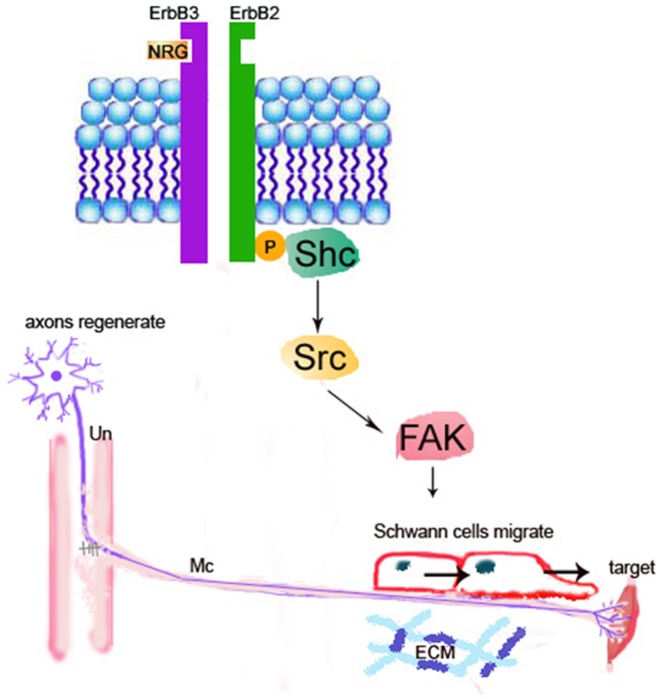
Adequate migration of Schwann cells (Sc) is crucial for axon-guidance in the regenerative process after peripheral nerve injury (PNI). Considering neuregulin-erbB-FAK signaling is an essential pathway participating in the regulation of Sc migration during development, the present study is aimed to examine whether neuregulin would exert its beneficial effects on adult following PNI and further determine the potential changes of downstream pathway engaged in neuro-regeneration by both in vitro and in vivo approaches.
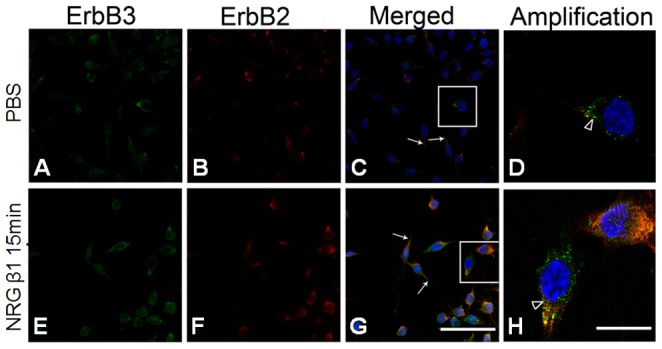
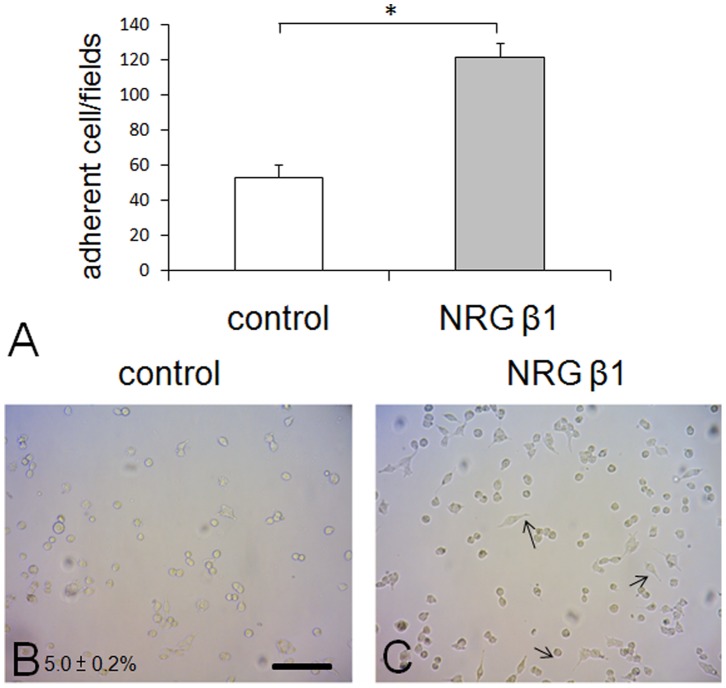
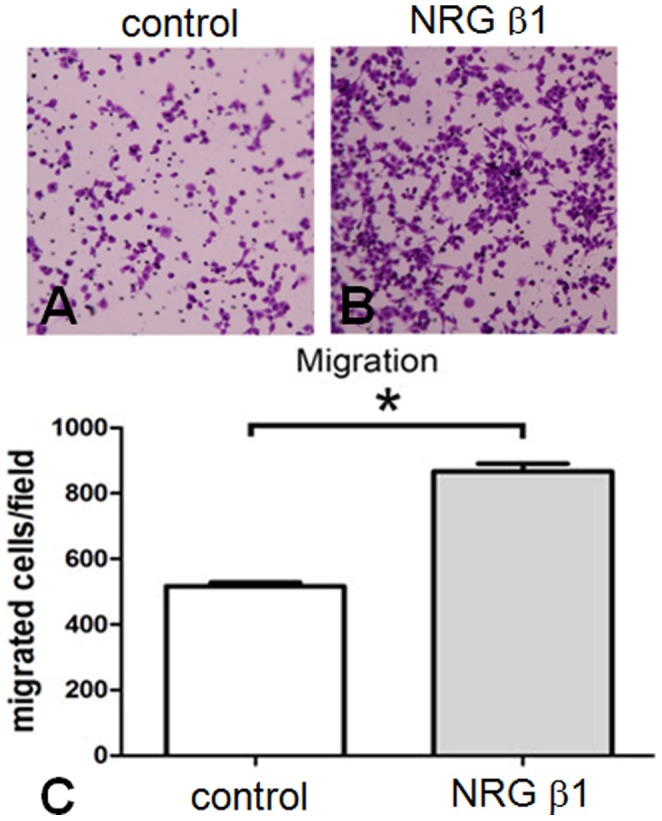
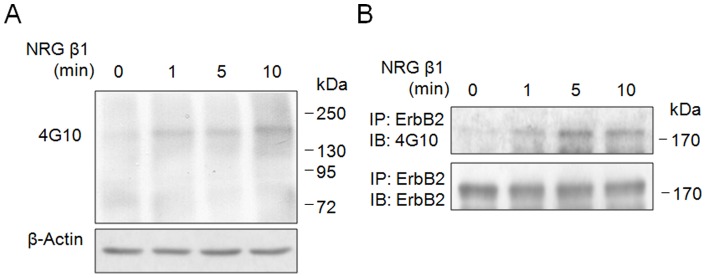
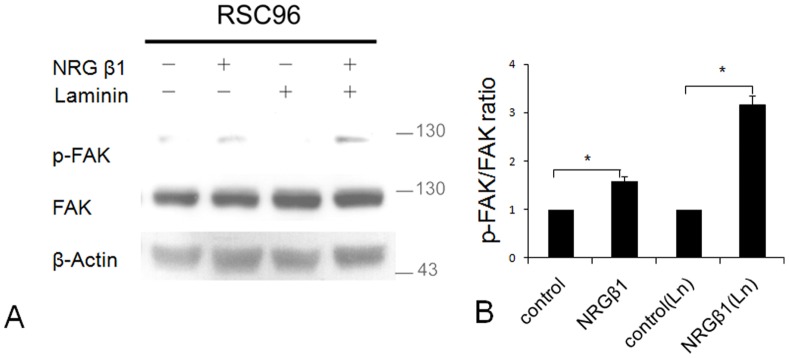
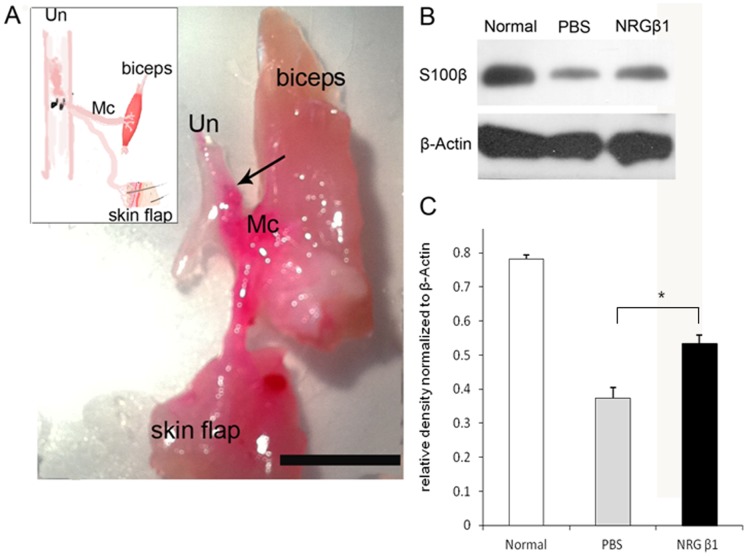
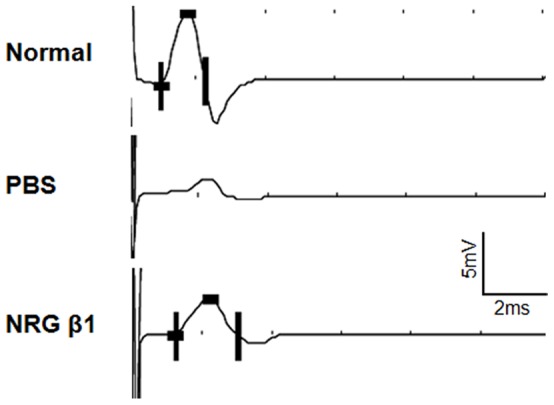
Cultured RSC96 cells treated with neuregulin were processed for erbB2/3 immunofluorescence and FAK immunoblotings. The potential effects of neuregulin on Sc were assessed by cell adherence, spreading, and migration assays. In order to evaluate the functional significance of neuregulin on neuro-regeneration, the in vivo model of PNI was performed by chronic end-to-side neurorrhaphy (ESN). In vitro studies indicated that after neuregulin incubation, erbB2/3 were not only expressed in cell membranes, but also distributed throughout the cytoplasm and nucleus of RSC96 cells. Activation of erbB2/3 was positively correlated with FAK phosphorylation. Neuregulin also increases Sc adherence, spreading, and migration by 127.2 ± 5.0%, 336.8 ± 3.0%, and 80.0 ± 5.7%, respectively. As for in vivo study, neuregulin significantly accelerates the speed of Sc migration and increases Sc expression in the distal stump of injured nerves. Retrograde labeling and compound muscle action potential recordings (CMAP) also showed that neuregulin successfully facilitates nerve regeneration by eliciting noticeably larger CMAP and promoting quick re-innervation of target muscles.
As neuregulin successfully improves axo-glial interaction by speeding Sc migration via the erbB2/3-FAK pathway, therapeutic use of neuregulin may thus serve as a promising strategy to facilitate the progress of nerve regeneration after PNI.
施万细胞(Schwann cells,Sc)的充分迁移对于周围神经损伤(peripheral nerve injury,PNI)后的轴突导向至关重要。鉴于神经调节蛋白-表皮生长因子受体(neuregulin-erbB-FAK)信号通路是参与发育过程中 Sc 迁移调节的重要途径,本研究旨在检验神经调节蛋白是否会在外周神经损伤后对成年个体发挥有益作用,并进一步通过体外和体内方法确定参与神经再生的下游途径的潜在变化。
用神经调节蛋白处理培养的 RSC96 细胞,进行 erbB2/3 免疫荧光和 FAK 免疫印迹。通过细胞黏附、铺展和迁移实验评估神经调节蛋白对 Sc 的潜在影响。为了评估神经调节蛋白对神经再生的功能意义,通过慢性端侧神经吻合术(chronic end-to-side neurorrhaphy,ESN)建立 PNI 的体内模型。体外研究表明,神经调节蛋白孵育后,erbB2/3 不仅表达在细胞膜上,而且分布在 RSC96 细胞的细胞质和核内。erbB2/3 的激活与 FAK 磷酸化呈正相关。神经调节蛋白还分别使 Sc 的黏附、铺展和迁移增加 127.2±5.0%、336.8±3.0%和 80.0±5.7%。对于体内研究,神经调节蛋白显著加速 Sc 的迁移速度,并增加损伤神经远端残端的 Sc 表达。逆行标记和复合肌肉动作电位记录(CMAP)也表明,神经调节蛋白通过引起明显更大的 CMAP 并促进靶肌肉的快速再神经支配,成功促进神经再生。
神经调节蛋白通过 erbB2/3-FAK 通路加速 Sc 迁移,从而成功改善轴突-胶质相互作用,因此神经调节蛋白的治疗用途可能是促进 PNI 后神经再生进展的有前途的策略。