Laboratory of Viral Diseases, National Institute of Allergy and Infectious Diseases, National Institutes of Health, Bethesda, MD 20892, USA.
Sci Transl Med. 2013 Jan 9;5(167):167ra5. doi: 10.1126/scitranslmed.3005145.
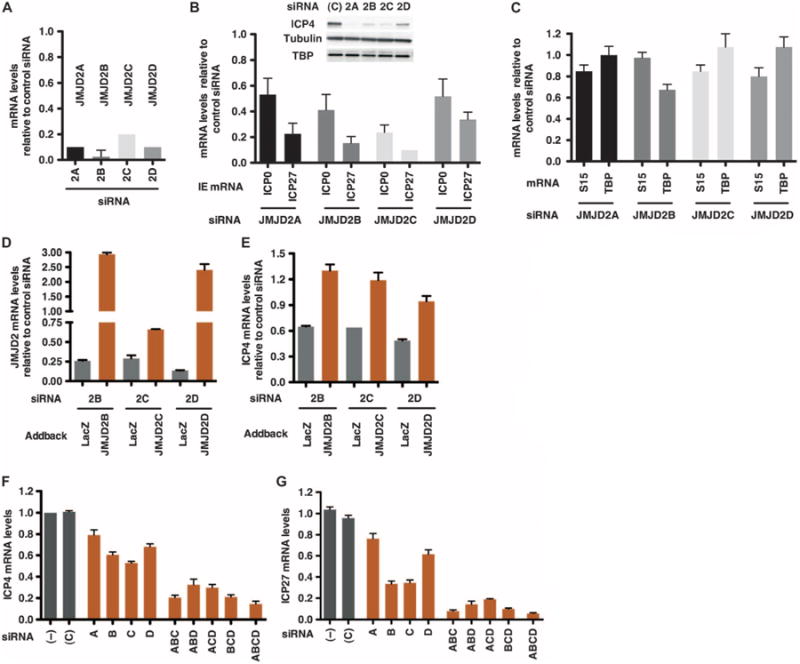
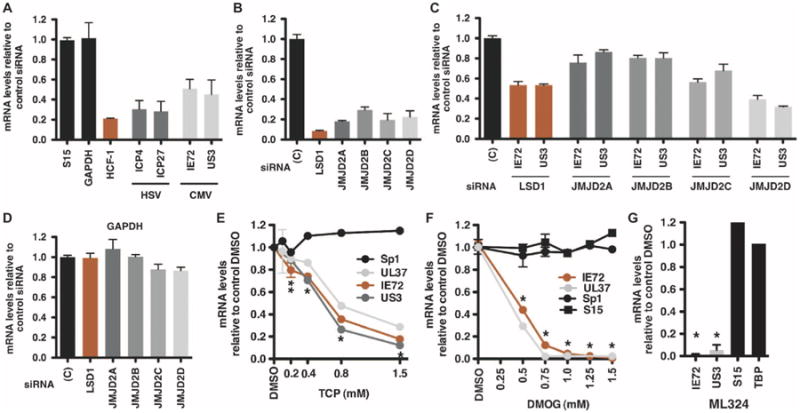
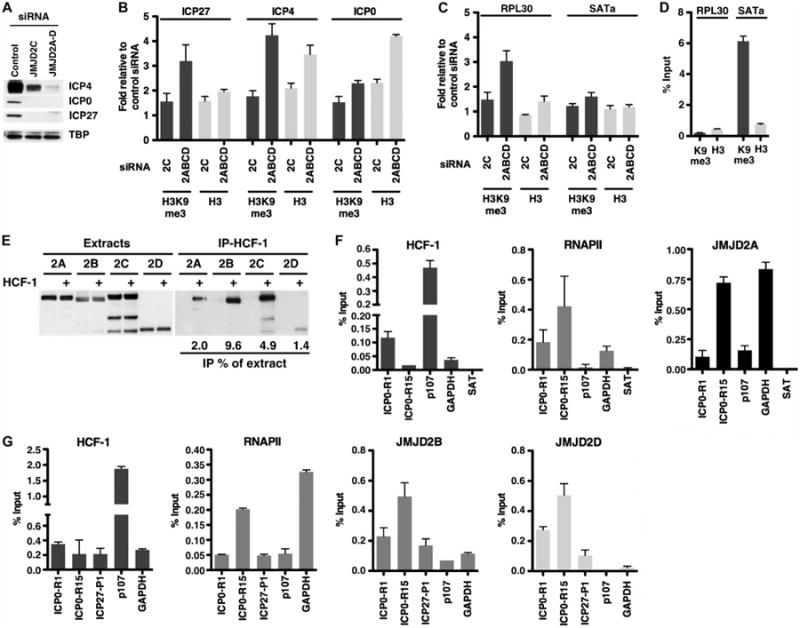
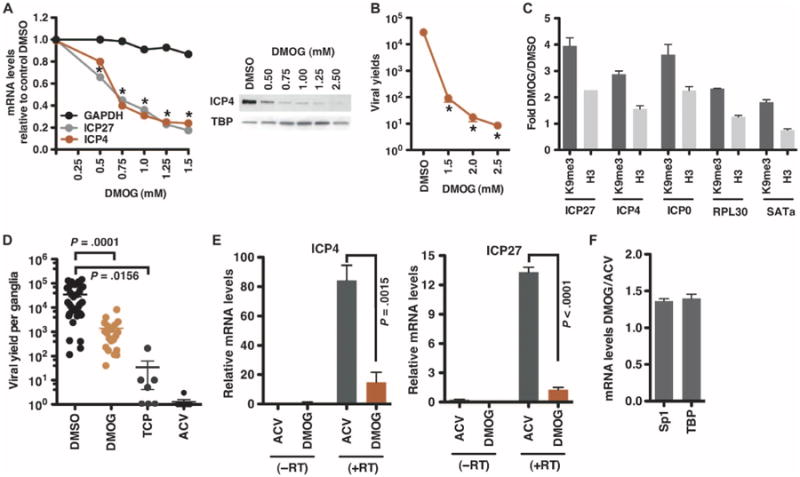
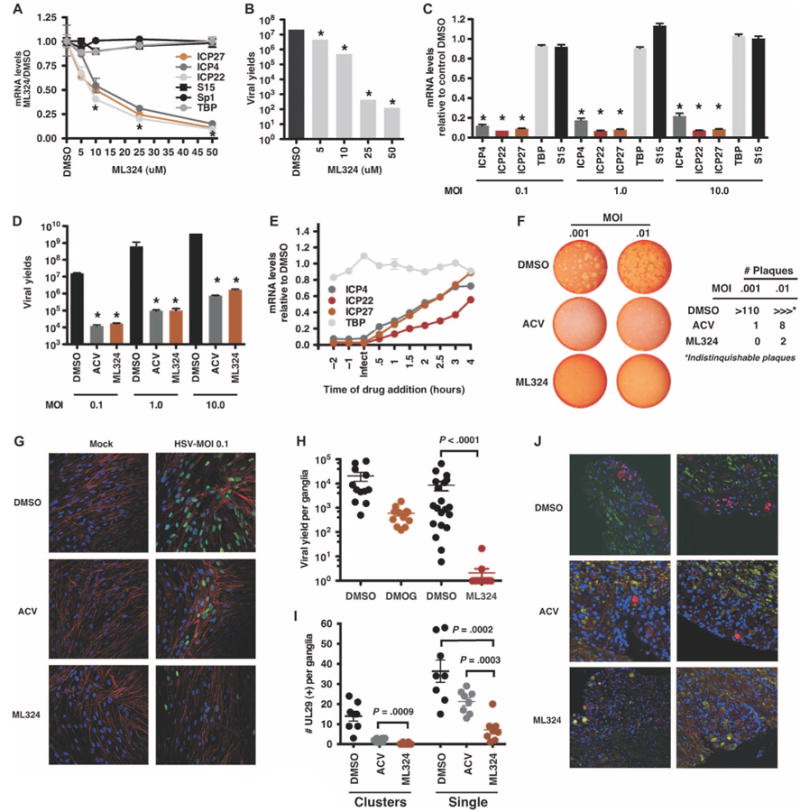
Chromatin and the chromatin modulation machinery not only provide a regulatory matrix for enabling cellular functions such as DNA replication and transcription but also regulate the infectious cycles of many DNA viruses. Elucidation of the components and mechanisms involved in this regulation is providing targets for the development of new antiviral therapies. Initiation of infection by herpes simplex virus (HSV) requires the activity of several cellular chromatin modification enzymes including the histone demethylases LSD1 and the family of JMJD2 proteins that promote transcriptional activation of the initial set of viral genes. Depletion of the JMJD2 members or inhibition of their activity with a new drug results in repression of expression of viral immediate early genes and abrogation of infection. This inhibitor also represses the reactivation of HSV from the latent state in sensory neurons. Like HSV, the β-herpesvirus human cytomegalovirus also requires the activity of LSD1 and the JMJD2s to initiate infection, thus demonstrating the potential of this chromatin-based inhibitor to be useful against a variety of different viruses.
染色质和染色质调节机制不仅为细胞功能(如 DNA 复制和转录)提供了一个调节基质,还调节了许多 DNA 病毒的感染周期。阐明参与这种调节的成分和机制为开发新的抗病毒疗法提供了目标。单纯疱疹病毒 (HSV) 的感染起始需要几种细胞染色质修饰酶的活性,包括组蛋白去甲基酶 LSD1 和 JMJD2 蛋白家族,它们促进初始病毒基因集的转录激活。JMJD2 成员的耗竭或用新药抑制其活性会导致病毒即刻早期基因的表达受到抑制,感染被阻断。这种抑制剂还抑制了潜伏在感觉神经元中的 HSV 的重新激活。与 HSV 一样,β-疱疹病毒人类巨细胞病毒也需要 LSD1 和 JMJD2s 的活性来启动感染,因此证明了这种基于染色质的抑制剂在对抗多种不同病毒方面具有潜在的用途。