Gan Xin, Wang Haifeng, Yu Yanyan, Yi Wei, Zhu Shanshan, Li En, Liang Yu
China Novartis Institutes for Biomedical Research, 4218 JinKe Rd, Pudong, Shanghai, P.R. China.
PLoS One. 2017 Apr 13;12(4):e0175390. doi: 10.1371/journal.pone.0175390. eCollection 2017.
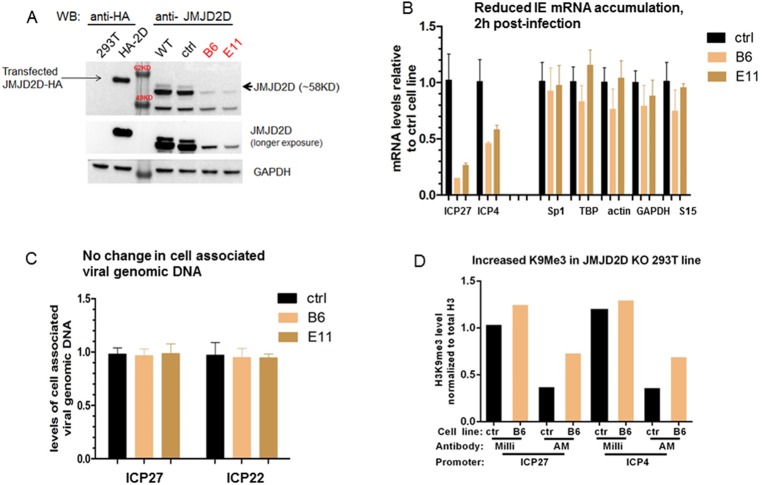
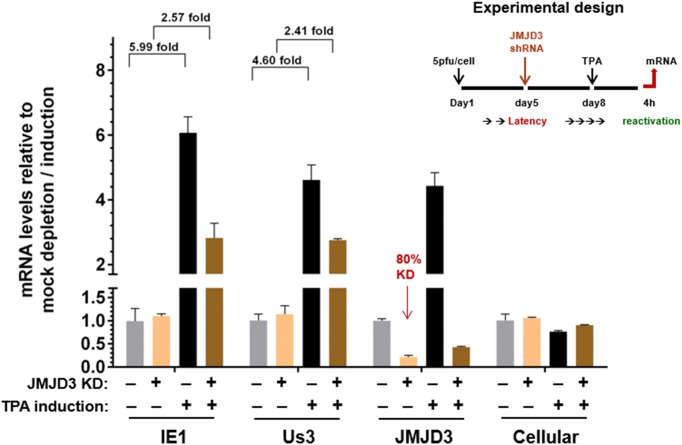
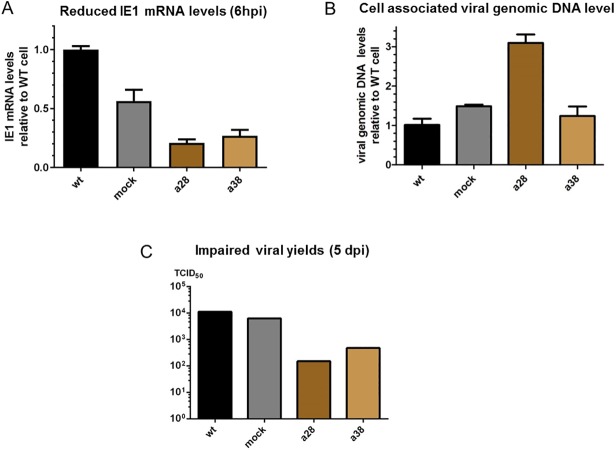
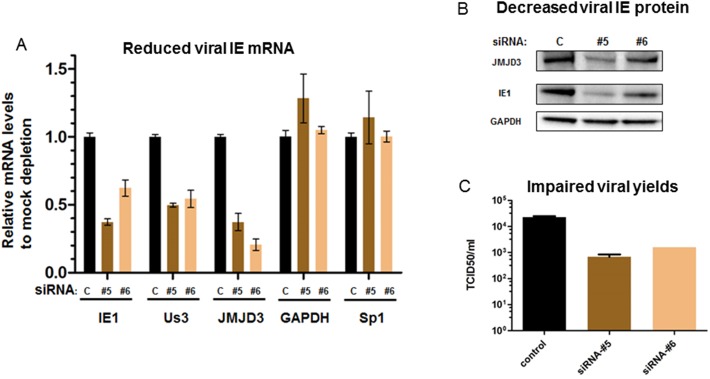
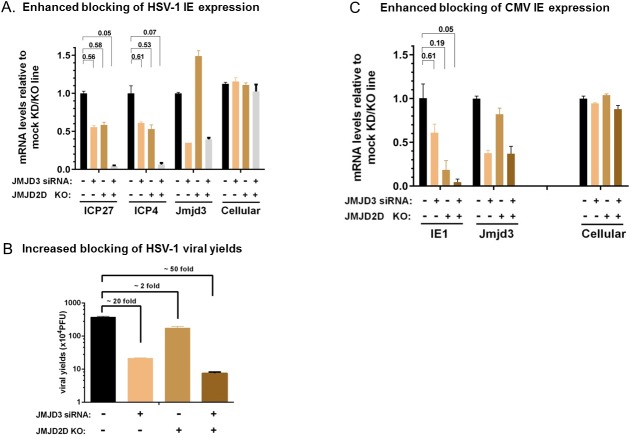
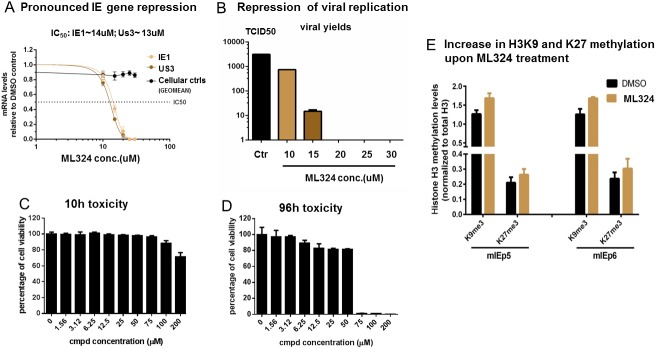
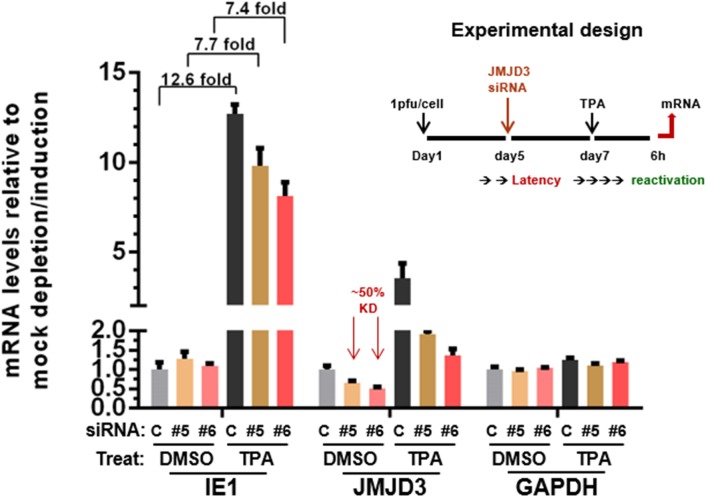
Human Cytomegalovirus (hCMV) infects a broad range of the population and establishes life-long latency in the infected individuals. Periodically the latently infected virus can reactivate and becomes a significant cause of morbidity and mortality in immunocompromised individuals. In latent infection, the viral genome is suppressed in a heterochromatic state and viral gene transcription is silenced. Upon reactivation, the repressive chromatin is remodeled to an active form, allowing viral lytic gene transcription, initiated by the expression of viral Immediate Early (IE) genes. During this process, a number of histone modification enzymes, including histone demethylases (HDMs), play important roles in driving IE expression, but the mechanisms involved are not fully understood. To get a better understanding of these mechanisms, we focused on two HDMs, KDM4 and KDM6, which reverse the repressive histone H3-lysine 9 and lysine 27 methylation, respectively. Our studies show that in lytic infection, both demethylases are important in the activation of viral IE gene expression. Simultaneous disruption of both via genetic or chemical methods leads to severely impaired viral IE gene expression and viral replication. Additionally, in an experimental latency-reactivation model in THP-1 cells, the KDM6 family member JMJD3 is induced upon viral reactivation and its knockdown resulted in reduced IE gene transcription. These findings suggest pharmacological inhibition of these HDMs may potentially block hCMV lytic infection and reactivation, and control the viral infection associated diseases, which are of significant unmet medical needs.
人巨细胞病毒(hCMV)感染广泛人群,并在受感染个体中建立终身潜伏感染。潜伏感染的病毒会周期性地重新激活,成为免疫功能低下个体发病和死亡的重要原因。在潜伏感染中,病毒基因组被抑制在异染色质状态,病毒基因转录沉默。重新激活时,抑制性染色质被重塑为活性形式,允许病毒裂解基因转录,这由病毒立即早期(IE)基因的表达启动。在此过程中,许多组蛋白修饰酶,包括组蛋白去甲基化酶(HDMs),在驱动IE表达中起重要作用,但其中涉及的机制尚未完全了解。为了更好地理解这些机制,我们聚焦于两种HDMs,KDM4和KDM6,它们分别逆转抑制性组蛋白H3赖氨酸9和赖氨酸27的甲基化。我们的研究表明,在裂解感染中,这两种去甲基化酶在病毒IE基因表达的激活中都很重要。通过基因或化学方法同时破坏这两种酶会导致病毒IE基因表达和病毒复制严重受损。此外,在THP-1细胞的实验性潜伏-重新激活模型中,病毒重新激活时会诱导KDM6家族成员JMJD3,敲低它会导致IE基因转录减少。这些发现表明,对这些HDMs的药理抑制可能潜在地阻断hCMV裂解感染和重新激活,并控制与病毒感染相关的疾病,这些疾病存在重大未满足的医疗需求。