International Centre for Reproductive Health, Ghent University, De Pintelaan 185 UZP 114, Gent 9000, Belgium.
BMC Public Health. 2013 Jan 14;13:31. doi: 10.1186/1471-2458-13-31.
Adolescents in Latin America are at high risk for unwanted and unplanned pregnancies, which often result in unsafe abortions or poor maternal health outcomes. Both young men and women in the region face an increased risk of sexually transmitted infections due to inadequate sexual and reproductive health information, services and counselling. To date, many adolescent health programmes have targeted a single determinant of sexual and reproductive health. However, recent evidence suggests that the complexity of sexual and reproductive health issues demands an equally multi-layered and comprehensive approach.
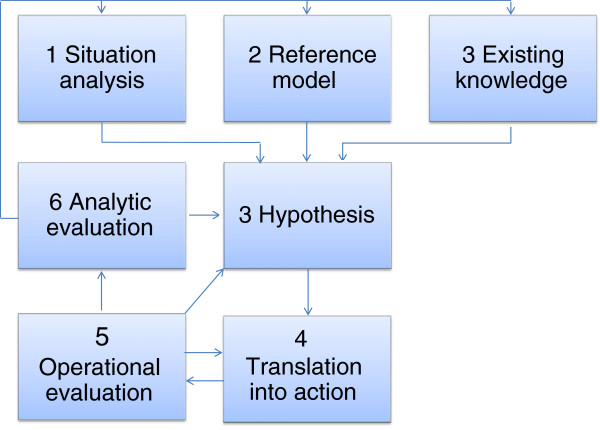
This article describes the development, implementation and evaluation design of the community-embedded reproductive health care for adolescents (CERCA) study in three Latin American cities: Cochabamba (Bolivia), Cuenca (Ecuador) and Managua (Nicaragua). Project CERCA's research methodology builds on existing methodological frameworks, namely: action research, community based participatory research and intervention-mapping.The interventions in each country address distinct target groups (adolescents, parents, local authorities and health providers) and seek improvement of the following sexual health behaviours: communication about sexuality, sexual and reproductive health information-seeking, access to sexual and reproductive health care and safe sexual relationships.In Managua, we implemented a randomised controlled study, and in Cochabamba and Cuenca we adopted a non-randomised controlled study to evaluate the effectiveness of Project CERCA interventions, in addition to a process evaluation.
This research will result in a methodological framework that will contribute to the improved design and implementation of future adolescent sexual and reproductive health interventions.
ClinicalTrials.gov (NCT01722084).
拉丁美洲的青少年面临着意外怀孕和计划外怀孕的高风险,这往往导致不安全的堕胎或较差的产妇健康结果。该地区的年轻男女由于性健康和生殖健康信息、服务和咨询不足,面临更高的性传播感染风险。迄今为止,许多青少年健康计划都针对性健康和生殖健康的单一决定因素。然而,最近的证据表明,性健康和生殖健康问题的复杂性需要同样多层次和全面的方法。
本文描述了在拉丁美洲的三个城市(玻利维亚的科恰班巴、厄瓜多尔的昆卡和尼加拉瓜的马那瓜)开展的社区嵌入式青少年生殖健康护理(CERCA)研究的开发、实施和评估设计。CERCA 项目的研究方法建立在现有的方法论框架之上,即:行动研究、社区参与式研究和干预映射。每个国家的干预措施针对不同的目标群体(青少年、家长、地方当局和卫生提供者),旨在改善以下性健康行为:关于性的沟通、性健康和生殖健康信息的获取、获得性健康和生殖健康护理以及安全性行为。在马那瓜,我们实施了一项随机对照研究,在科恰班巴和昆卡,我们采用了非随机对照研究来评估 CERCA 项目干预措施的有效性,此外还进行了过程评估。
这项研究将产生一个方法论框架,有助于改善未来青少年性健康和生殖健康干预措施的设计和实施。
ClinicalTrials.gov(NCT01722084)。