Department of Chemical and Biological Engineering, Industrial Biotechnology, Chalmers University of Technology, Göteborg SE-412 96, Sweden.
Biotechnol Biofuels. 2013 Jan 14;6(1):2. doi: 10.1186/1754-6834-6-2.
While simultaneous saccharification and co-fermentation (SSCF) is considered to be a promising process for bioconversion of lignocellulosic materials to ethanol, there are still relatively little demo-plant data and operating experiences reported in the literature. In the current work, we designed a SSCF process and scaled up from lab to demo scale reaching 4% (w/v) ethanol using xylose rich corncobs.
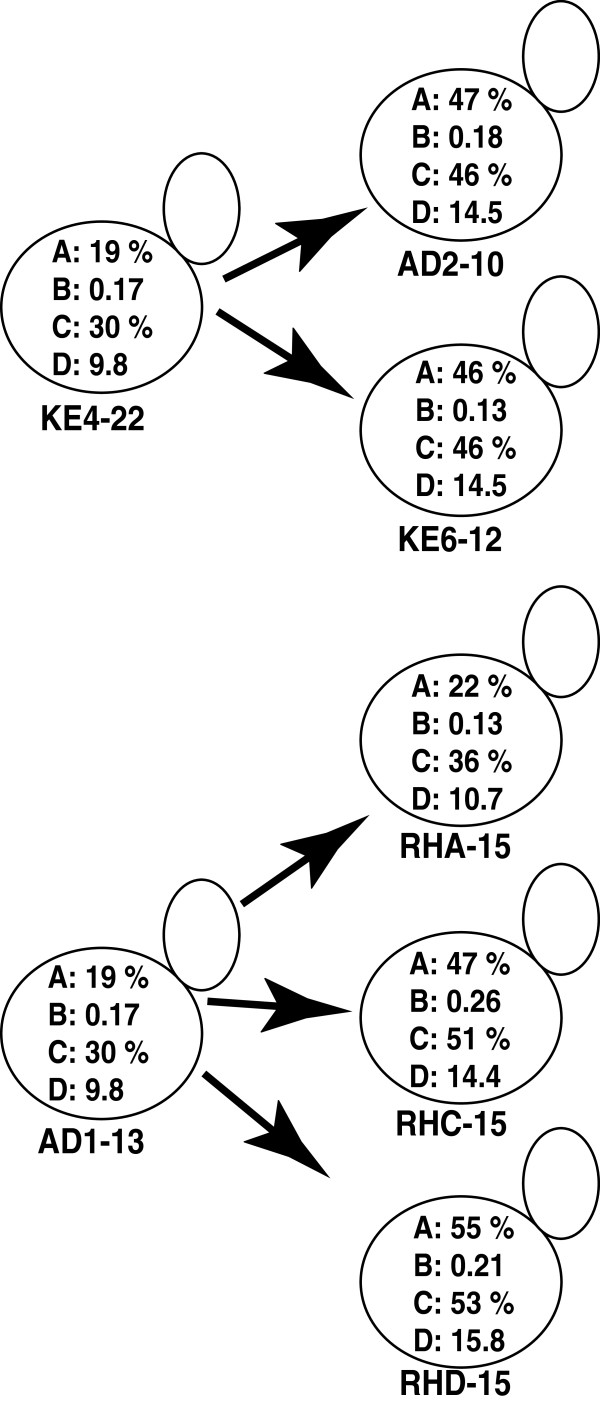
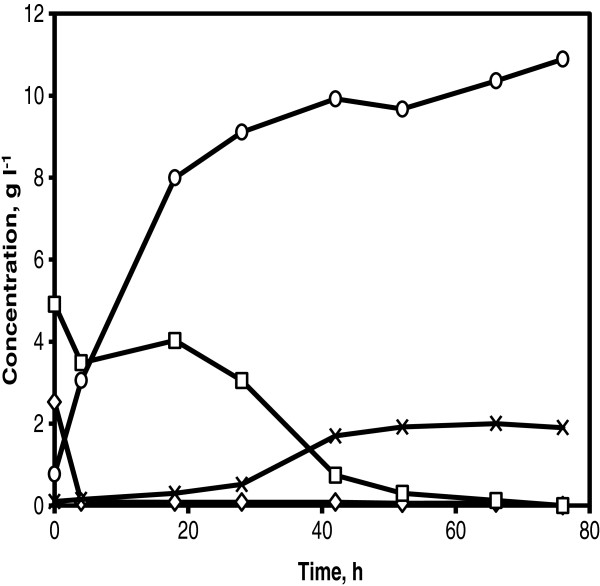
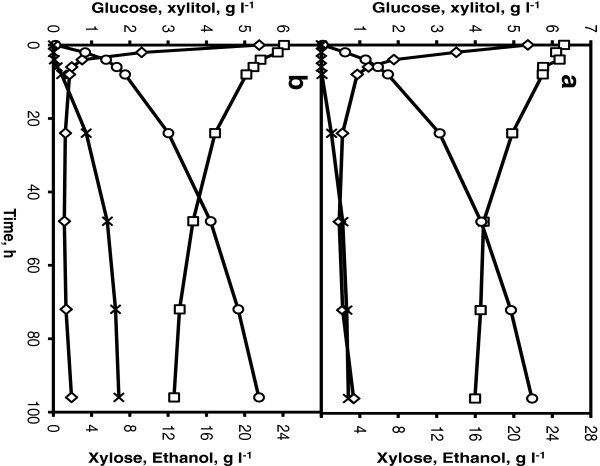
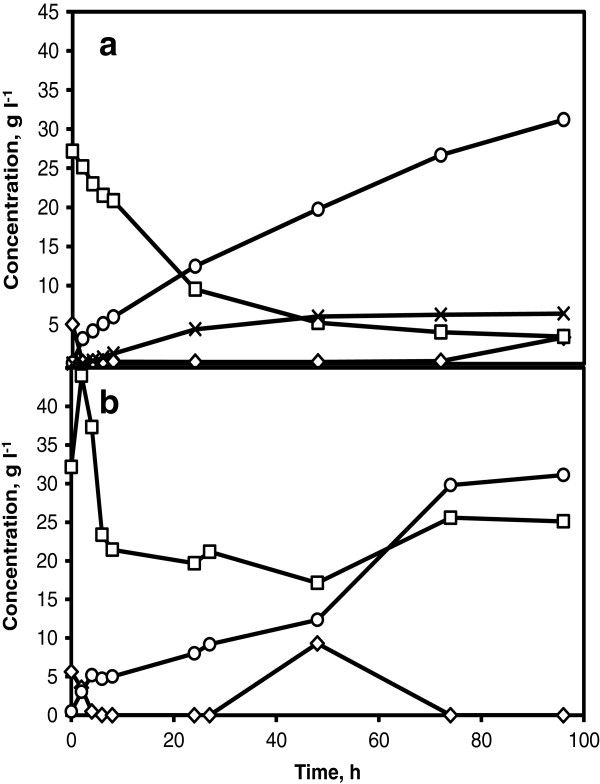
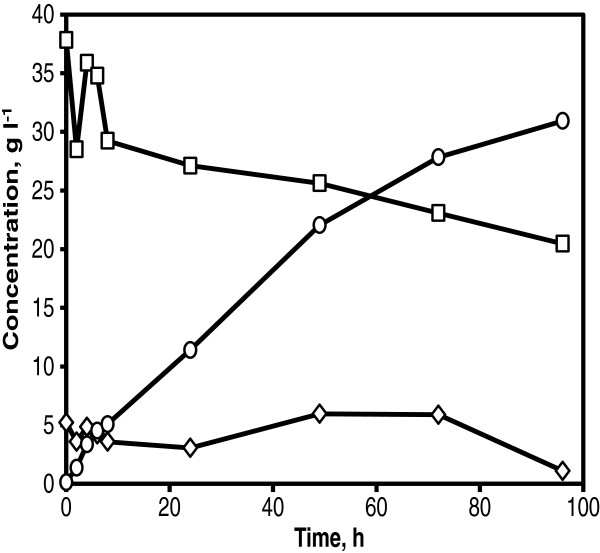
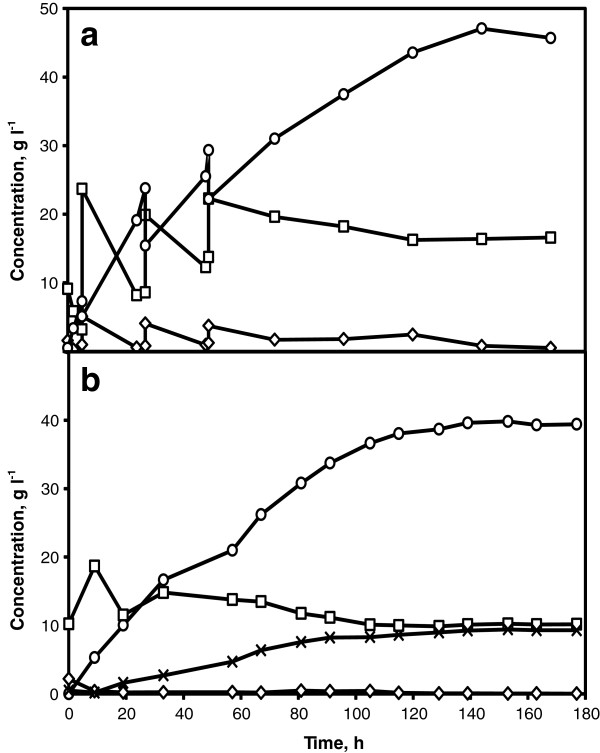
Seven different recombinant xylose utilizing Saccharomyces cerevisiae strains were evaluated for their fermentation performance in hydrolysates of steam pretreated corncobs. Two strains, RHD-15 and KE6-12 with highest ethanol yield and lowest xylitol yield, respectively were further screened in SSCF using the whole slurry from pretreatment. Similar ethanol yields were reached with both strains, however, KE6-12 was chosen as the preferred strain since it produced 26% lower xylitol from consumed xylose compared to RHD-15. Model SSCF experiments with glucose or hydrolysate feed in combination with prefermentation resulted in 79% of xylose consumption and more than 75% of the theoretical ethanol yield on available glucose and xylose in lab and PDU scales. The results suggest that for an efficient xylose conversion to ethanol controlled release of glucose from enzymatic hydrolysis and low levels of glucose concentration must be maintained throughout the SSCF. Fed-batch SSCF in PDU with addition of enzymes at three different time points facilitated controlled release of glucose and hence co-consumption of glucose and xylose was observed yielding 76% of the theoretical ethanol yield on available glucose and xylose at 7.9% water insoluble solids (WIS). With a fed-batch SSCF in combination with prefermentation and a feed of substrate and enzymes 47 and 40 g l-1 of ethanol corresponding to 68% and 58% of the theoretical ethanol yield on available glucose and xylose were produced at 10.5% WIS in PDU and demo scale, respectively. The strain KE6-12 was able to completely consume xylose within 76 h during the fermentation of hydrolysate in a 10 m3 demo scale bioreactor.
The potential of SSCF is improved in combination with prefermentation and a feed of substrate and enzymes. It was possible to successfully reproduce the fed-batch SSCF at demo scale producing 4% (w/v) ethanol which is the minimum economical requirement for efficient lignocellulosic bioethanol production process.
虽然同步糖化和共发酵(SSCF)被认为是将木质纤维素材料生物转化为乙醇的很有前途的过程,但文献中仍相对较少报道示范工厂的数据和操作经验。在当前的工作中,我们设计了一个 SSCF 工艺,并从实验室规模扩大到示范规模,使用富含木糖的玉米芯达到 4%(w/v)的乙醇。
评估了七种不同的重组利用木糖的酿酒酵母菌株在蒸汽预处理玉米芯水解物中的发酵性能。在整个预处理的浆液中进行 SSCF 时,两种菌株 RHD-15 和 KE6-12 分别具有最高的乙醇产率和最低的木糖醇产率,被进一步筛选出来。两种菌株的乙醇产率相似,但由于与 RHD-15 相比,KE6-12 从消耗的木糖中产生了 26%更低的木糖醇,因此选择 KE6-12 作为首选菌株。在实验室和 PDU 规模的模型 SSCF 实验中,使用葡萄糖或水解物进料与预发酵相结合,导致 79%的木糖消耗和超过 75%的理论乙醇产率可用于可利用的葡萄糖和木糖。结果表明,为了有效地将木糖转化为乙醇,必须在整个 SSCF 过程中保持从酶解中释放的葡萄糖的受控释放以及葡萄糖浓度的低水平。在 PDU 中进行分批补料 SSCF,并在三个不同的时间点添加酶,有利于葡萄糖的受控释放,因此观察到葡萄糖和木糖的共消耗,在 7.9%水不溶性固体(WIS)下可达到理论乙醇产率的 76%。在结合预发酵和底物和酶进料的分批补料 SSCF 中,在 10.5%WIS 下,在 PDU 和示范规模下分别产生了 47 和 40 g l-1 的乙醇,对应于可利用的葡萄糖和木糖的理论乙醇产率的 68%和 58%。KE6-12 菌株能够在 10 m3 示范规模生物反应器中水解物发酵的 76 小时内完全消耗木糖。
与预发酵和底物及酶的进料相结合,提高了 SSCF 的潜力。可以成功地在示范规模下复制分批补料 SSCF,生产 4%(w/v)的乙醇,这是高效木质纤维素生物乙醇生产过程的最低经济要求。