Department of Obstetrics, Gynecology and Reproductive Biology, College of Human Medicine, Michigan State University, Grand Rapids, MI 49503, USA.
Biochem Biophys Res Commun. 2013 Feb 8;431(2):197-202. doi: 10.1016/j.bbrc.2012.12.135. Epub 2013 Jan 8.
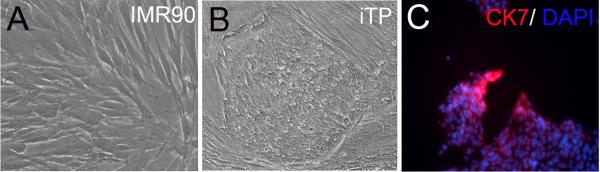
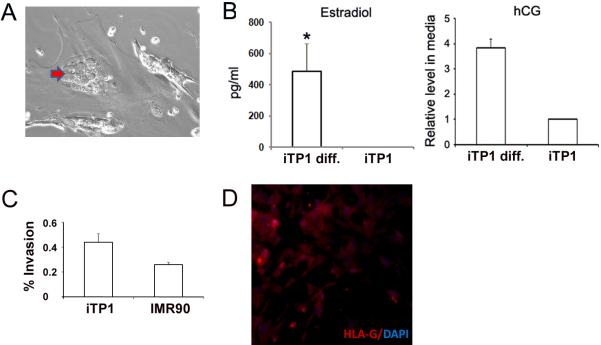
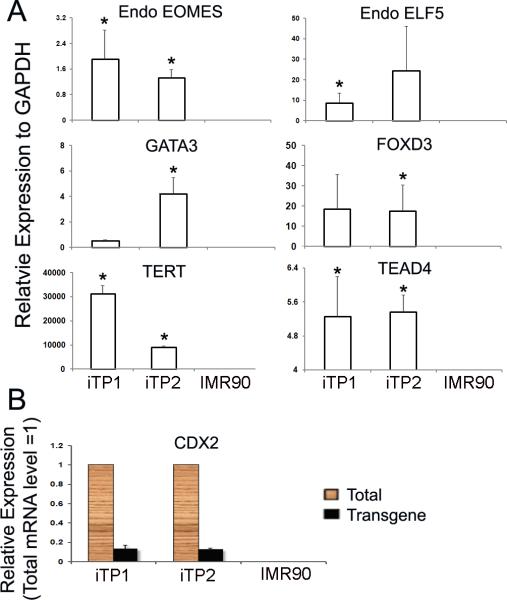
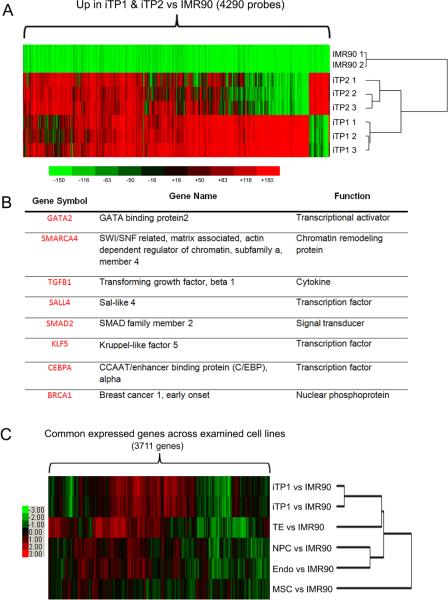
Abnormal trophoblast lineage proliferation and differentiation in early pregnancy have been associated with the pathogenesis of placenta diseases of pregnancy. However, there is still a gap in understanding the molecular mechanisms of early placental development due to the limited primary trophoblast cultures and fidelity of immortalized trophoblast lines. Trophoblasts stem (TS) cells, an in vitro model of trophectoderm that can differentiate into syncytiotrophoblasts and extravillous trophoblasts, can be an attractive tool for early pregnancy research. TS cells are well established in mouse but not in humans due to insufficient knowledge of which trophoblast lineage-specific transcription factors are involved in human trophectoderm (TE) proliferation and differentiation. Here, we applied induced pluripotent stem cell technique to investigate the human trophoblast lineage-specific transcription factors. We established human induced trophoblast progenitor (iTP) cells by direct reprogramming the fibroblasts with a pool of mouse trophoblast lineage-specific transcription factors consisting of CDX2, EOMES, and ELF5. The human iTP cells exhibit epithelial morphology and can be maintained in vitro for more than 2 months. Gene expression profile of these cells was tightly clustered with human trophectoderm but not with human neuron progenitor cells, mesenchymal stem cells, or endoderm cells. These cells are capable of differentiating into cells with an invasive capacity, suggesting extravillous trophoblasts. They also form multi-nucleated cells which secrete human chorionic gonadotropin and estradiol, consistent with a syncytiotrophoblast phenotype. Our results provide the evidence that transcription factors CDX2 and EOMES may play critical roles in human iTP cell generation.
异常的滋养层谱系增殖和分化与妊娠相关胎盘疾病的发病机制有关。然而,由于有限的原发性滋养层培养物和永生化滋养层系的保真度,早期胎盘发育的分子机制仍然存在差距。滋养层干细胞(TS)细胞是滋养外胚层的体外模型,可分化为合体滋养层细胞和绒毛外滋养层细胞,它可能是妊娠早期研究的一个有吸引力的工具。TS 细胞在小鼠中得到了很好的建立,但在人类中没有,这是因为人们对哪些滋养层谱系特异性转录因子参与人类滋养外胚层(TE)增殖和分化知之甚少。在这里,我们应用诱导多能干细胞技术来研究人类滋养层谱系特异性转录因子。我们通过用包含 CDX2、EOMES 和 ELF5 的一组小鼠滋养层谱系特异性转录因子直接重编程成纤维细胞,建立了人类诱导滋养层祖细胞(iTP)细胞。这些人 iTP 细胞具有上皮形态,可以在体外维持 2 个月以上。这些细胞的基因表达谱与人类滋养外胚层紧密聚集,但与人类神经祖细胞、间充质干细胞或内胚层细胞不同。这些细胞能够分化为具有侵袭能力的细胞,提示绒毛外滋养层细胞。它们还形成多核细胞,分泌人绒毛膜促性腺激素和雌二醇,与合体滋养层表型一致。我们的研究结果提供了证据,表明转录因子 CDX2 和 EOMES 可能在人类 iTP 细胞的产生中发挥关键作用。