Shibata Shun, Kobayashi Eri H, Kobayashi Norio, Oike Akira, Okae Hiroaki, Arima Takahiro
Department of Informative Genetics Tohoku University Graduate School of Medicine Sendai Japan.
Reprod Med Biol. 2020 Sep 12;19(4):301-313. doi: 10.1002/rmb2.12347. eCollection 2020 Oct.
The placenta is an essential organ for the normal development of mammalian fetuses. Most of our knowledge on the molecular mechanisms of placental development has come from the analyses of mice, especially histopathological examination of knockout mice. Choriocarcinoma and immortalized cell lines have also been used for basic research on the human placenta. However, these cells are quite different from normal trophoblast cells.
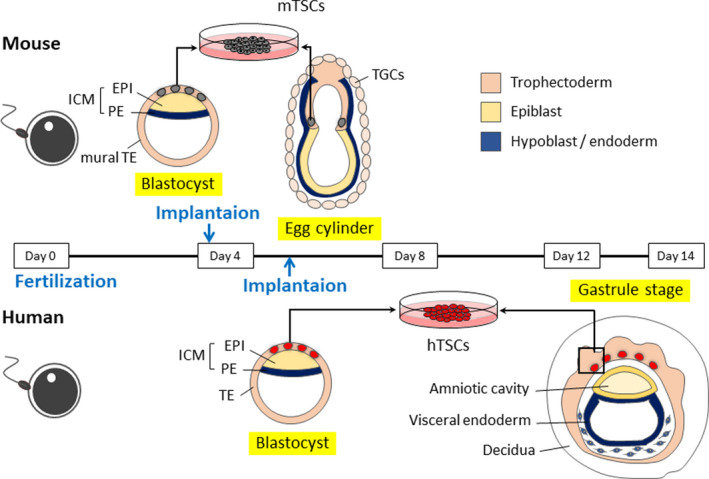
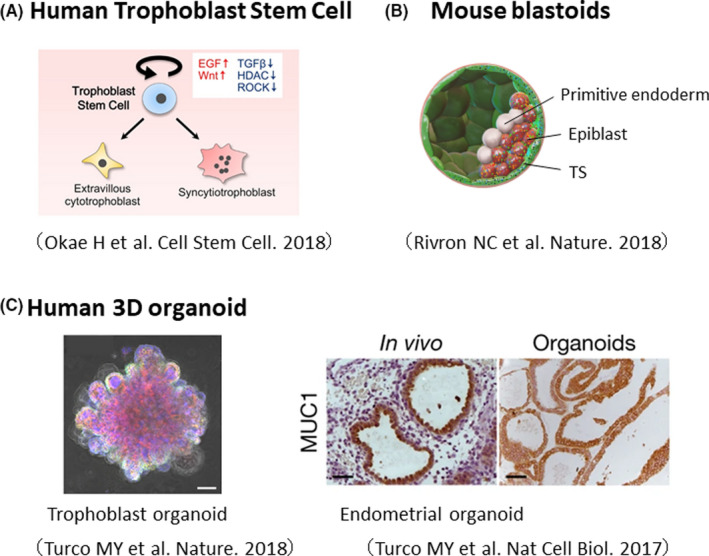
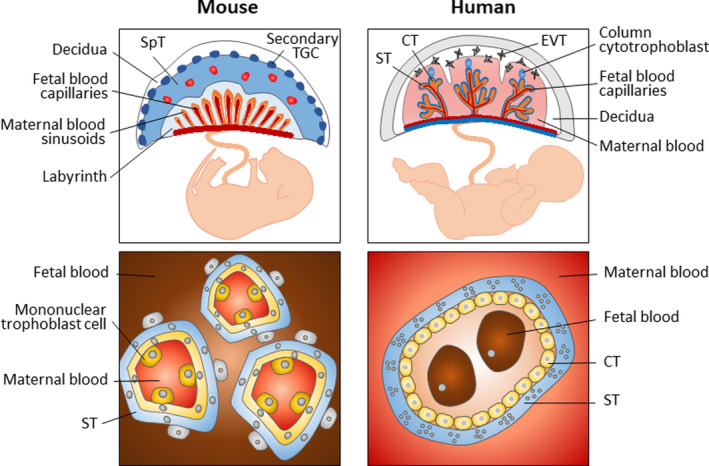
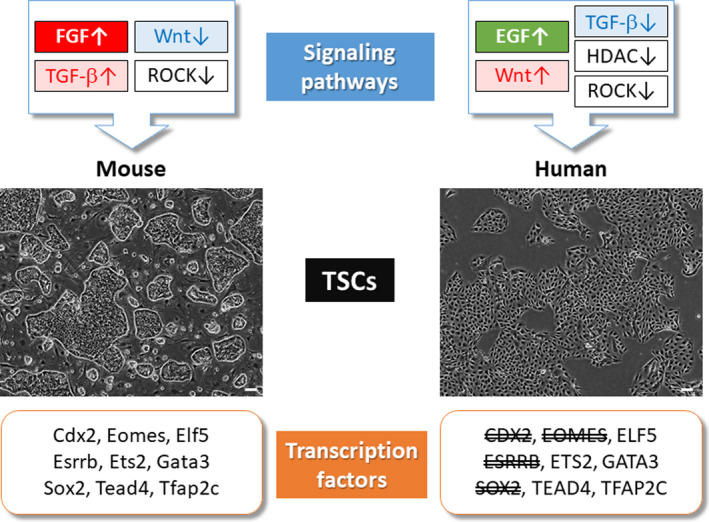
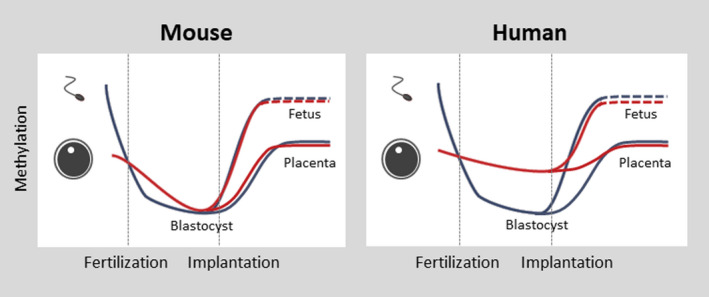
In this review, we first provide an overview of mouse and human placental development with particular focus on the differences in the anatomy, transcription factor networks, and epigenetic characteristics between these species. Next, we discuss pregnancy complications associated with abnormal placentation. Finally, we introduce emerging in vitro models to study the human placenta, including human trophoblast stem (TS) cells, trophoblast and endometrium organoids, and artificial embryos.
The placental structure and development differ greatly between humans and mice. The recent establishment of human TS cells and trophoblast and endometrial organoids enhances our understanding of the mechanisms underlying human placental development.
These in vitro models will greatly advance our understanding of human placental development and potentially contribute to the elucidation of the causes of infertility and other pregnancy complications.
胎盘是哺乳动物胎儿正常发育的重要器官。我们对胎盘发育分子机制的大部分了解来自对小鼠的分析,尤其是对基因敲除小鼠的组织病理学检查。绒毛膜癌和永生化细胞系也被用于人类胎盘的基础研究。然而,这些细胞与正常滋养层细胞有很大不同。
在本综述中,我们首先概述小鼠和人类胎盘发育,特别关注这两个物种在解剖结构、转录因子网络和表观遗传特征方面的差异。接下来,我们讨论与胎盘植入异常相关的妊娠并发症。最后,我们介绍用于研究人类胎盘的新兴体外模型,包括人类滋养层干细胞(TS)、滋养层和子宫内膜类器官以及人工胚胎。
人类和小鼠的胎盘结构与发育差异很大。人类TS细胞以及滋养层和子宫内膜类器官的最新建立增进了我们对人类胎盘发育机制的理解。
这些体外模型将极大地推进我们对人类胎盘发育的理解,并可能有助于阐明不孕症和其他妊娠并发症的原因。