Geriatric Anesthesia Research Unit, Department of Anesthesia, Critical Care and Pain Medicine, Massachusetts General Hospital and Harvard Medical School, Charlestown, Massachusetts 02129-2060, USA.
Anesthesiology. 2013 Mar;118(3):502-15. doi: 10.1097/ALN.0b013e3182834d77.
: Recent population studies have suggested that children with multiple exposures to anesthesia and surgery at an early age are at an increased risk of cognitive impairment. The authors therefore have established an animal model with single versus multiple exposures of anesthetic(s) in young versus adult mice, aiming to distinguish the role of different types of anesthesia in cognitive impairment.
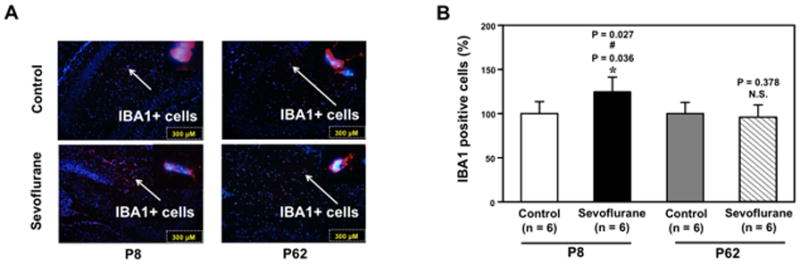
: Six- and 60-day-old mice were exposed to various anesthesia regimens. The authors then determined the effects of the anesthesia on learning and memory function, levels of proinflammatory cytokine interleukin-6 and tumor necrosis factor-α in brain tissues, and the amount of ionized calcium-binding adaptor molecule 1-positive cells, the marker of microglia activation, in the hippocampus.
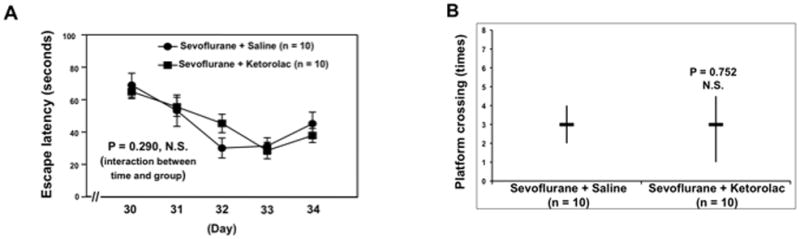
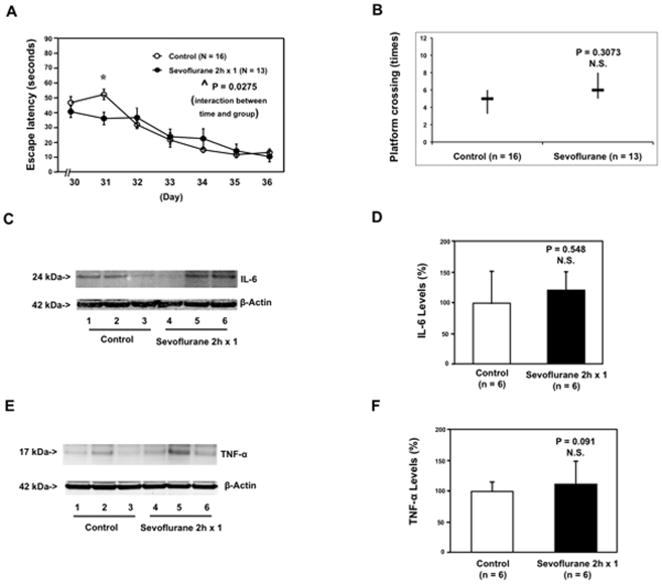
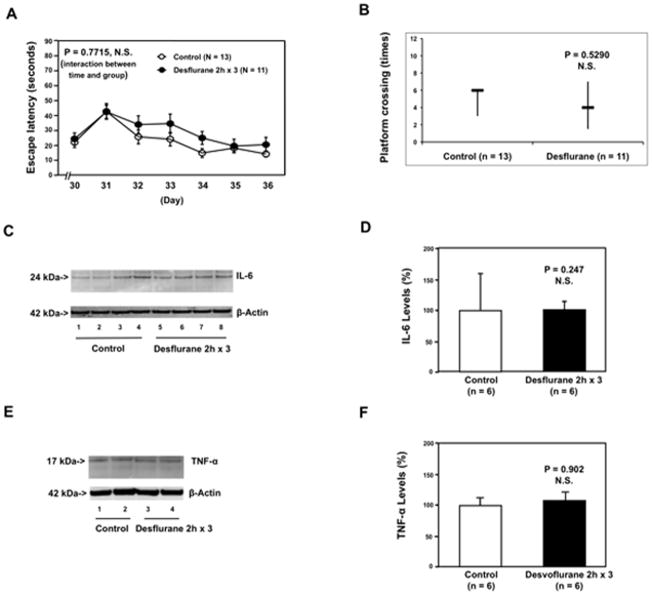
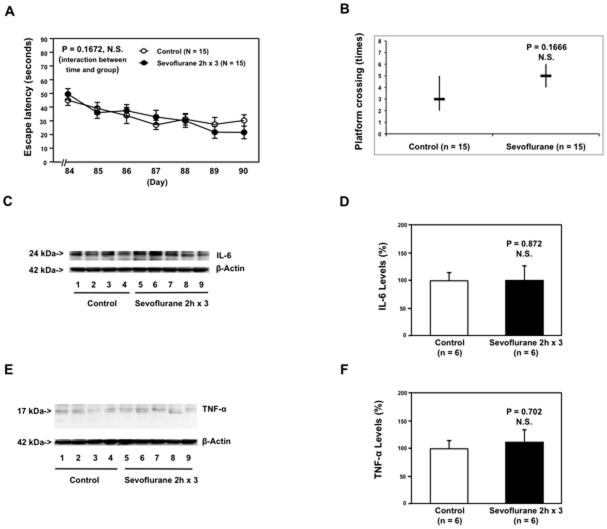
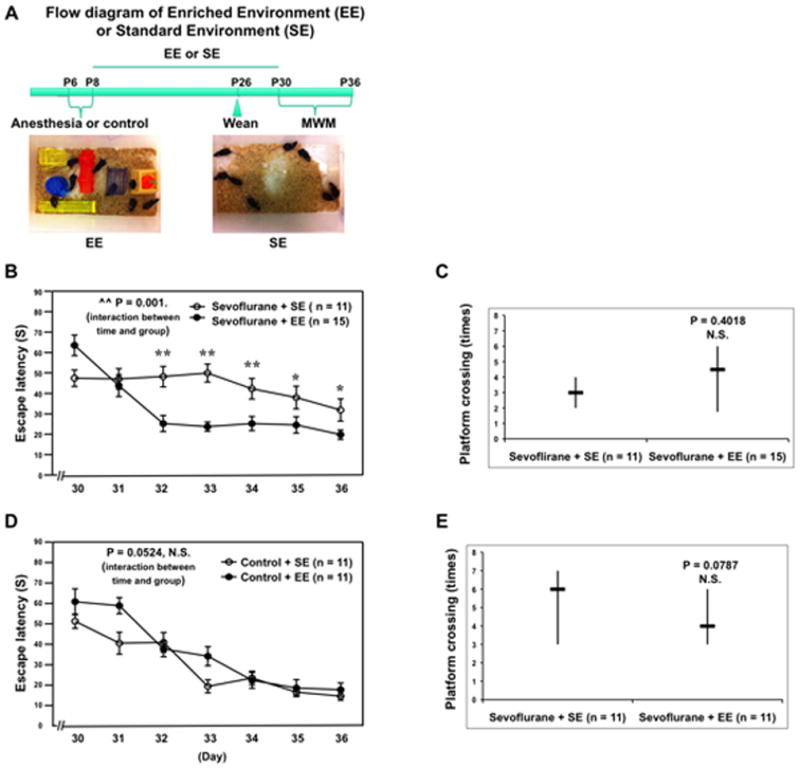
: In this article, the authors show that anesthesia with 3% sevoflurane for 2 h daily for 3 days induced cognitive impairment and neuroinflammation (e.g., increased interleukin-6 levels, 151 ± 2.3% [mean ± SD] vs. 100 ± 9.0%, P = 0.035, n = 6) in young but not in adult mice. Anesthesia with 3% sevoflurane for 2 h daily for 1 day and 9% desflurane for 2 h daily for 3 days induced neither cognitive impairment nor neuroinflammation. Finally, an enriched environment and antiinflammatory treatment (ketorolac) ameliorated the sevoflurane-induced cognitive impairment.
: Anesthesia-induced cognitive impairment may depend on developmental stage, anesthetic agent, and number of exposures. These findings also suggest the cellular basis and the potential prevention and treatment strategies for anesthesia-induced cognitive impairment, which may ultimately lead to safer anesthesia care and better postoperative outcomes for children.
最近的人群研究表明,幼年时多次接受麻醉和手术的儿童认知障碍的风险增加。因此,作者建立了一个动物模型,比较了年幼和成年小鼠单次和多次暴露于麻醉剂时的情况,旨在区分不同类型的麻醉在认知障碍中的作用。
6 日龄和 60 日龄的小鼠接受了各种麻醉方案的暴露。然后,作者确定了麻醉对学习和记忆功能的影响,大脑组织中促炎细胞因子白细胞介素-6 和肿瘤坏死因子-α的水平,以及海马中离子钙结合衔接蛋白 1 阳性细胞(小胶质细胞激活的标志物)的数量。
在本文中,作者表明,每天 3%七氟醚麻醉 2 小时,连续 3 天,会导致幼年小鼠出现认知障碍和神经炎症(例如,白细胞介素-6 水平升高,151±2.3%[均值±标准差]比 100±9.0%,P=0.035,n=6),但不会导致成年小鼠出现这种情况。每天 3%七氟醚麻醉 2 小时和 9%地氟醚麻醉 3 天,均不会导致认知障碍或神经炎症。最后,丰富的环境和抗炎治疗(酮咯酸)改善了七氟醚引起的认知障碍。
麻醉引起的认知障碍可能取决于发育阶段、麻醉剂和暴露次数。这些发现还提示了麻醉引起的认知障碍的细胞基础和潜在的预防和治疗策略,这可能最终导致儿童更安全的麻醉护理和更好的术后结果。