Sharma Dileep, Ivanovski Saso, Slevin Mark, Hamlet Stephen, Pop Tudor S, Brinzaniuc Klara, Petcu Eugen B, Miroiu Rodica I
Department of Anatomy and Doctoral School, University of Medicine and Pharmacy Targu Mures, Targu Mures, 540000, Romania.
Vasc Cell. 2013 Jan 14;5(1):1. doi: 10.1186/2045-824X-5-1.
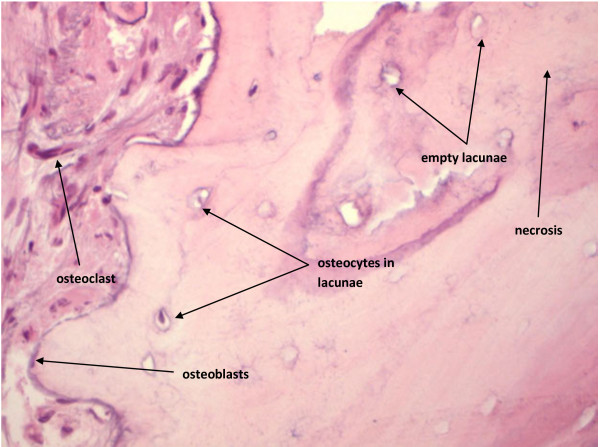
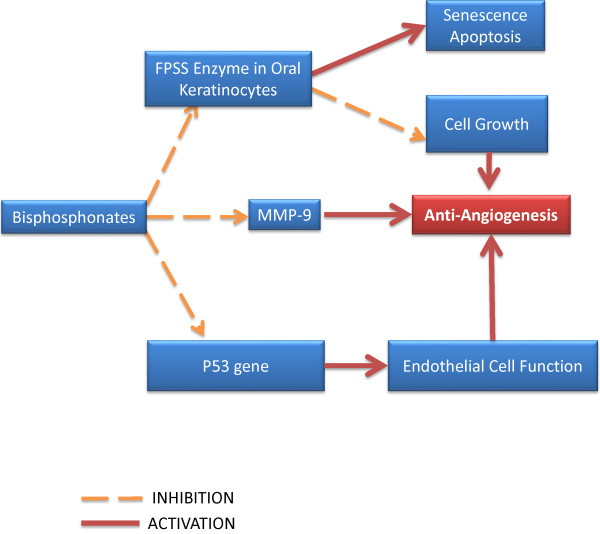
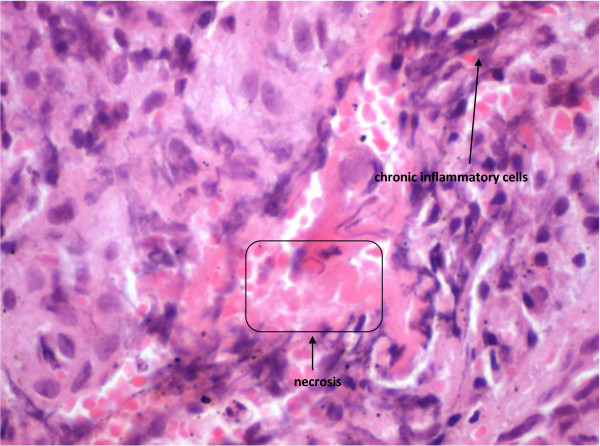
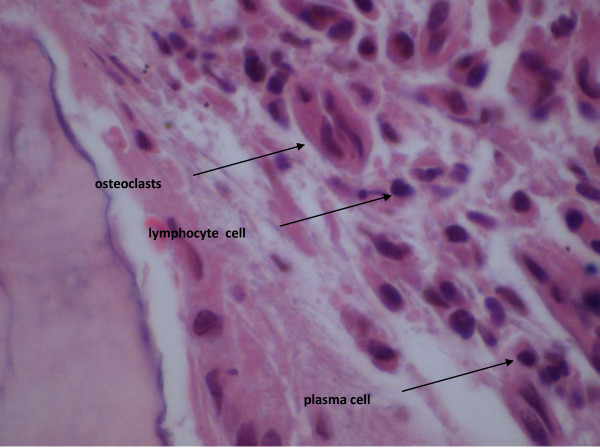
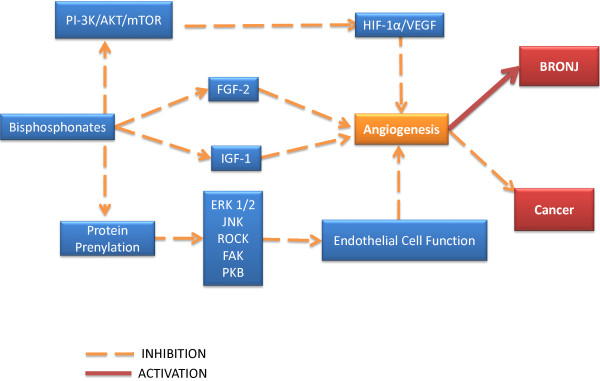
Recently, bisphosphonates (BPs) have been widely used in medical practice as anti-resorptive agents owing to their anti-osteoclatic action. In addition, these compounds are also used for their analgesic action and their potential anti-tumour effect. Patients treated with BPs may subsequently develop osteonecrosis of the jaw or maxillary bone after minor local trauma including dental work, recently labelled as bisphosphonate osteonecrosis of jaw (BRONJ). However, the etiopathogenic mechanisms of this pathological condition are poorly understood. Although, several pathways have been proposed for BRONJ occurrence, no single model can explain all morphological changes observed at the macro- and microscopic level. Recent research suggests that BPs may promote an anti-angiogenic effect which contributes directly to the clinical features associated with BRONJ. Remarkably, the anti-angiogenic effect promoting BRONJ might be in keeping with the anti-neoplastic action of BPs. The current review, presents clinical diagnostic criteria. In addition, based on our own experience we describe the histopathological criteria for diagnosis of BRONJ and the possible pathways which may lead to this frustrating pathological condition.
近年来,双膦酸盐(BPs)因其抗破骨细胞作用,作为抗吸收剂在医学实践中被广泛应用。此外,这些化合物还因其镇痛作用和潜在的抗肿瘤作用而被使用。接受BPs治疗的患者在包括牙科手术在内的轻微局部创伤后,可能随后发生颌骨或上颌骨坏死,最近被称为双膦酸盐颌骨坏死(BRONJ)。然而,这种病理状况的发病机制尚不清楚。尽管已经提出了几种BRONJ发生的途径,但没有一个单一模型能够解释在宏观和微观层面观察到的所有形态学变化。最近的研究表明,BPs可能促进抗血管生成作用,这直接导致了与BRONJ相关的临床特征。值得注意的是,促进BRONJ的抗血管生成作用可能与BPs的抗肿瘤作用一致。本综述介绍了临床诊断标准。此外,基于我们自己的经验,我们描述了BRONJ诊断的组织病理学标准以及可能导致这种令人沮丧的病理状况的途径。