Famularo Giuseppe, Remotti Daniele, Galluzzo Michele, Gasbarrone Laura
Department of Internal Medicine, San Camillo Hospital, Circonvallazione Gianicolense, 00152 Rome, Italy.
JSLS. 2012 Jul-Sep;16(3):481-4. doi: 10.4293/108680812X13462882736015.
Granulomatous peritonitis may indicate a number of infectious, malignant, and idiopathic inflammatory conditions. It is a very rare postoperative complication, which is thought to reflect a delayed cellmediated response to cornstarch from surgical glove powder in susceptible individuals. This mechanism, however, is much more likely to occur with open abdominal surgery when compared with the laparoscopic technique.
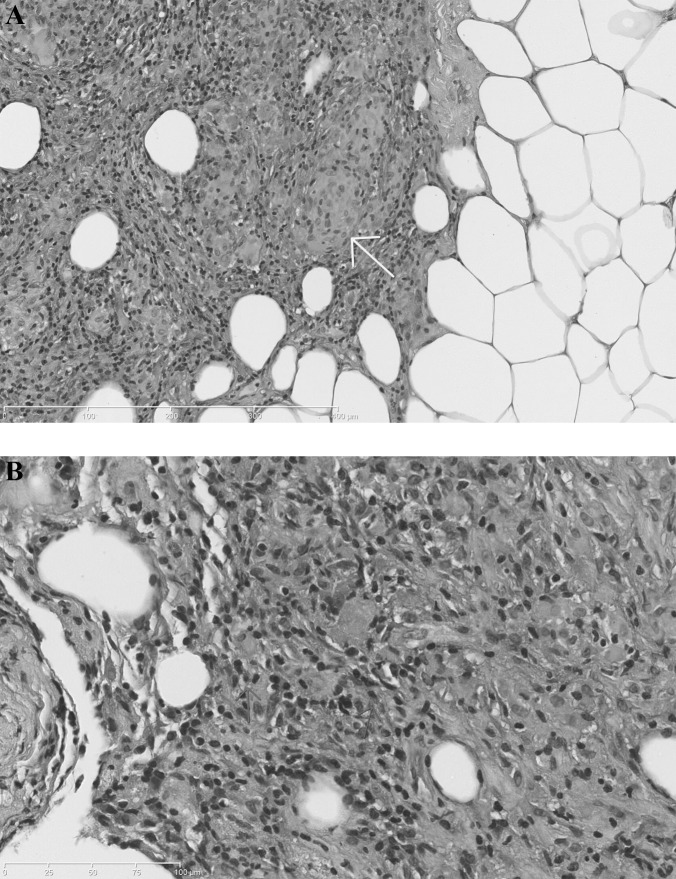
We report a case of sterile granulomatous peritonitis in an 80-y-old female after a laparoscopic cholecystectomy. Management was conservative, and no relapse was observed after over 1-y of follow-up.
We propose that peritoneal exposure to bile acids during the laparoscopic removal of the gallbladder was the trigger of granulomatous peritonitis in this patient. Severe complications, such as peritoneal adhesions, intestinal obstruction, and fistula formation, were observed, but no fatalities were reported.
We should be aware of this rare cause of peritonitis in the surgical setting.
肉芽肿性腹膜炎可能提示多种感染性、恶性及特发性炎症性疾病。它是一种非常罕见的术后并发症,被认为反映了易感个体对手术手套粉末中玉米淀粉的延迟细胞介导反应。然而,与腹腔镜技术相比,这种机制在开腹手术中更易发生。
我们报告一例80岁女性在腹腔镜胆囊切除术后发生无菌性肉芽肿性腹膜炎的病例。治疗采取保守方式,随访1年多未观察到复发。
我们认为该患者腹腔镜胆囊切除术中腹膜暴露于胆汁酸是肉芽肿性腹膜炎的触发因素。观察到了诸如腹膜粘连、肠梗阻和瘘管形成等严重并发症,但未报告死亡病例。
在手术环境中,我们应意识到这种罕见的腹膜炎病因。