1] HCC Translational Research Laboratory, Liver Unit, Barcelona-Clinic Liver Cancer Group, Institut d'Investigacions Biomediques August Pi i Sunyer (IDIBAPS), Hospital Clínic, Barcelona, Catalonia, Spain [2] Gastrointestinal Surgery and Liver Transplantation Unit, National Cancer Institute, Milan, Italy.
Oncogene. 2013 Oct 10;32(41):4861-70. doi: 10.1038/onc.2012.617. Epub 2013 Jan 14.
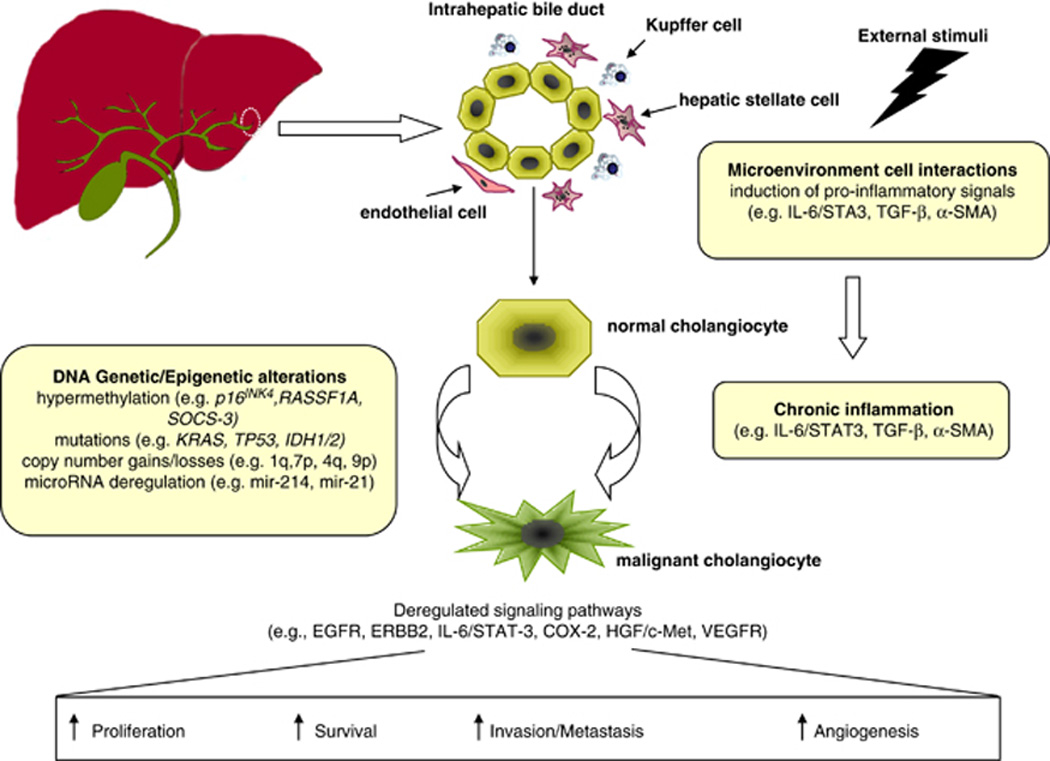
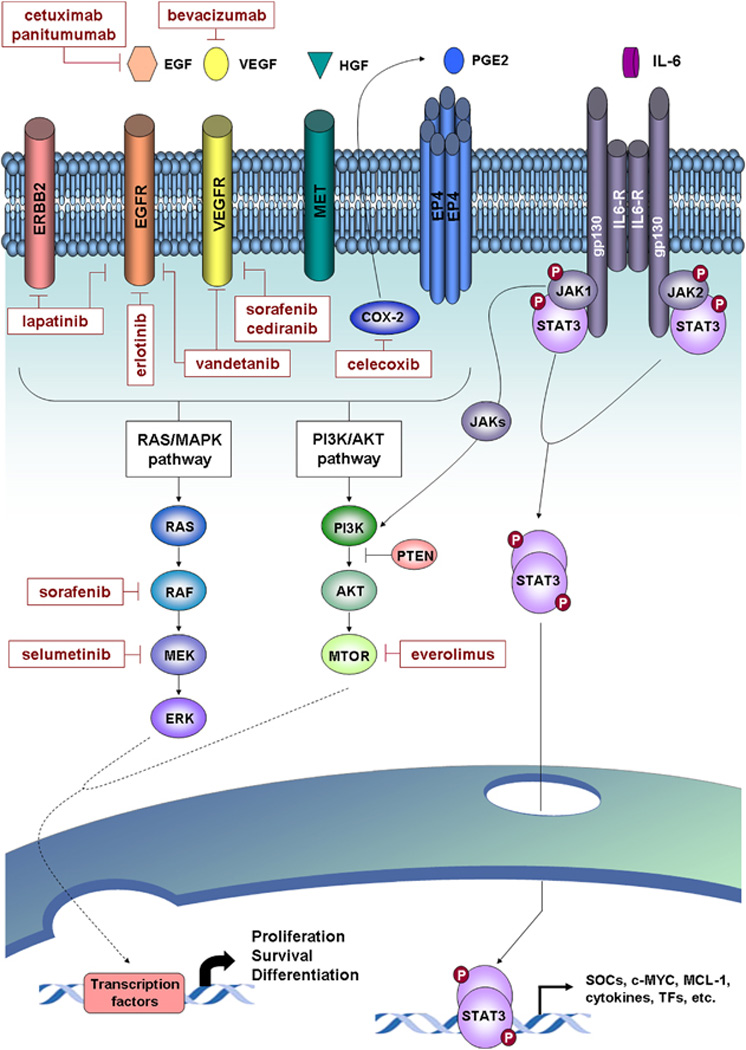
Intrahepatic cholangiocarcinoma (ICC) is an aggressive malignancy with very poor prognosis. Genome-wide, high-throughput technologies have made major advances in understanding the molecular basis of this disease, although important mechanisms are still unclear. Recent data have revealed specific genetic mutations (for example, KRAS, IDH1 and IDH2), epigenetic silencing, aberrant signaling pathway activation (for example, interleukin (IL)-6/signal transducer and activator of transcription 3 (STAT3), tyrosine kinase receptor-related pathways) and molecular subclasses with unique alterations (for example, proliferation and inflammation subclasses). In addition, some ICCs share common genomic traits with hepatocellular carcinoma. All this information provides the basis to explore novel targeted therapies. Currently, surgery at early stage is the only effective therapy. At more advanced stages, chemotherapy regimens are emerging (that is, cisplatin plus gemcitabine), along with molecular targeted agents tested in several ongoing clinical trials. Nonetheless, a first-line conclusive treatment remains an unmet need. Similarly, there are no studies assessing tumor response related with genetic alterations. This review explores the recent advancements in the knowledge of the molecular alterations underlying ICC and the future prospects in terms of therapeutic strategies leading towards a more personalized treatment of this neoplasm.
肝内胆管癌(ICC)是一种侵袭性恶性肿瘤,预后极差。全基因组高通量技术在了解这种疾病的分子基础方面取得了重大进展,尽管仍有一些重要的机制尚不清楚。最近的数据揭示了特定的基因突变(例如 KRAS、IDH1 和 IDH2)、表观遗传沉默、异常信号通路激活(例如白细胞介素(IL)-6/信号转导和转录激活因子 3(STAT3)、酪氨酸激酶受体相关途径)和具有独特改变的分子亚型(例如增殖和炎症亚类)。此外,一些 ICC 与肝细胞癌具有共同的基因组特征。所有这些信息为探索新的靶向治疗方法提供了依据。目前,早期手术是唯一有效的治疗方法。在更晚期,正在出现化疗方案(即顺铂加吉西他滨),以及正在进行的几项临床试验中测试的分子靶向药物。然而,一线明确的治疗方法仍然是一个未满足的需求。同样,也没有研究评估与遗传改变相关的肿瘤反应。这篇综述探讨了 ICC 分子改变的最新进展以及在治疗策略方面的未来前景,以实现对这种肿瘤的更个体化治疗。