Department of Medical Genetics, Oslo University Hospital and University of Oslo, BOX 4956 Nydalen, Oslo, N-0424, Norway.
J Hematol Oncol. 2013 Jan 15;6:5. doi: 10.1186/1756-8722-6-5.
Tissue factor (TF) pathway inhibitor-1 (TFPI) is expressed in several malignant tissues- and cell lines and we recently reported that it possesses anti-tumor effects in breast cancer cells, indicating a biological role of TFPI in cancer. The two main splice variants of TFPI; TFPIα and TFPIβ, are both able to inhibit TF-factor VIIa (FVIIa) activity in normal cells, but only TFPIα circulates in plasma. The functional importance of TFPIβ is therefore largely unknown, especially in cancer cells. We aimed to characterize the expression and function of TFPIα, TFPIβ, and TF in a panel of tumor derived breast cancer cell lines in comparison to normal endothelial cells.
TFPIα, TFPIβ, and TF mRNA and protein measurements were conducted using qRT-PCR and ELISA, respectively. Cell-associated TFPI was detected after phosphatidylinositol-phospholipase C (PI-PLC) and heparin treatment by flow cytometry, immunofluorescence, and Western blotting. The potential anticoagulant activity of cell surface TFPI was determined in a factor Xa activity assay.
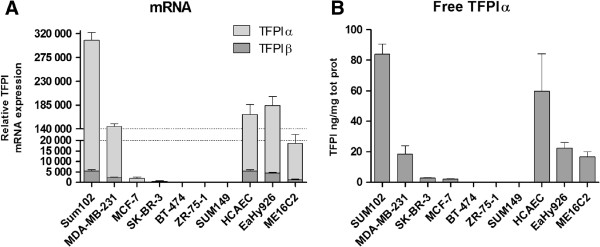
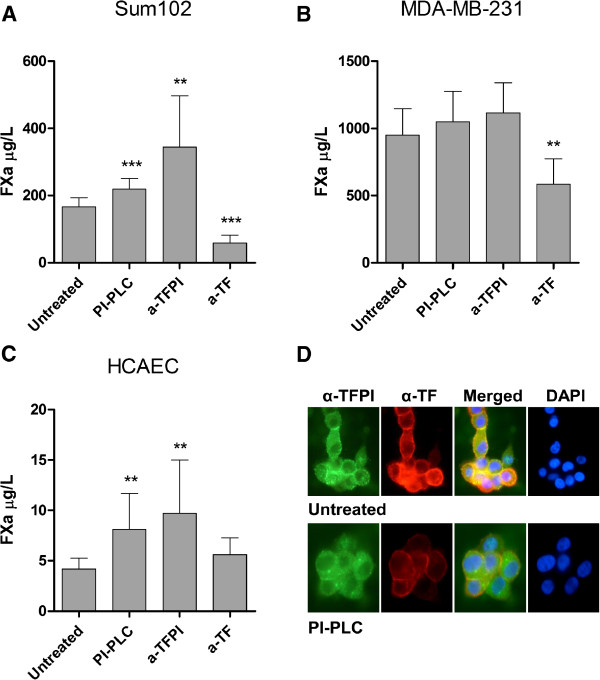
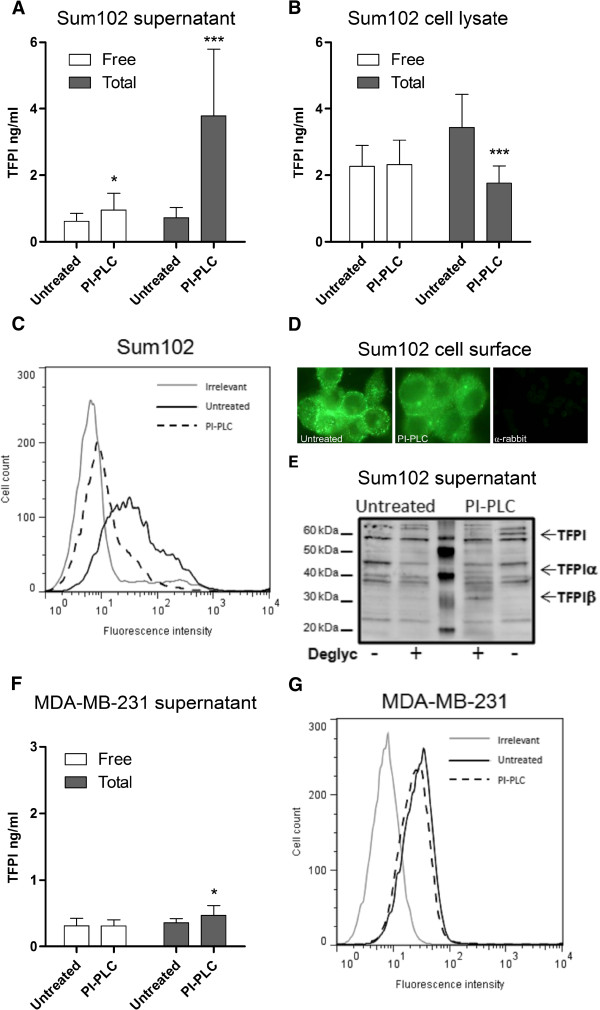
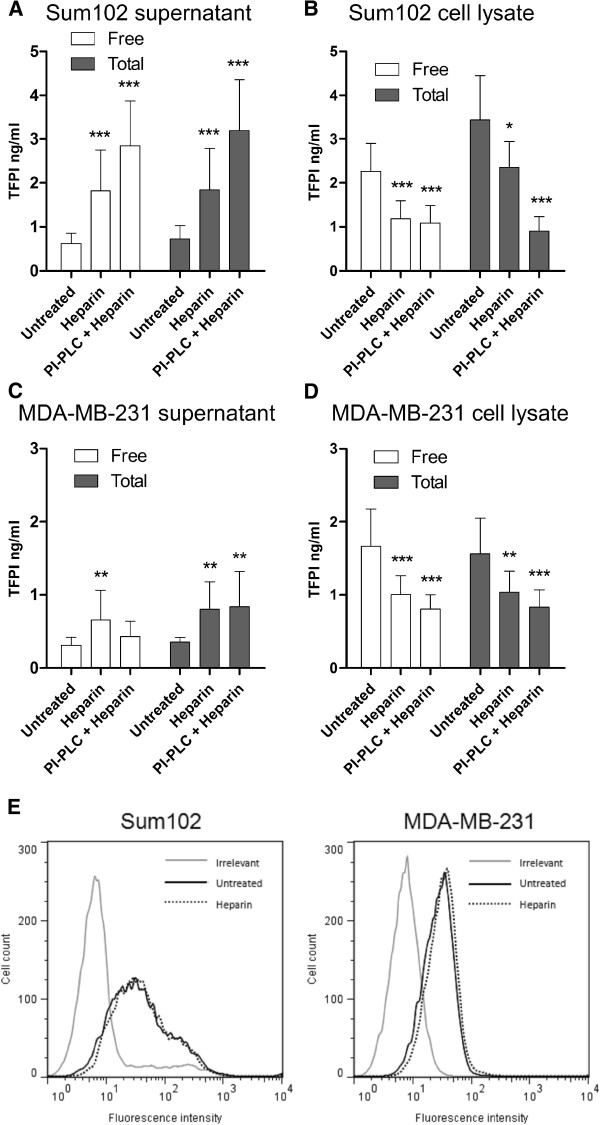
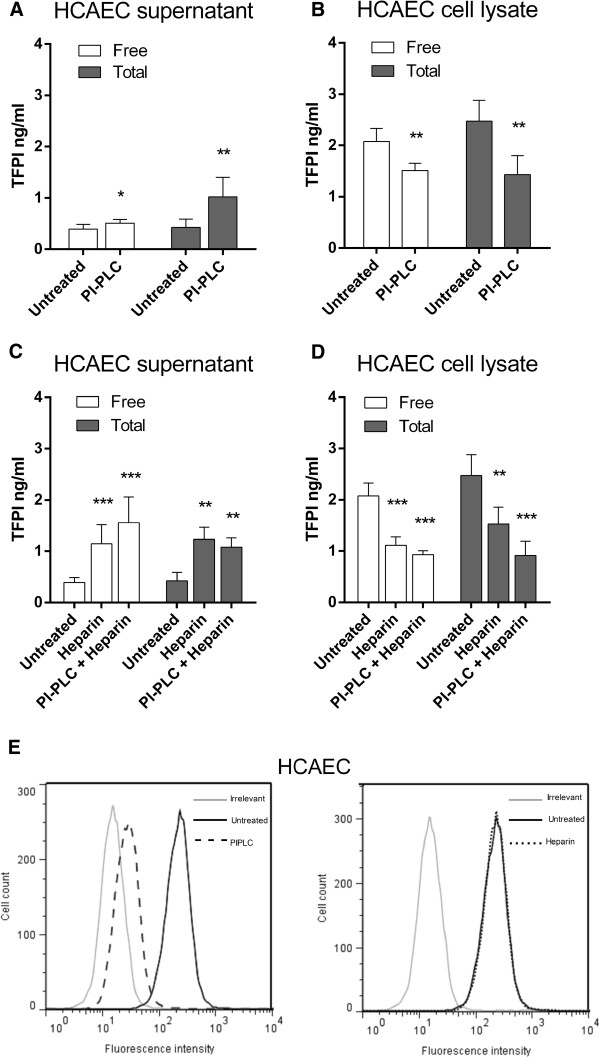
The expression of both isoforms of TFPI varied considerably among the breast cancer cell lines tested, from no expression in Sum149 cells to levels above or in the same range as normal endothelial cells in Sum102 and MDA-MB-231 cells. PI-PLC treatment released both TFPIα and TFPIβ from the breast cancer cell membrane and increased TF activity on the cell surface, showing TF-FVIIa inhibitory activity of the glycosylphosphatidylinositol- (GPI-) anchored TFPI. Heparin treatment released TFPIα without decreasing the cell surface levels, thus indicating the presence of intracellular storage pools of TFPIα in the breast cancer cells.
GPI-attached TFPI located at the surface of breast cancer cells inhibited TF activity and could possibly reduce TF signaling and breast cancer cell growth locally, indicating a therapeutic potential of the TFPIβ isoform.
组织因子(TF)途径抑制剂-1(TFPI)在几种恶性组织和细胞系中表达,我们最近报道它在乳腺癌细胞中具有抗肿瘤作用,表明 TFPI 在癌症中有生物学作用。TFPI 的两个主要剪接变体 TFPIα 和 TFPIβ 都能够抑制正常细胞中的 TF-FVIIa(FVIIa)活性,但只有 TFPIα 循环存在于血浆中。因此,TFPIβ 的功能重要性在很大程度上尚不清楚,特别是在癌细胞中。我们旨在比较正常内皮细胞,描述肿瘤衍生的乳腺癌细胞系中 TFPIα、TFPIβ 和 TF 的表达和功能。
使用 qRT-PCR 和 ELISA 分别进行 TFPIα、TFPIβ 和 TF 的 mRNA 和蛋白测量。用磷脂酰肌醇-磷脂酶 C(PI-PLC)和肝素处理后,通过流式细胞术、免疫荧光和 Western blot 检测细胞相关 TFPI。在因子 Xa 活性测定中测定细胞表面 TFPI 的潜在抗凝活性。
在所测试的乳腺癌细胞系中,两种 TFPI 同工型的表达差异很大,从 Sum149 细胞中无表达到 Sum102 和 MDA-MB-231 细胞中表达水平高于或与正常内皮细胞相当。PI-PLC 处理从乳腺癌细胞膜上释放 TFPIα 和 TFPIβ,并增加细胞表面上的 TF 活性,显示糖基磷脂酰肌醇-(GPI-)锚定 TFPI 的 TF-FVIIa 抑制活性。肝素处理释放 TFPIα 而不降低细胞表面水平,因此表明乳腺癌细胞中存在细胞内 TFPIα 储存池。
位于乳腺癌细胞表面的 GPI 连接的 TFPI 抑制 TF 活性,并且可能局部降低 TF 信号转导和乳腺癌细胞生长,表明 TFPIβ 同工型具有治疗潜力。