Department of Neuroscience, Tufts University School of Medicine, Boston, MA, USA.
Transl Psychiatry. 2013 Jan 15;3(1):e212. doi: 10.1038/tp.2012.136.
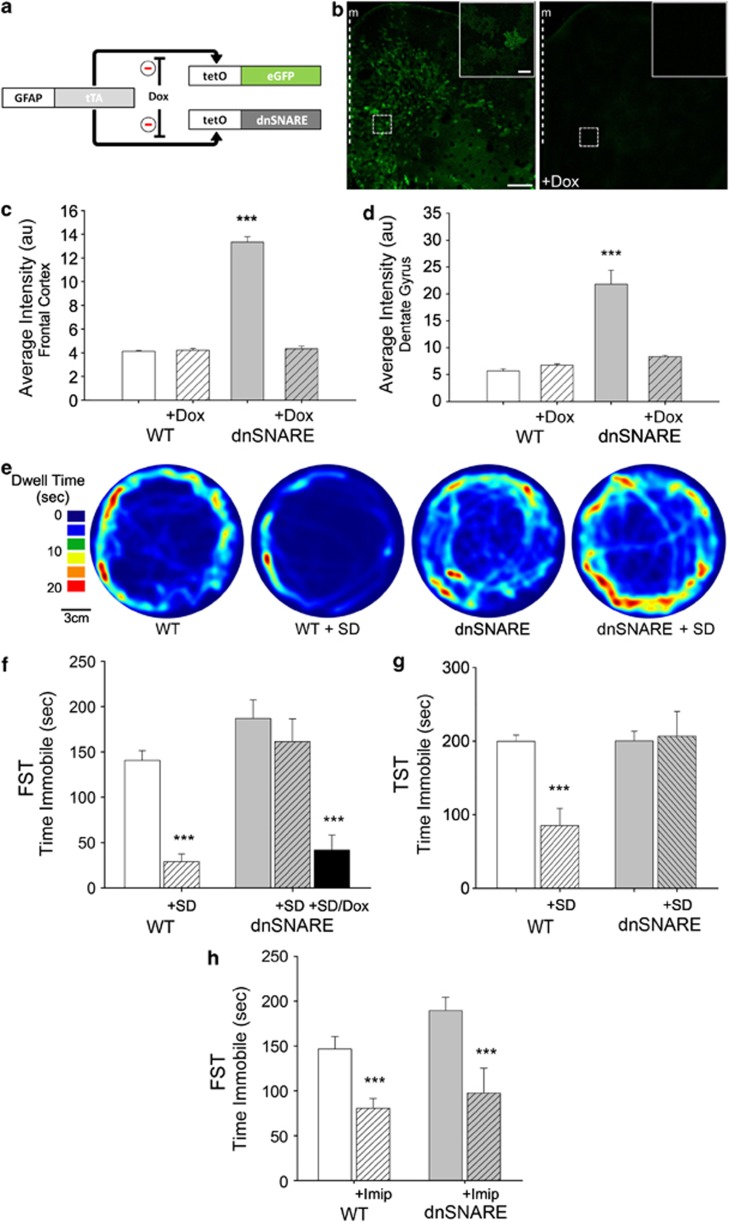
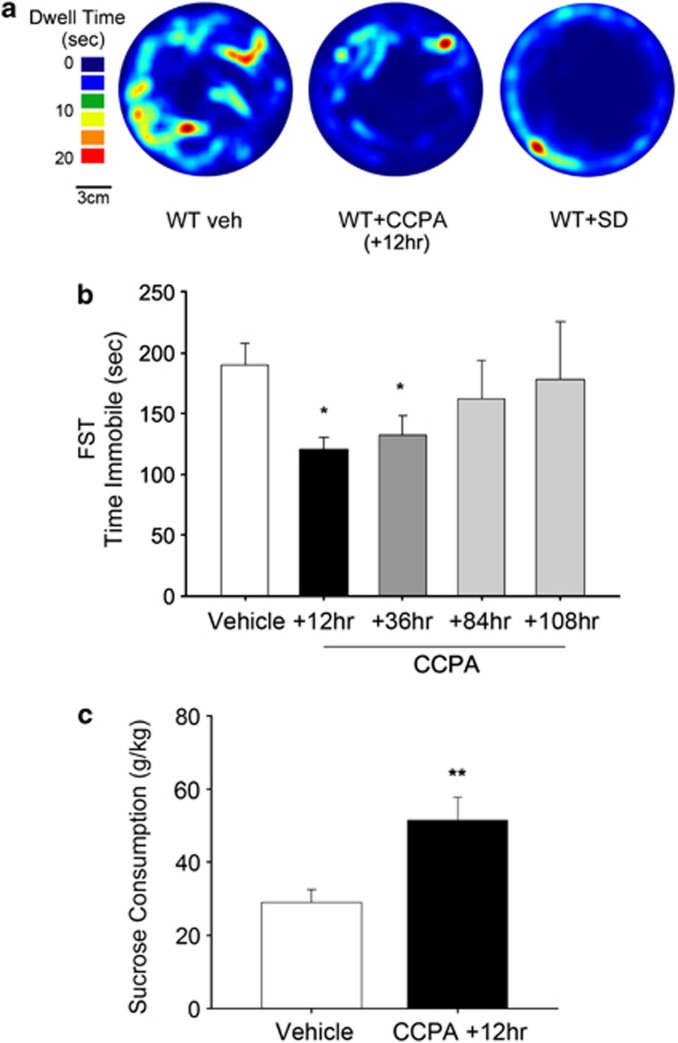
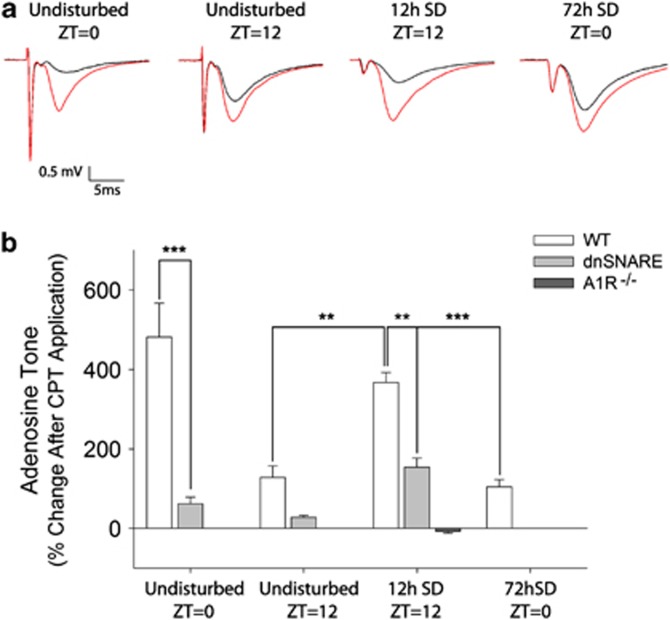
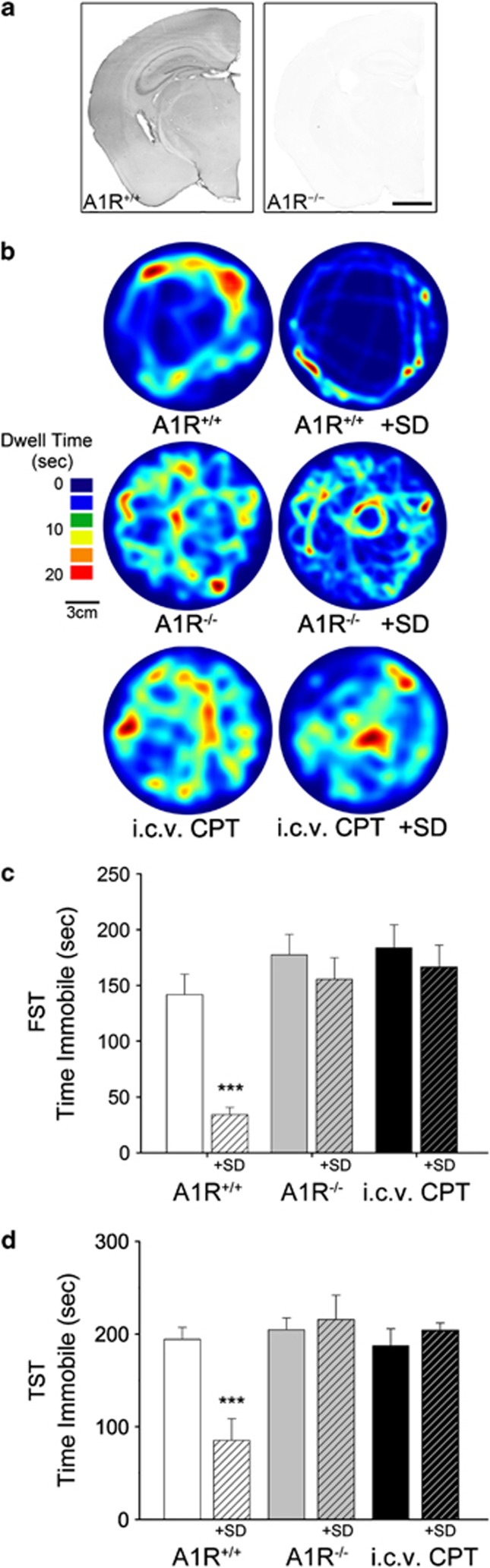
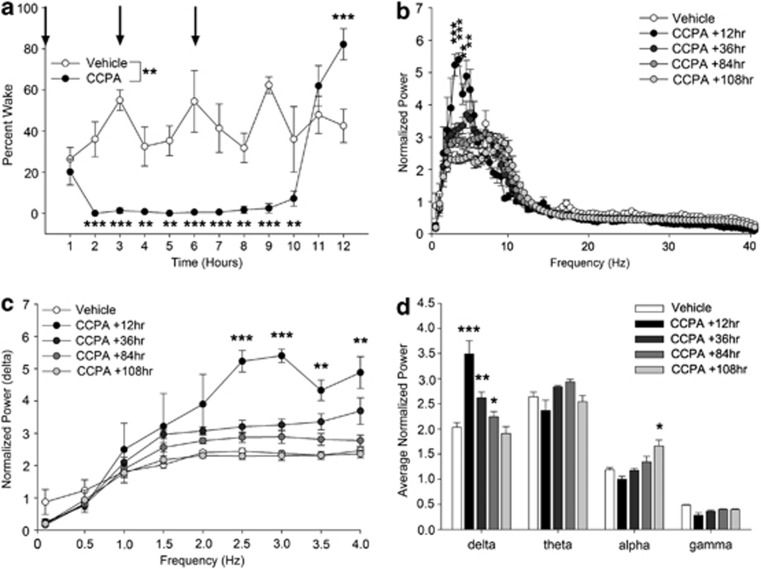
Major depressive disorder is a debilitating condition with a lifetime risk of ten percent. Most treatments take several weeks to achieve clinical efficacy, limiting the ability to bring instant relief needed in psychiatric emergencies. One intervention that rapidly alleviates depressive symptoms is sleep deprivation; however, its mechanism of action is unknown. Astrocytes regulate responses to sleep deprivation, raising the possibility that glial signaling mediates antidepressive-like actions of sleep deprivation. Here, we found that astrocytic signaling to adenosine (A1) receptors was required for the robust reduction of depressive-like behaviors following 12 hours of sleep deprivation. As sleep deprivation activates synaptic A1 receptors, we mimicked the effect of sleep deprivation on depression phenotypes by administration of the A1 agonist CCPA. These results provide the first mechanistic insight into how sleep deprivation impacts mood, and provide a novel pathway for rapid antidepressant development by modulation of glial signaling in the brain.
重度抑郁症是一种使人虚弱的疾病,终身患病风险为 10%。大多数治疗方法需要数周时间才能达到临床疗效,这限制了在精神科急症中提供即时缓解的能力。一种可以迅速缓解抑郁症状的干预措施是睡眠剥夺;然而,其作用机制尚不清楚。星形胶质细胞调节对睡眠剥夺的反应,这增加了神经胶质信号介导睡眠剥夺的抗抑郁样作用的可能性。在这里,我们发现星形胶质细胞向腺苷 (A1) 受体的信号传递对于 12 小时睡眠剥夺后抑郁样行为的显著减少是必需的。由于睡眠剥夺会激活突触 A1 受体,我们通过给予 A1 激动剂 CCPA 模拟睡眠剥夺对抑郁表型的影响。这些结果首次为睡眠剥夺如何影响情绪提供了机制上的见解,并为通过调节大脑中的神经胶质信号来快速开发抗抑郁药物提供了新途径。