Institute of Biomedical Engineering, École Polytechnique, C,P, 6079 succ, Centre-Ville, Montréal, QC, H3C 3A7, Canada.
BMC Musculoskelet Disord. 2013 Jan 16;14:27. doi: 10.1186/1471-2474-14-27.
In this study we evaluated a novel approach to guide the bone marrow-driven articular cartilage repair response in skeletally aged rabbits. We hypothesized that dispersed chitosan particles implanted close to the bone marrow degrade in situ in a molecular mass-dependent manner, and attract more stromal cells to the site in aged rabbits compared to the blood clot in untreated controls.
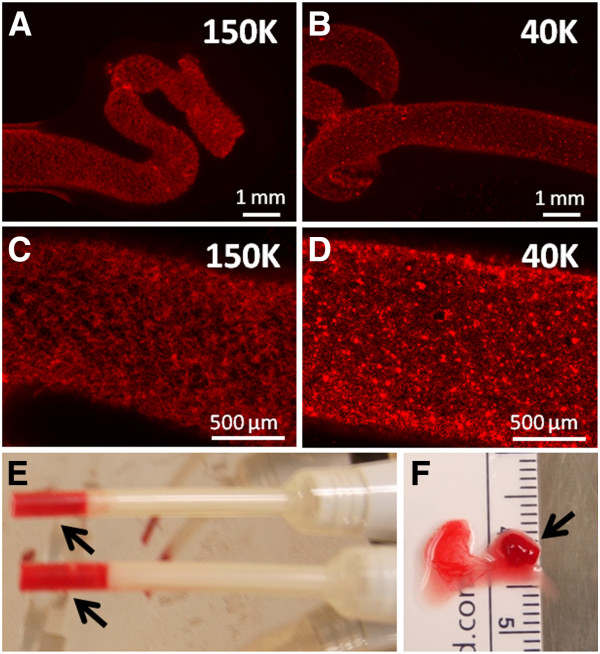
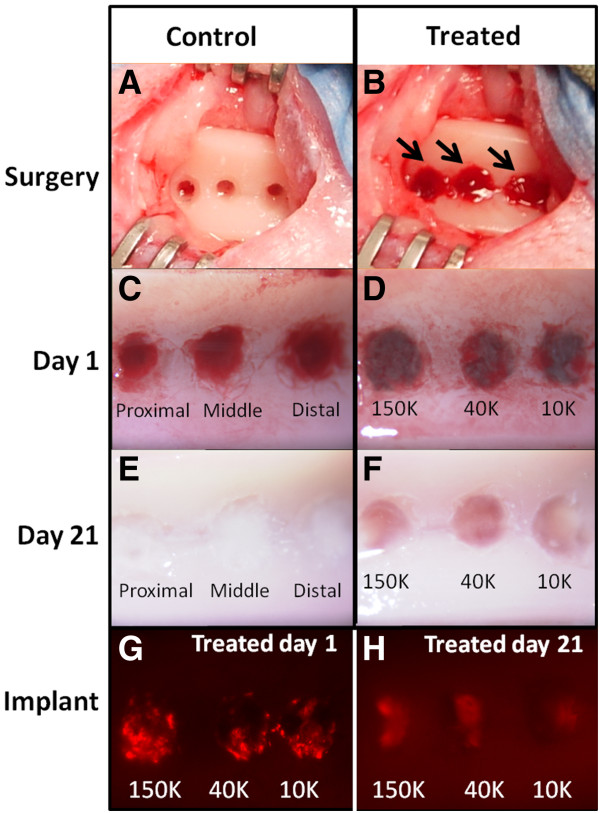
Three microdrill hole defects, 1.4 mm diameter and 2 mm deep, were created in both knee trochlea of 30 month-old New Zealand White rabbits. Each of 3 isotonic chitosan solutions (150, 40, 10 kDa, 80% degree of deaceylation, with fluorescent chitosan tracer) was mixed with autologous rabbit whole blood, clotted with tissue factor to form cylindrical implants, and press-fit in drill holes in the left knee while contralateral holes received tissue factor or no treatment. At day 1 or day 21 post-operative, defects were analyzed by micro-computed tomography, histomorphometry and stereology for bone and soft tissue repair.
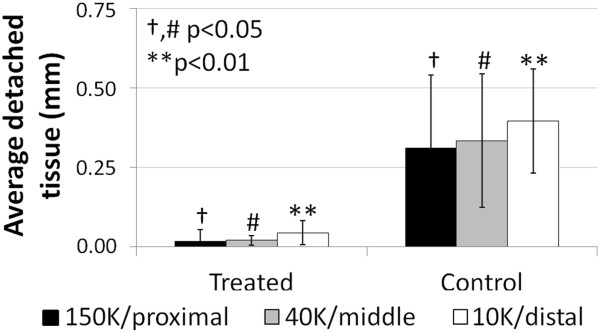
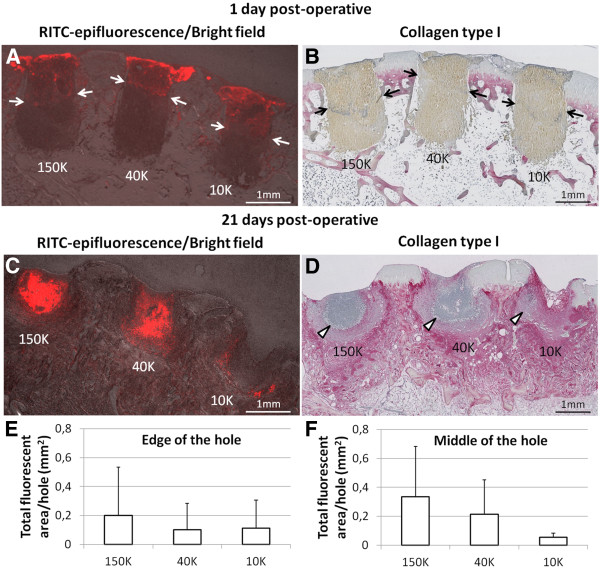
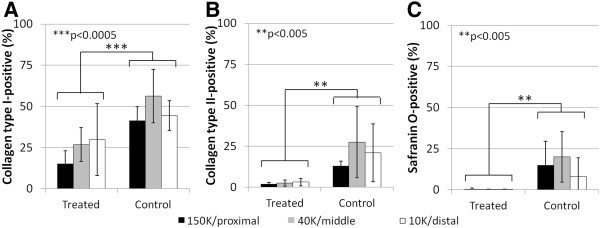
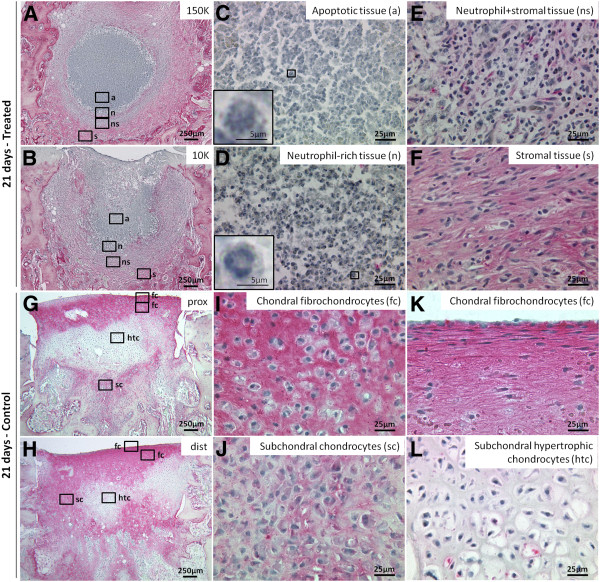
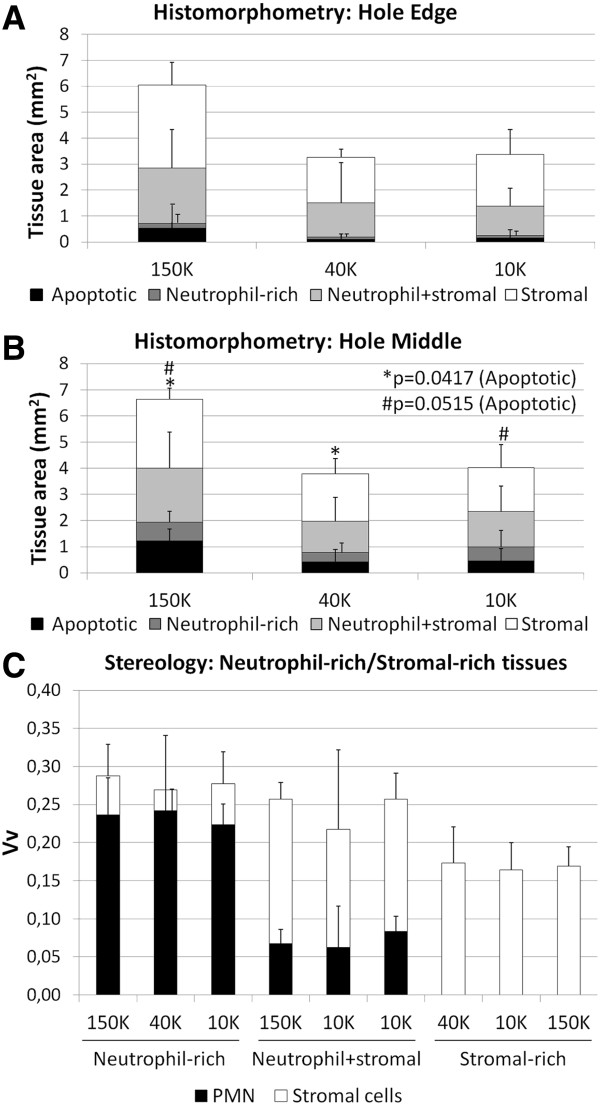
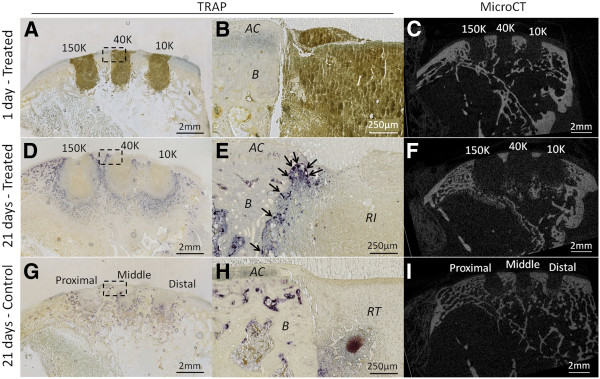
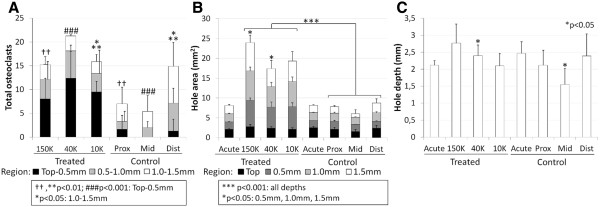
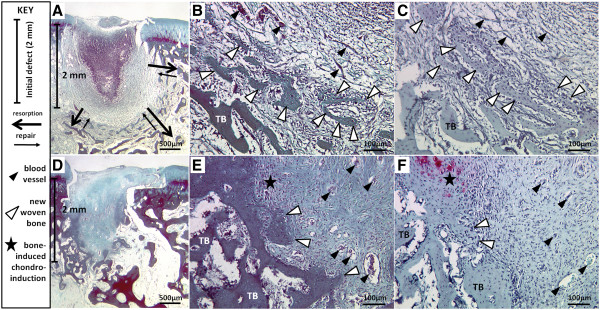
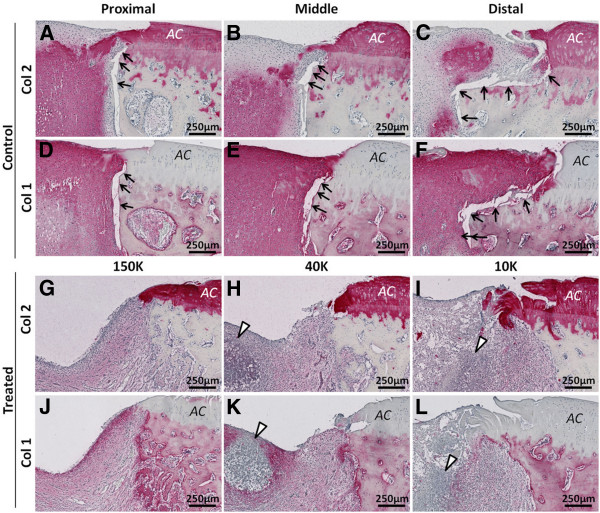
All 3 implants filled the top of defects at day 1 and were partly degraded in situ at 21 days post-operative. All implants attracted neutrophils, osteoclasts and abundant bone marrow-derived stromal cells, stimulated bone resorption followed by new woven bone repair (bone remodeling) and promoted repair tissue-bone integration. 150 kDa chitosan implant was less degraded, and elicited more apoptotic neutrophils and bone resorption than 10 kDa chitosan implant. Drilled controls elicited a poorly integrated fibrous or fibrocartilaginous tissue.
Pre-solidified implants elicit stromal cells and vigorous bone plate remodeling through a phase involving neutrophil chemotaxis. Pre-solidified chitosan implants are tunable by molecular mass, and could be beneficial for augmented marrow stimulation therapy if the recruited stromal cells can progress to bone and cartilage repair.
在这项研究中,我们评估了一种新方法,以指导骨髓驱动的关节软骨修复反应在骨骼老化的兔子中。我们假设,植入靠近骨髓的分散壳聚糖颗粒会以分子质量依赖性的方式原位降解,并吸引更多的基质细胞到老年兔子的部位,而不是未治疗对照中的血凝块。
在 30 月龄的新西兰白兔的双侧膝关节滑车中创建了 3 个 1.4 毫米直径和 2 毫米深的微钻孔缺损。将 3 种等渗壳聚糖溶液(150、40、10 kDa,80%去乙酰化度,带有荧光壳聚糖示踪剂)与自体兔全血混合,用组织因子凝结形成圆柱形植入物,并在左侧膝关节的钻孔中压配合,而对侧孔接受组织因子或不治疗。在术后第 1 天或第 21 天,通过微计算机断层扫描、组织形态计量学和体视学分析对骨和软组织修复进行分析。
所有 3 种植入物在第 1 天填充了缺损的顶部,并且在术后第 21 天在原位部分降解。所有植入物都吸引了中性粒细胞、破骨细胞和丰富的骨髓来源的基质细胞,刺激了骨吸收,随后是新的编织骨修复(骨重塑),并促进了修复组织与骨的整合。150 kDa 壳聚糖植入物降解较少,并且比 10 kDa 壳聚糖植入物引起更多的凋亡中性粒细胞和骨吸收。钻孔对照引起了较差整合的纤维或纤维软骨组织。
预固化植入物通过涉及中性粒细胞趋化作用的阶段,募集基质细胞并强烈刺激骨板重塑。预固化壳聚糖植入物可通过分子质量进行调节,如果募集的基质细胞能够进展为骨和软骨修复,那么它们可能对增强骨髓刺激疗法有益。