Institute of Biochemistry, ETH Zurich, Zurich, Switzerland.
Nucleus. 2013 Jan-Feb;4(1):29-36. doi: 10.4161/nucl.23387. Epub 2013 Jan 1.
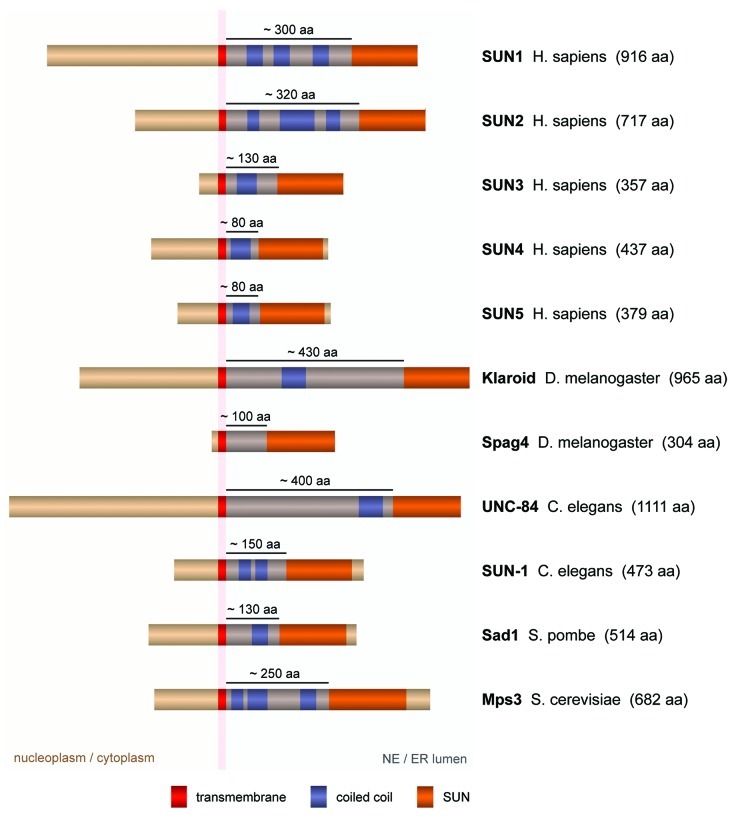
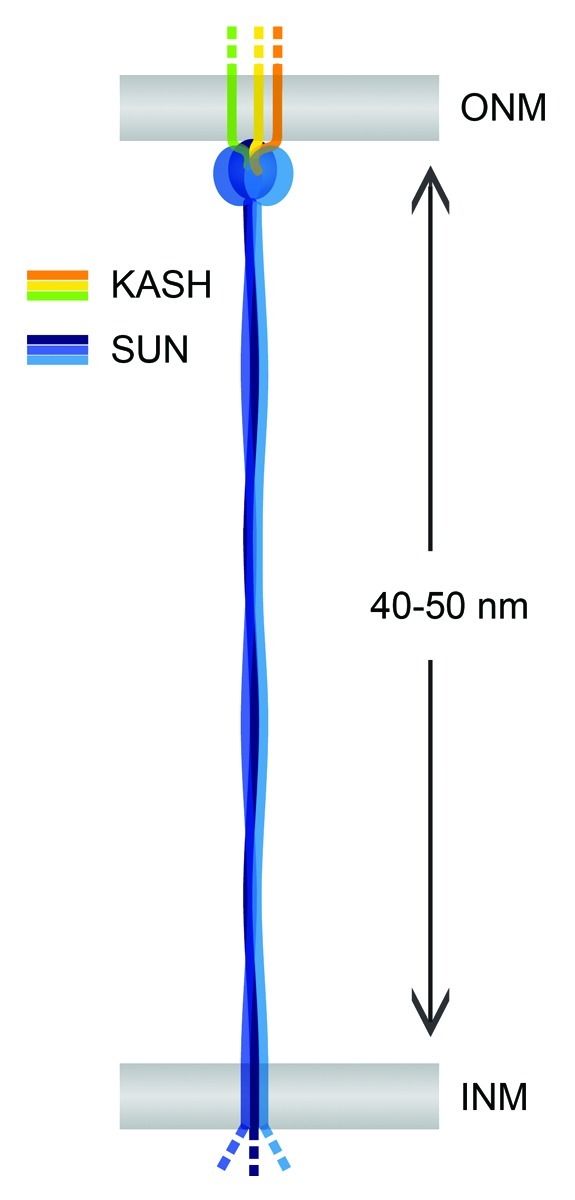
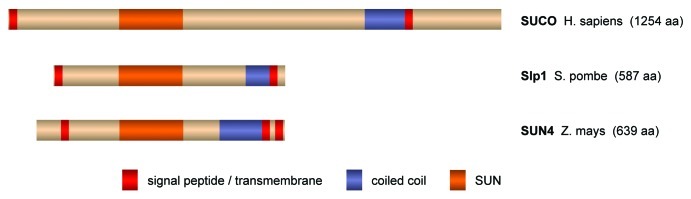
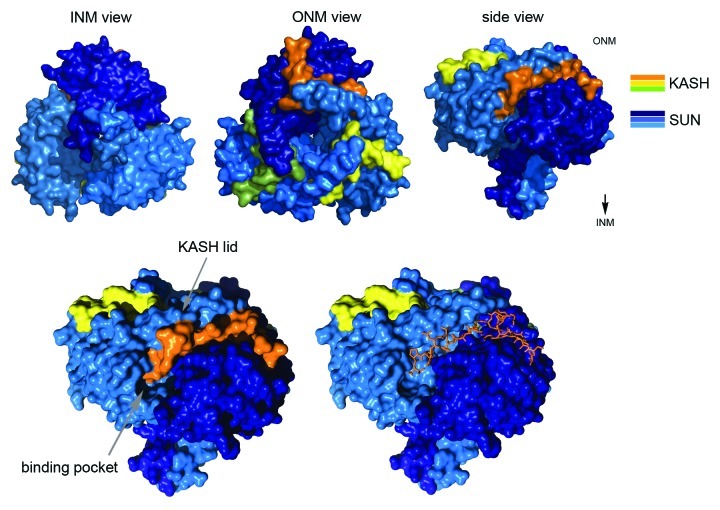
Linker of nucleoskeleton and cytoskeleton (LINC) complexes span the double membrane of the nuclear envelope (NE) and physically connect nuclear structures to cytoskeletal elements. LINC complexes are envisioned as force transducers in the NE, which facilitate processes like nuclear anchorage and migration, or chromosome movements. The complexes are built from members of two evolutionary conserved families of transmembrane (TM) proteins, the SUN (Sad1/UNC-84) domain proteins in the inner nuclear membrane (INM) and the KASH (Klarsicht/ANC-1/SYNE homology) domain proteins in the outer nuclear membrane (ONM). In the lumen of the NE, the SUN and KASH domains engage in an intimate assembly to jointly form a NE bridge. Detailed insights into the molecular architecture and atomic structure of LINC complexes have recently revealed the molecular basis of nucleo-cytoskeletal coupling. They bear important implications for LINC complex function and suggest new potential and as yet unexplored roles, which the complexes may play in the cell.
核骨架和细胞骨架连接蛋白(LINC)复合物跨越核膜的双层,并将核结构与细胞骨架元件物理连接。LINC 复合物被设想为核包膜中的力传感器,有助于核锚定和迁移或染色体运动等过程。这些复合物由两个进化上保守的跨膜(TM)蛋白家族的成员组成,分别是内核膜(INM)中的 SUN(Sad1/UNC-84)结构域蛋白和外核膜(ONM)中的 KASH(Klarsicht/ANC-1/SYNE homology)结构域蛋白。在核膜的腔中,SUN 和 KASH 结构域紧密组装,共同形成核包膜桥。最近对 LINC 复合物的分子结构和原子结构的详细了解揭示了核-细胞骨架偶联的分子基础。它们对 LINC 复合物的功能具有重要意义,并暗示了复合物在细胞中可能发挥的新的潜在和尚未探索的作用。