Department of Medicine, University of Colorado School of Medicine, Aurora, Colorado, United States of America.
PLoS Genet. 2013;9(1):e1003137. doi: 10.1371/journal.pgen.1003137. Epub 2013 Jan 10.
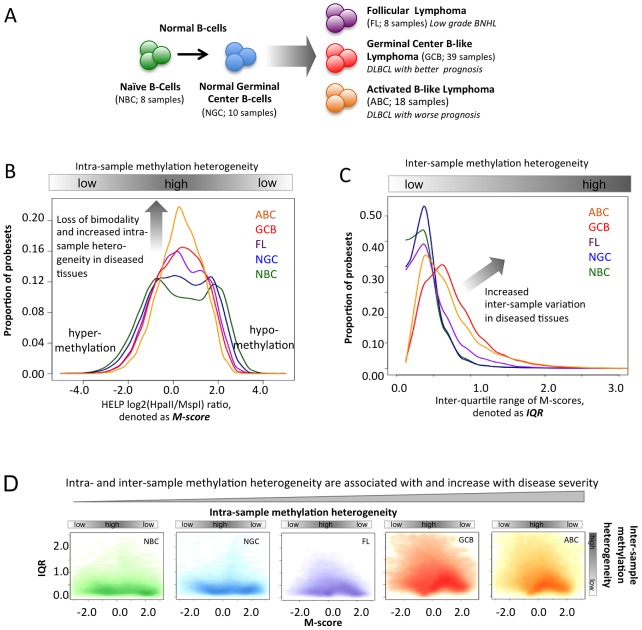
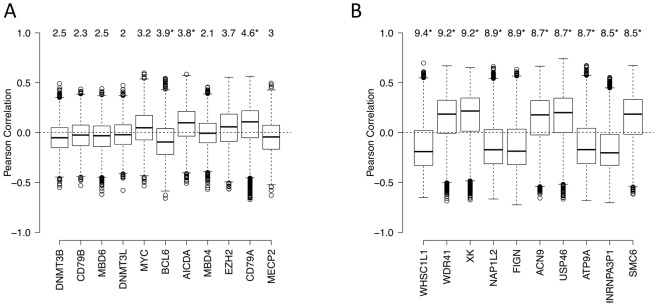
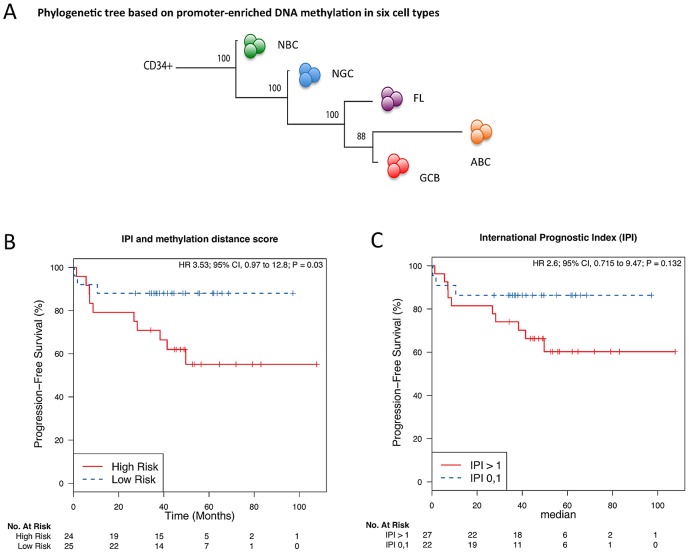
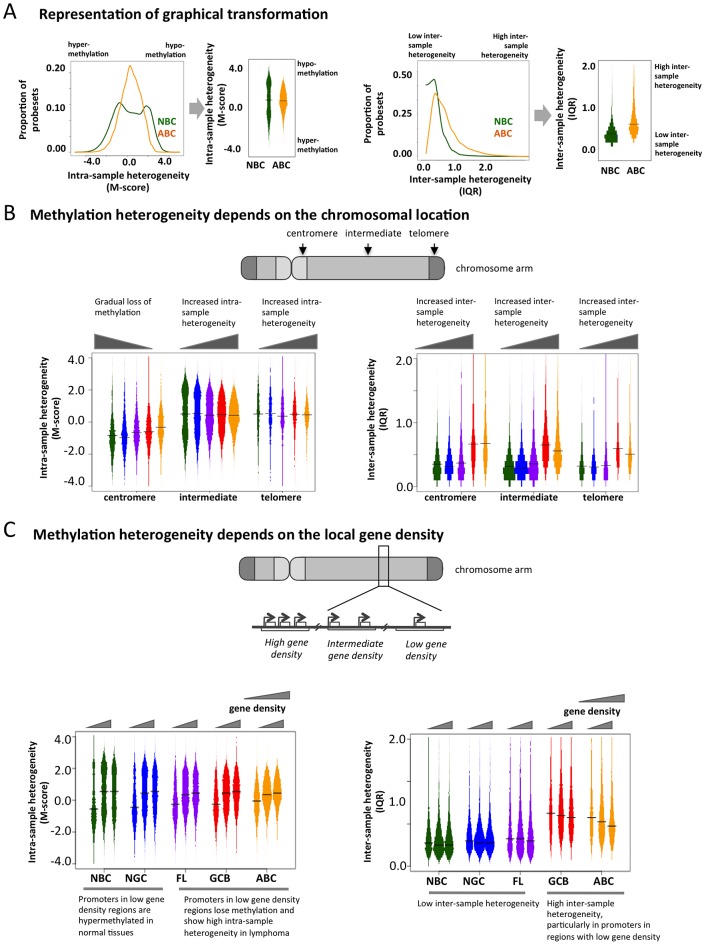
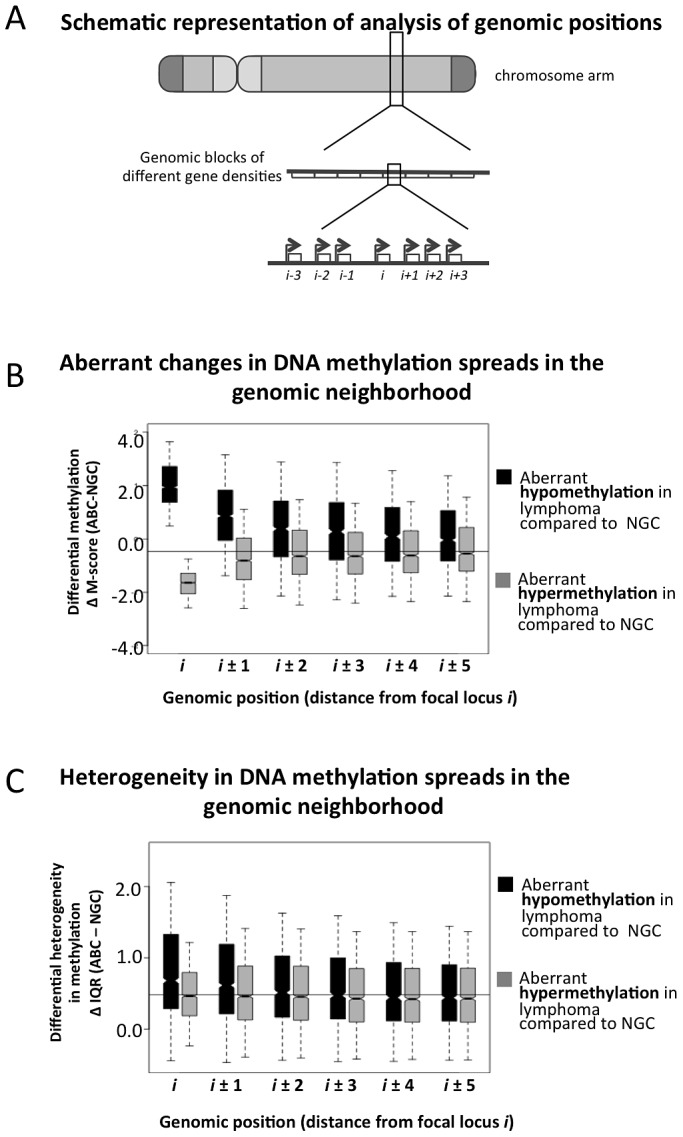
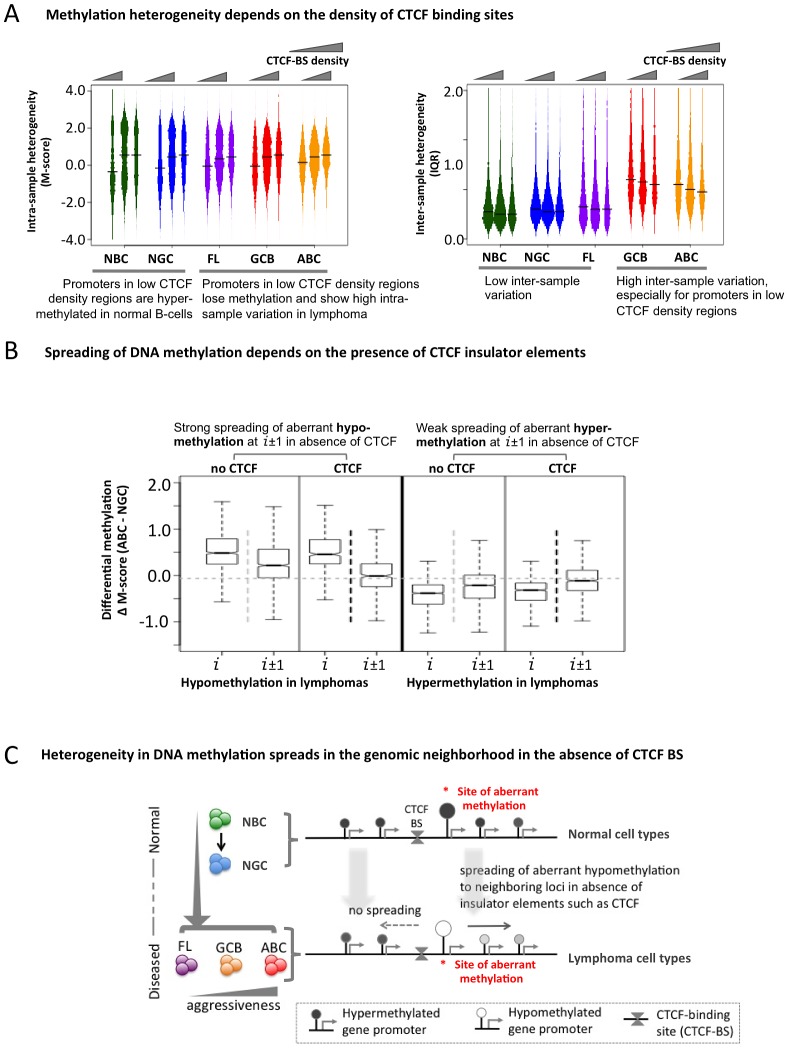
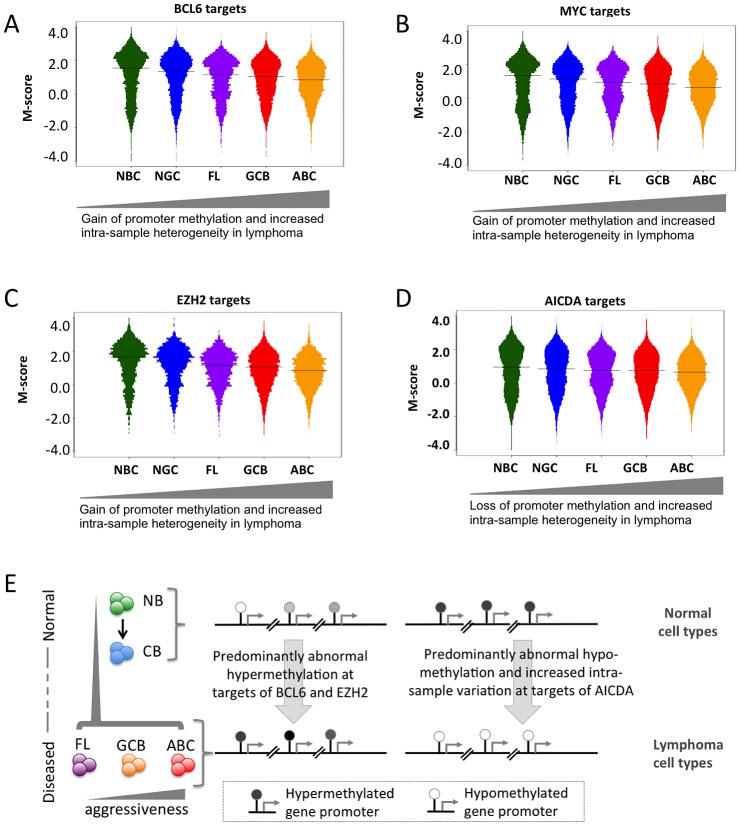
Despite mounting evidence that epigenetic abnormalities play a key role in cancer biology, their contributions to the malignant phenotype remain poorly understood. Here we studied genome-wide DNA methylation in normal B-cell populations and subtypes of B-cell non-Hodgkin lymphoma: follicular lymphoma and diffuse large B-cell lymphomas. These lymphomas display striking and progressive intra-tumor heterogeneity and also inter-patient heterogeneity in their cytosine methylation patterns. Epigenetic heterogeneity is initiated in normal germinal center B-cells, increases markedly with disease aggressiveness, and is associated with unfavorable clinical outcome. Moreover, patterns of abnormal methylation vary depending upon chromosomal regions, gene density and the status of neighboring genes. DNA methylation abnormalities arise via two distinct processes: i) lymphomagenic transcriptional regulators perturb promoter DNA methylation in a target gene-specific manner, and ii) aberrant epigenetic states tend to spread to neighboring promoters in the absence of CTCF insulator binding sites.
尽管越来越多的证据表明表观遗传异常在癌症生物学中发挥着关键作用,但它们对恶性表型的贡献仍知之甚少。在这里,我们研究了正常 B 细胞群体和 B 细胞非霍奇金淋巴瘤的亚型(滤泡性淋巴瘤和弥漫性大 B 细胞淋巴瘤)中的全基因组 DNA 甲基化。这些淋巴瘤表现出明显的、进行性的肿瘤内异质性,以及在其胞嘧啶甲基化模式上的患者间异质性。表观遗传异质性起始于正常生发中心 B 细胞,随着疾病侵袭性的增加而显著增加,并与不良的临床结局相关。此外,异常甲基化的模式取决于染色体区域、基因密度和相邻基因的状态。DNA 甲基化异常是通过两种不同的过程产生的:i)淋巴瘤发生的转录调节因子以特定于靶基因的方式扰乱启动子 DNA 甲基化,ii)异常的表观遗传状态往往在没有 CTCF 绝缘子结合位点的情况下扩散到相邻的启动子。