Life Sciences Research Center, School of Life Sciences and Technology, Xidian University, Xi'an, Shaanxi 710071, China.
Evid Based Complement Alternat Med. 2012;2012:934085. doi: 10.1155/2012/934085. Epub 2012 Dec 24.
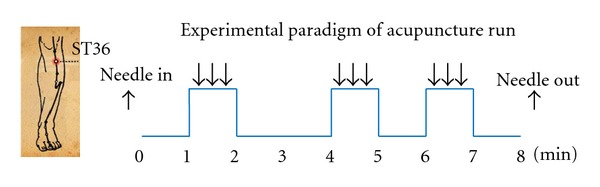
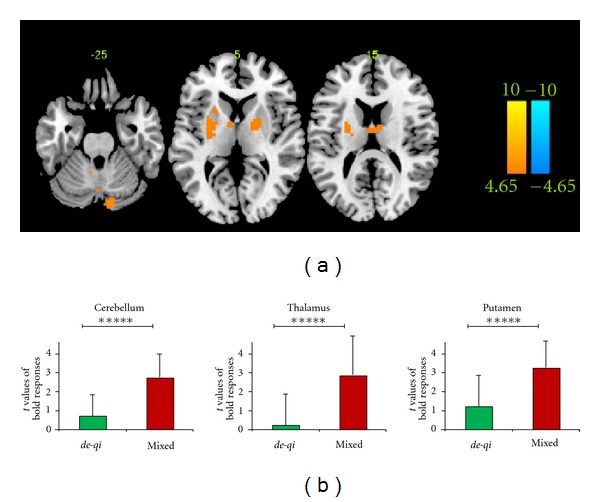
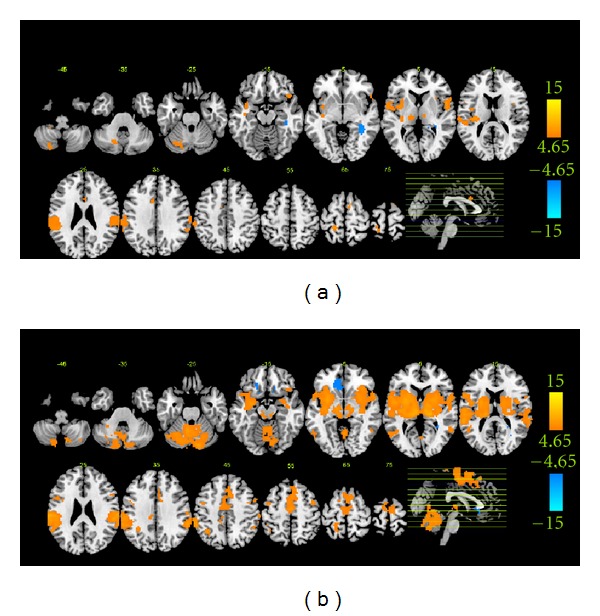
Nowadays, functional magnetic resonance imaging (fMRI) has become one of the most important ways to explore the central mechanism of acupuncture. Among these studies, activations around the somatosensory-related brain network had the most robust blood oxygen level-dependent (BOLD) responses. However, due to the insufficient control of the subjective sensations during acupuncture stimulation, whether these robust activations reflected the pattern of de-qi, sharp pain, or mixed (de-qi + sharp pain) sensations was largely unknown. The current study recruited 50 subjects and grouped them into two groups according to whether he/she experienced sharp pain during acupuncture stimulation to give a definite answer to the aforesaid question. Our results indicated that BOLD responses associated with de-qi during acupuncture stimulation at ST36 were activation dominated. Furthermore, both the quantitative and qualitative differences of BOLD responses between de-qi and mixed sensations evoked by acupuncture stimulation were significant. The pattern of BOLD responses of sharp pain might be partly separated from that of de-qi in the spatial distribution. Therefore, we proposed that in order to explore the specific central mechanism of acupuncture, subjects with sharp pain should be excluded from those with only de-qi.
如今,功能磁共振成像(fMRI)已成为探索针刺中枢机制的重要方法之一。在这些研究中,与躯体感觉相关的脑网络周围的激活具有最强烈的血氧水平依赖(BOLD)反应。然而,由于在针刺刺激过程中对主观感觉的控制不足,这些强烈的激活是否反映了得气、刺痛或混合(得气+刺痛)感觉的模式在很大程度上是未知的。本研究招募了 50 名受试者,并根据他们在针刺刺激过程中是否经历刺痛将他们分为两组,以明确回答上述问题。我们的结果表明,针刺 ST36 时与得气相关的 BOLD 反应以激活为主。此外,针刺刺激引起的得气和混合感觉之间的 BOLD 反应的数量和质量差异均具有统计学意义。刺痛的 BOLD 反应模式在空间分布上可能与得气部分分离。因此,我们提出为了探索针刺的特定中枢机制,应该排除那些只有得气而没有刺痛的受试者。