Department of Public Health and Clinical Medicine, Family Medicine, Umeå University, Umeå, Sweden.
PLoS One. 2013;8(1):e53246. doi: 10.1371/journal.pone.0053246. Epub 2013 Jan 9.
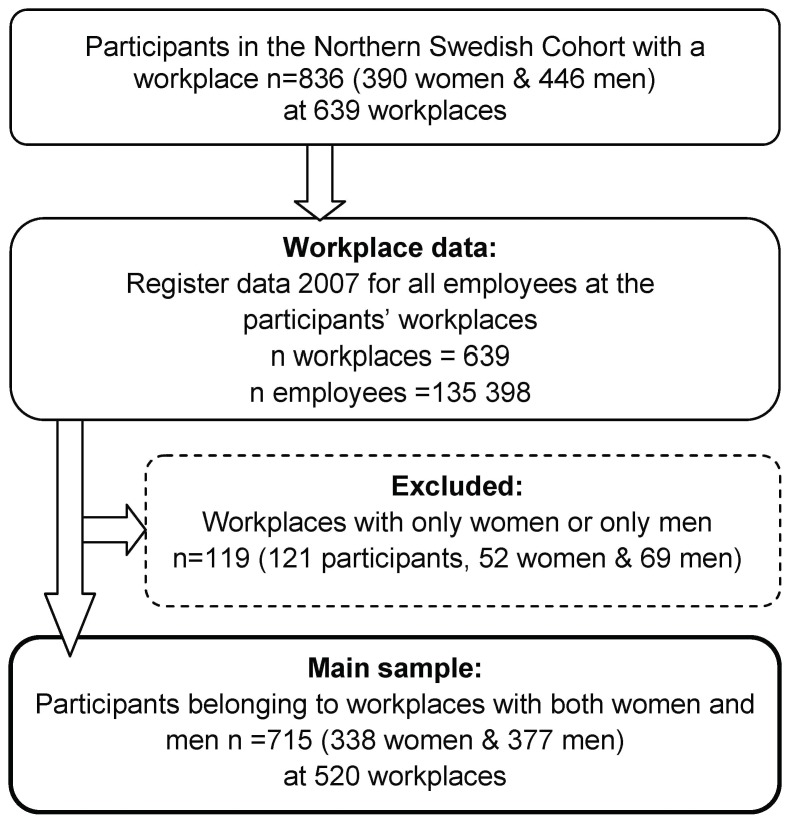
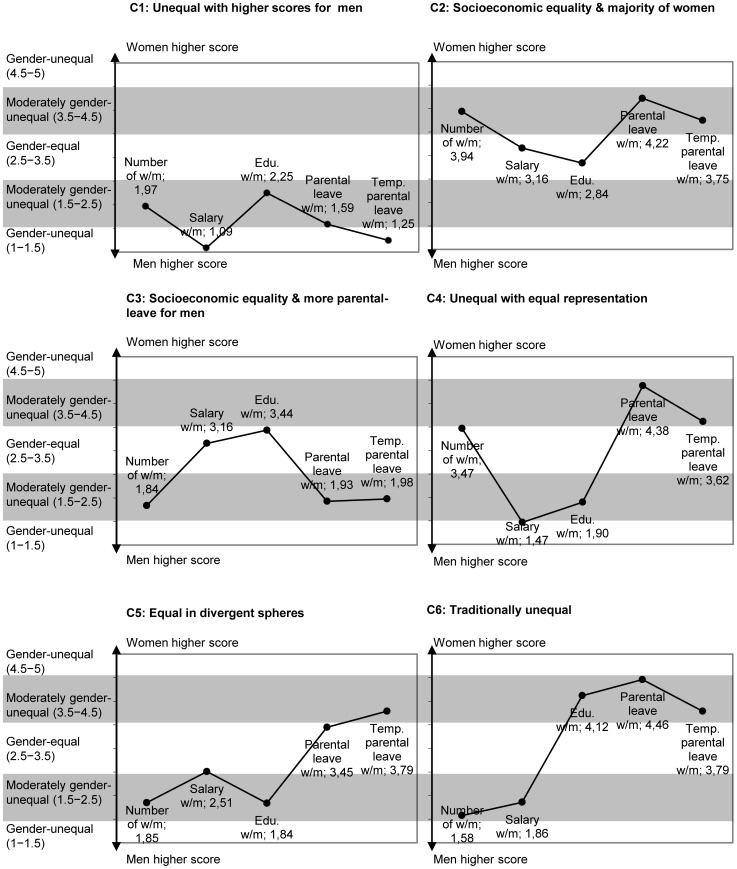
Research in the field of occupational health often uses a risk factor approach which has been criticized by feminist researchers for not considering the combination of many different variables that are at play simultaneously. To overcome this shortcoming this study aims to identify patterns of gender equality at workplaces and to investigate how these patterns are associated with psychological distress. Questionnaire data from the Northern Swedish Cohort (n = 715) have been analysed and supplemented with register data about the participants' workplaces. The register data were used to create gender equality indicators of women/men ratios of number of employees, educational level, salary and parental leave. Cluster analysis was used to identify patterns of gender equality at the workplaces. Differences in psychological distress between the clusters were analysed by chi-square test and logistic regression analyses, adjusting for individual socio-demographics and previous psychological distress. The cluster analysis resulted in six distinctive clusters with different patterns of gender equality at the workplaces that were associated to psychological distress for women but not for men. For women the highest odds of psychological distress was found on traditionally gender unequal workplaces. The lowest overall occurrence of psychological distress as well as same occurrence for women and men was found on the most gender equal workplaces. The results from this study support the convergence hypothesis as gender equality at the workplace does not only relate to better mental health for women, but also more similar occurrence of mental ill-health between women and men. This study highlights the importance of utilizing a multidimensional view of gender equality to understand its association to health outcomes. Health policies need to consider gender equality at the workplace level as a social determinant of health that is of importance for reducing differences in health outcomes for women and men.
职业健康领域的研究通常采用风险因素方法,但这种方法受到女权主义研究人员的批评,因为它没有考虑同时发挥作用的许多不同变量的组合。为了克服这一缺陷,本研究旨在确定工作场所性别平等模式,并调查这些模式如何与心理困扰相关。对来自瑞典北部队列(n=715)的问卷调查数据进行了分析,并补充了参与者工作场所的登记数据。登记数据用于创建员工人数、教育水平、工资和育儿假的性别平等指标,以衡量女性/男性比例。使用聚类分析来识别工作场所性别平等模式。通过卡方检验和逻辑回归分析,在调整个体社会人口统计学和先前心理困扰的情况下,分析了不同性别平等模式之间的心理困扰差异。聚类分析产生了六个具有不同工作场所性别平等模式的独特集群,这些模式与女性的心理困扰相关,但与男性无关。对于女性来说,在传统性别不平等的工作场所,心理困扰的可能性最高。在性别最平等的工作场所,心理困扰的总体发生率最低,女性和男性的发生率相同。这项研究的结果支持趋同假设,因为工作场所的性别平等不仅与女性的心理健康相关,而且与女性和男性心理健康状况的相似性相关。这项研究强调了利用性别平等的多维视角来理解其与健康结果之间的关系的重要性。卫生政策需要考虑工作场所的性别平等作为健康的社会决定因素,这对于减少男女健康结果的差异非常重要。