Department of Clinical Microbiology, Immunology, Umeå University, Umeå, Sweden.
PLoS One. 2013;8(1):e53414. doi: 10.1371/journal.pone.0053414. Epub 2013 Jan 9.
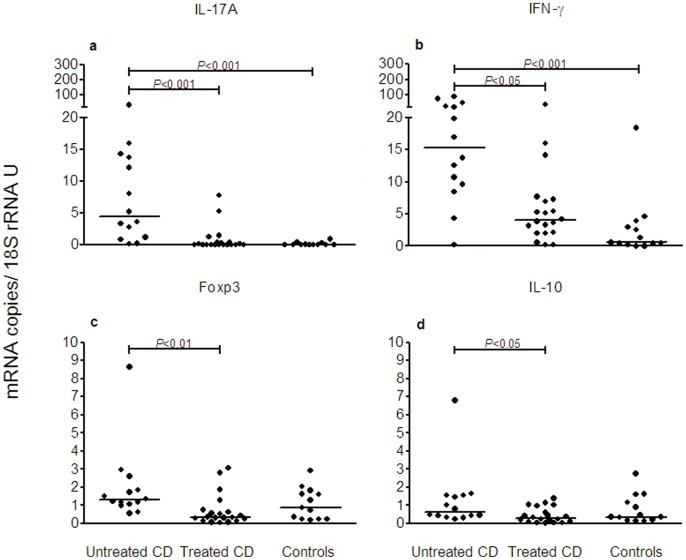
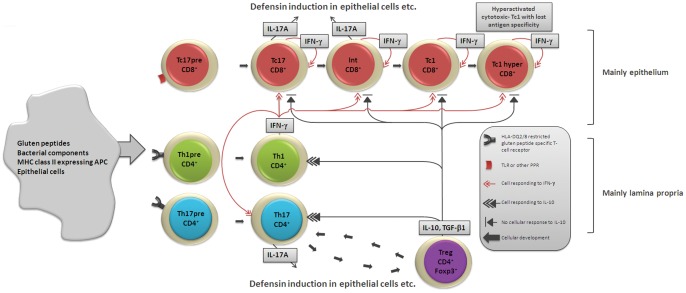
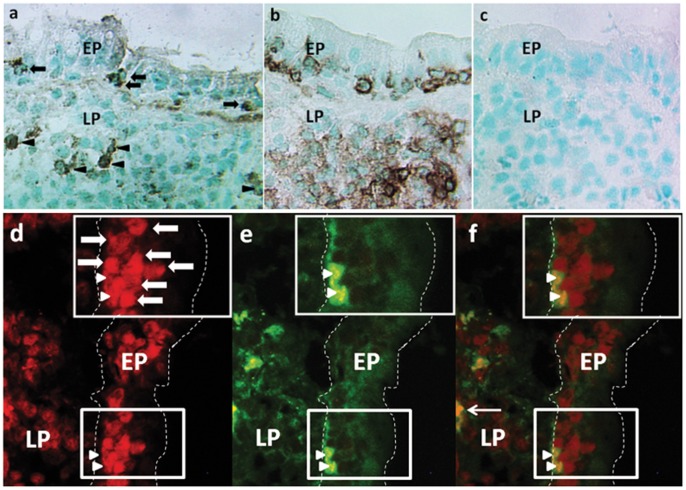
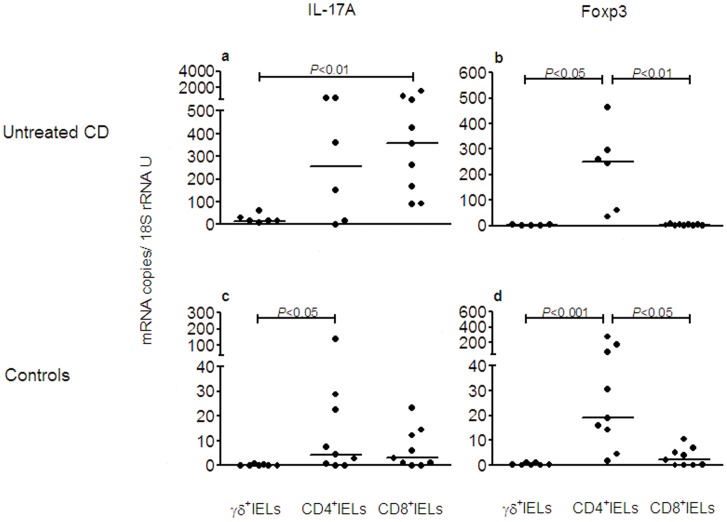
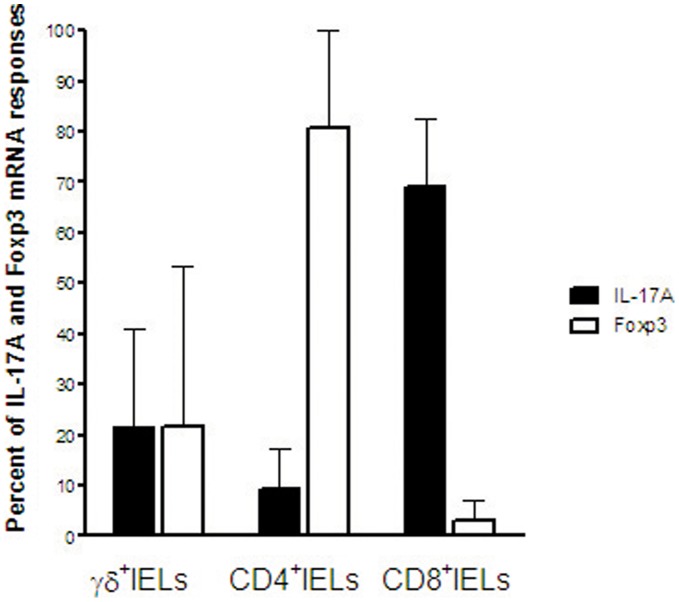
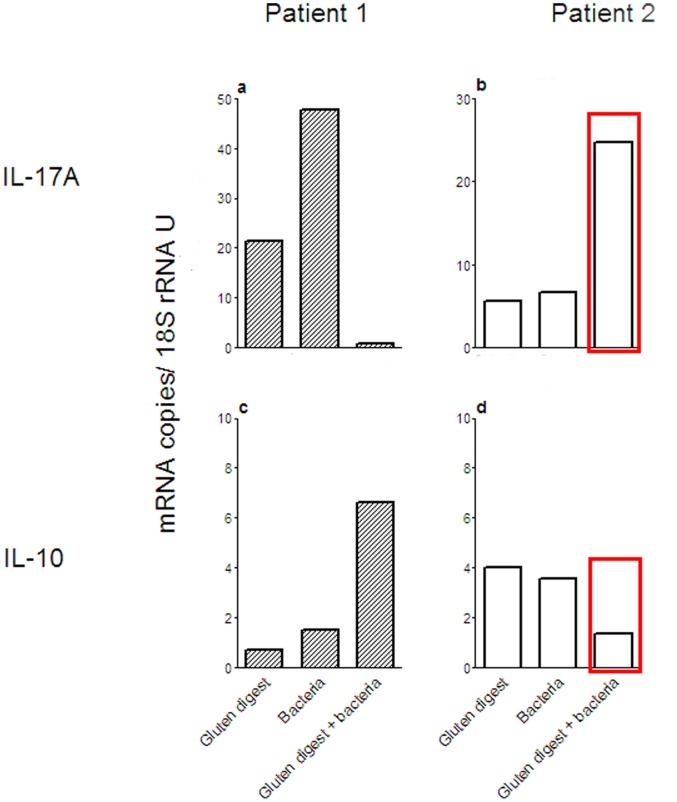
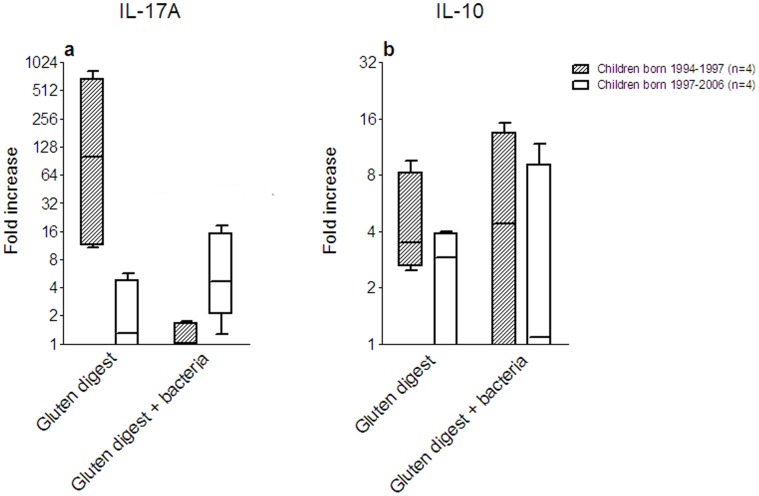
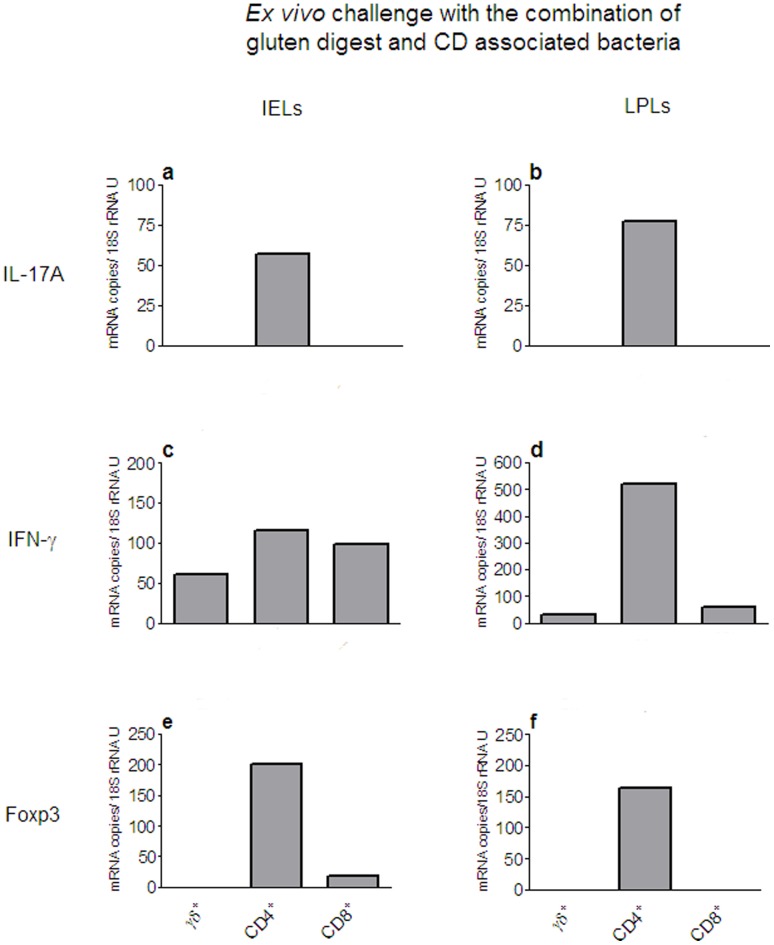
A hallmark of active celiac disease (CD), an inflammatory small-bowel enteropathy caused by permanent intolerance to gluten, is cytokine production by intestinal T lymphocytes. Prerequisites for contracting CD are that the individual carries the MHC class II alleles HLA-DQ2 and/or HLA-DQ8 and is exposed to gluten in the diet. Dysbiosis in the resident microbiota has been suggested to be another risk factor for CD. In fact, rod shaped bacteria adhering to the small intestinal mucosa were frequently seen in patients with CD during the "Swedish CD epidemic" and bacterial candidates could later be isolated from patients born during the epidemic suggesting long-lasting changes in the gut microbiota. Interleukin-17A (IL-17A) plays a role in both inflammation and anti-bacterial responses. In active CD IL-17A was produced by both CD8(+) T cells (Tc17) and CD4(+) T cells (Th17), with intraepithelial Tc17 cells being the dominant producers. Gluten peptides as well as CD associated bacteria induced IL-17A responses in ex vivo challenged biopsies from patients with inactive CD. The IL-17A response was suppressed in patients born during the epidemic when a mixture of CD associated bacteria was added to gluten, while the reverse was the case in patients born after the epidemic. Under these conditions Th17 cells were the dominant producers. Thus Tc17 and Th17 responses to gluten and bacteria seem to pave the way for the chronic disease with interferon-γ-production by intraepithelial Tc1 cells and lamina propria Th1 cells. The CD associated bacteria and the dysbiosis they might cause in the resident microbiota may be a risk factor for CD either by directly influencing the immune responses in the mucosa or by enhancing inflammatory responses to gluten.
活动性乳糜泻(CD)是一种由对麸质的永久性不耐受引起的炎症性小肠肠病,其特征是肠道 T 淋巴细胞产生细胞因子。患 CD 的先决条件是个体携带 MHC Ⅱ类等位基因 HLA-DQ2 和/或 HLA-DQ8,并暴露于饮食中的麸质。肠道常驻微生物群落失调被认为是 CD 的另一个危险因素。事实上,在“瑞典 CD 流行”期间,经常在 CD 患者的小肠黏膜上看到杆状细菌,后来可以从流行期间出生的患者中分离出细菌候选物,这表明肠道微生物群落发生了持久的变化。白细胞介素-17A(IL-17A)在炎症和抗细菌反应中都发挥作用。在活动性 CD 中,IL-17A 由 CD8+T 细胞(Tc17)和 CD4+T 细胞(Th17)产生,上皮内 Tc17 细胞是主要的产生者。来自处于缓解期的 CD 患者的活检组织在体外受到挑战时,无论是麸质肽还是与 CD 相关的细菌都能诱导 IL-17A 反应。当添加与 CD 相关的细菌混合物到麸质中时,出生于流行期间的患者的 IL-17A 反应受到抑制,而出生于流行之后的患者则相反。在这些条件下,Th17 细胞是主要的产生者。因此,Tc17 和 Th17 对麸质和细菌的反应似乎为疾病的慢性期铺平了道路,在慢性期,上皮内 Tc1 细胞和固有层 Th1 细胞产生干扰素-γ。与 CD 相关的细菌及其在常驻微生物群落中可能引起的失调可能是 CD 的一个危险因素,既可以通过直接影响黏膜中的免疫反应,也可以通过增强对麸质的炎症反应。