Department of Physiology and Pharmacology and Health Aging Research Center, College of Medicine, Chang Gung University, Kwei-San, Tao-Yuan, Taiwan.
PLoS One. 2013;8(1):e54125. doi: 10.1371/journal.pone.0054125. Epub 2013 Jan 11.
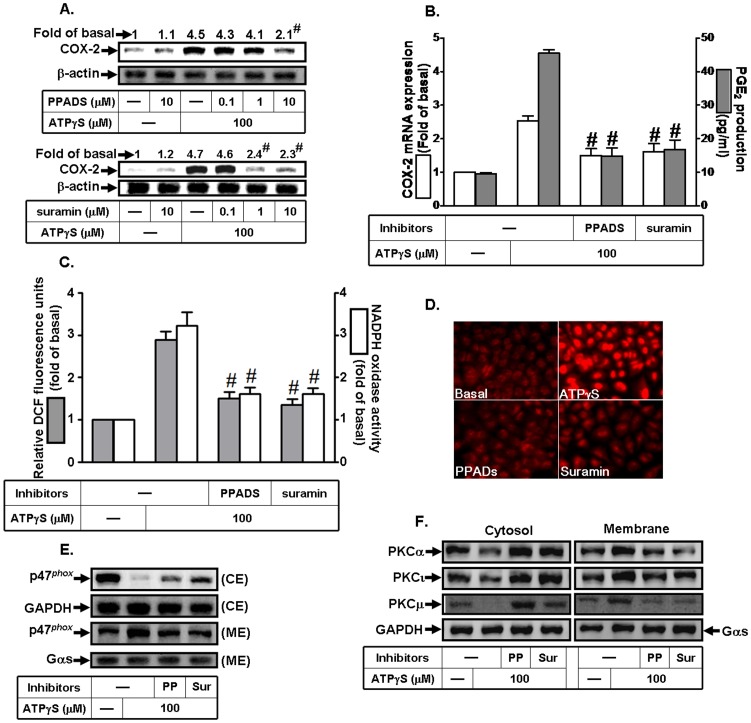
Up-regulation of cyclooxygenase (COX)-2 and its metabolite prostaglandin E(2) (PGE(2)) are frequently implicated in lung inflammation. Extracellular nucleotides, such as ATP have been shown to act via activation of P2 purinoceptors, leading to COX-2 expression in various inflammatory diseases, such as lung inflammation. However, the mechanisms underlying ATP-induced COX-2 expression and PGE(2) release remain unclear.
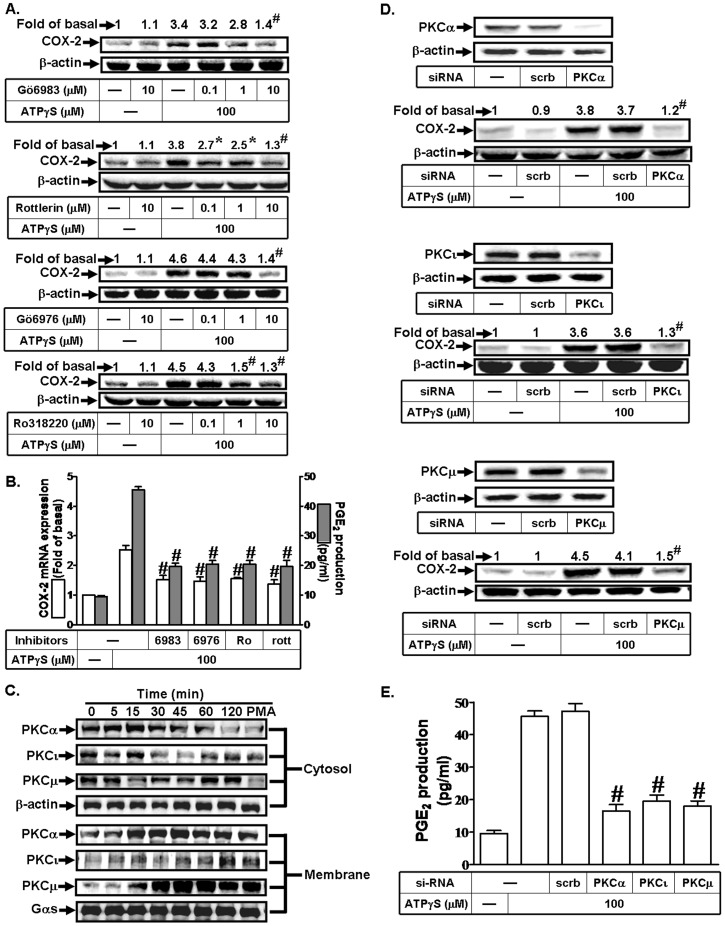
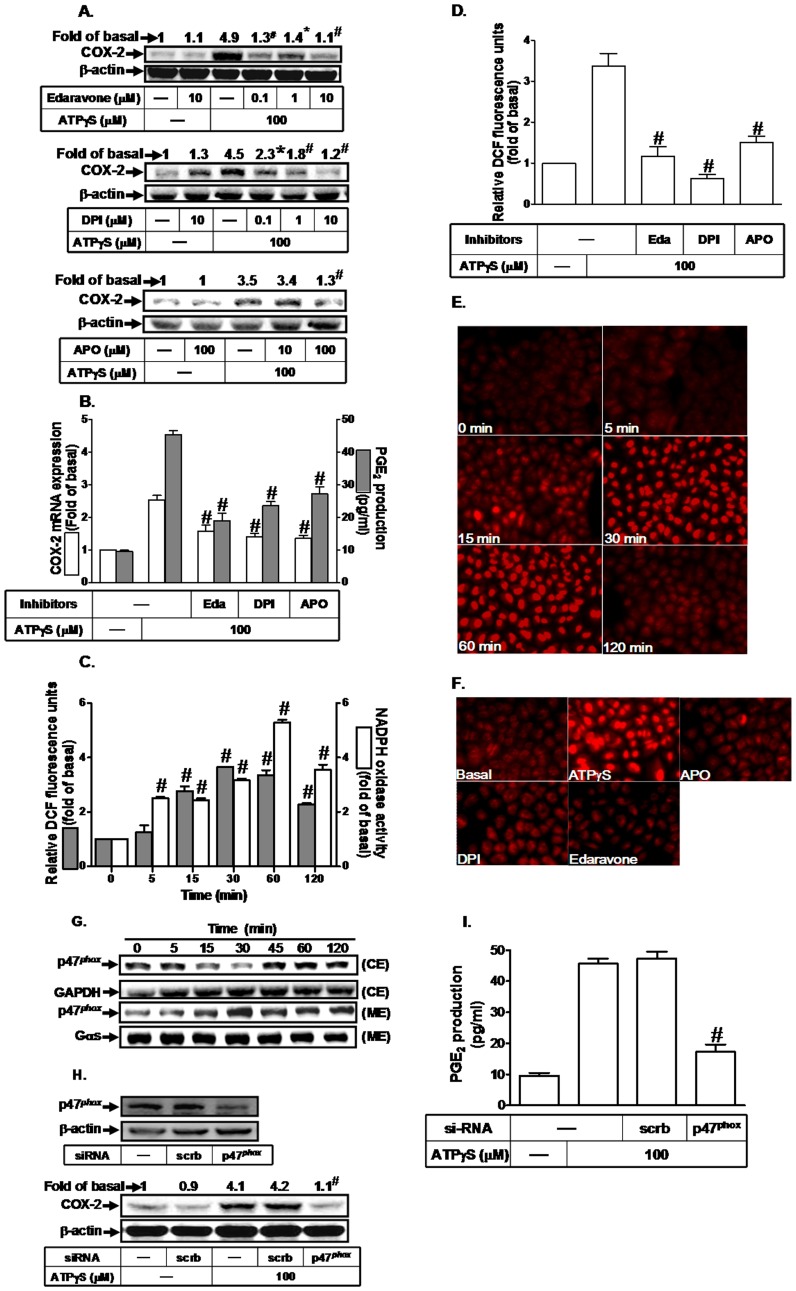
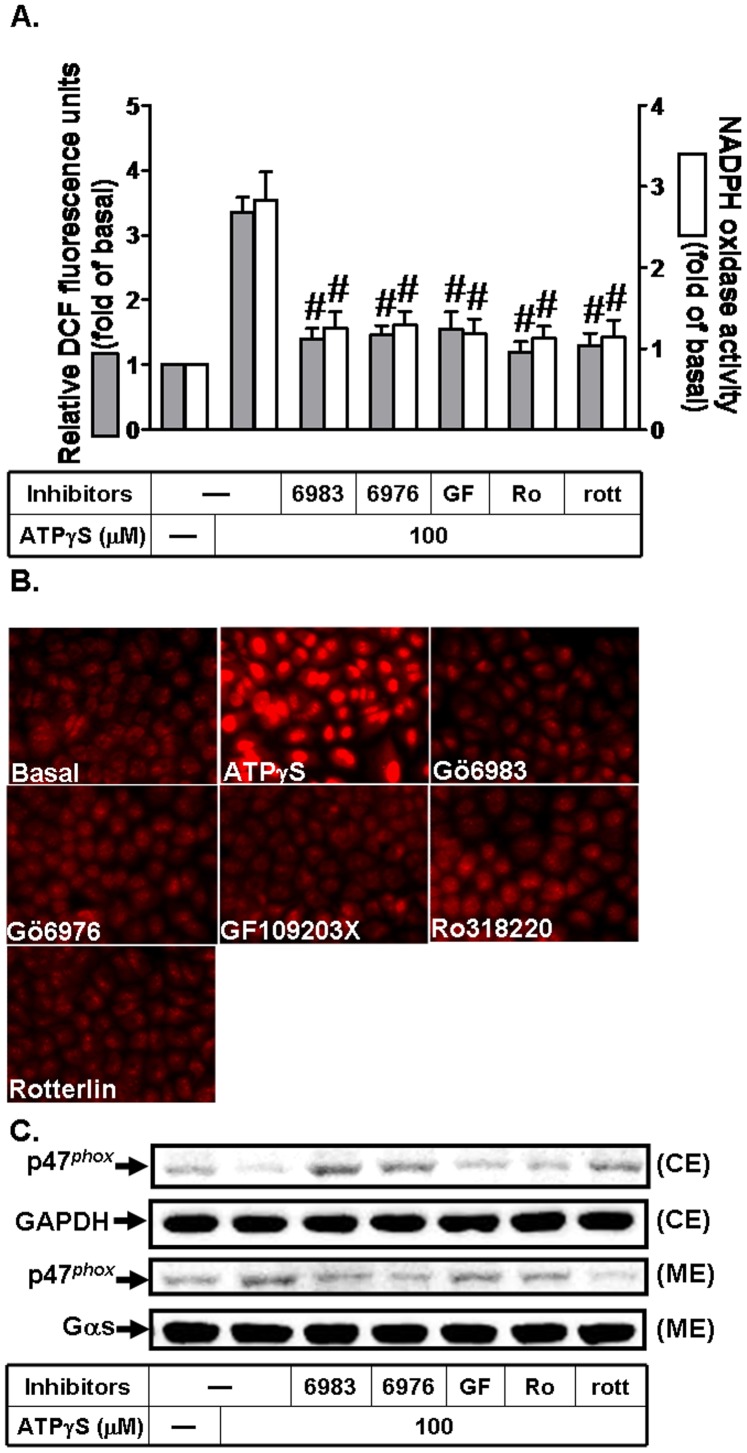
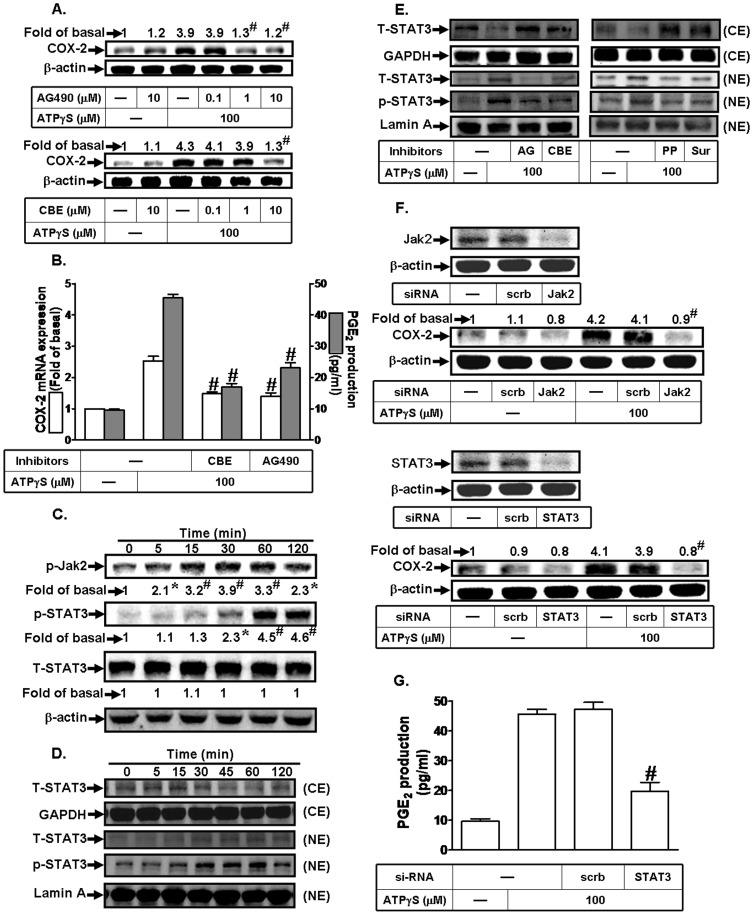
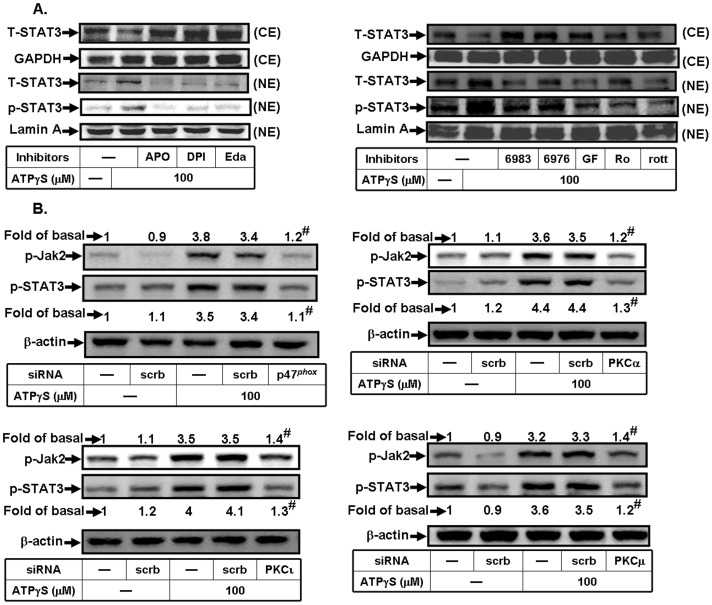
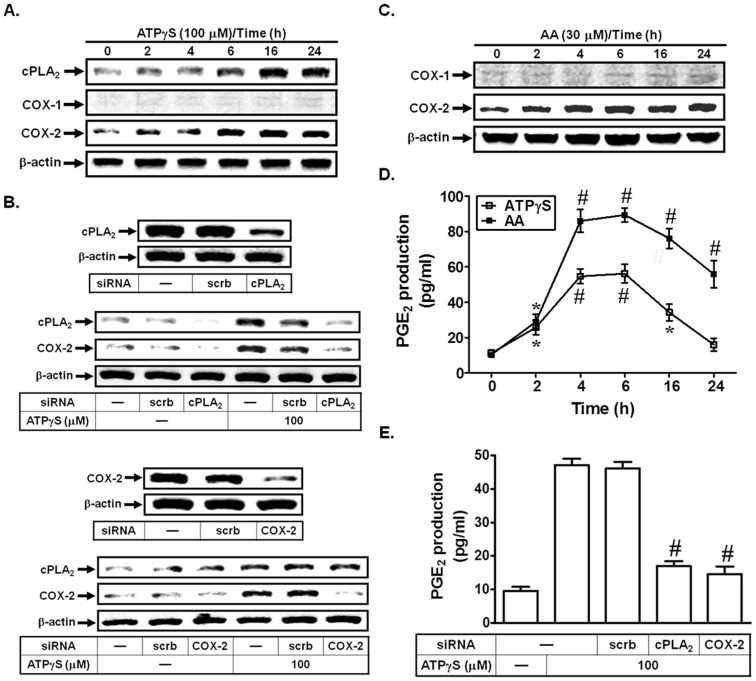
Here, we showed that ATPγS induced COX-2 expression in A549 cells revealed by western blot and real-time PCR. Pretreatment with the inhibitors of P2 receptor (PPADS and suramin), PKC (Gö6983, Gö6976, Ro318220, and Rottlerin), ROS (Edaravone), NADPH oxidase [diphenyleneiodonium chloride (DPI) and apocynin], Jak2 (AG490), and STAT3 [cucurbitacin E (CBE)] and transfection with siRNAs of PKCα, PKCι, PKCμ, p47(phox), Jak2, STAT3, and cPLA(2) markedly reduced ATPγS-induced COX-2 expression and PGE(2) production. In addition, pretreatment with the inhibitors of P2 receptor attenuated PKCs translocation from the cytosol to the membrane in response to ATPγS. Moreover, ATPγS-induced ROS generation and p47(phox) translocation was also reduced by pretreatment with the inhibitors of P2 receptor, PKC, and NADPH oxidase. On the other hand, ATPγS stimulated Jak2 and STAT3 activation which were inhibited by pretreatment with PPADS, suramin, Gö6983, Gö6976, Ro318220, GF109203X, Rottlerin, Edaravone, DPI, and apocynin in A549 cells.
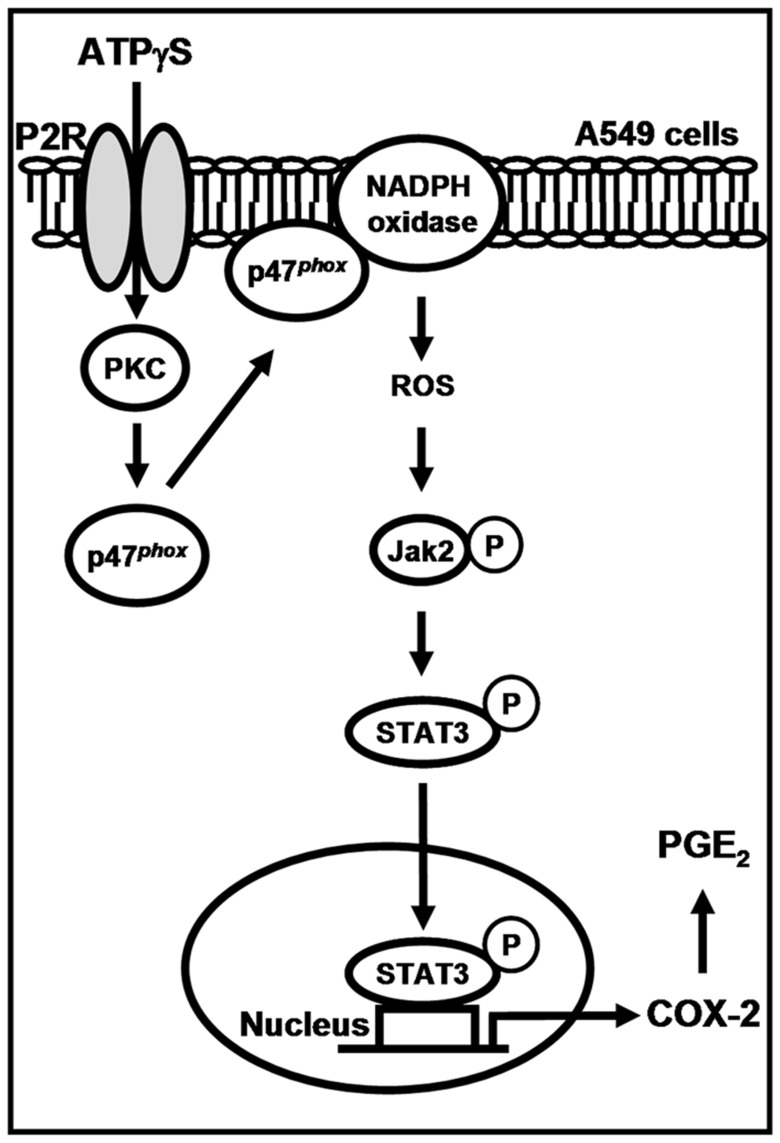
Taken together, these results showed that ATPγS induced COX-2 expression and PGE(2) production via a P2 receptor/PKC/NADPH oxidase/ROS/Jak2/STAT3/cPLA(2) signaling pathway in A549 cells. Increased understanding of signal transduction mechanisms underlying COX-2 gene regulation will create opportunities for the development of anti-inflammation therapeutic strategies.
环氧化酶 (COX)-2 和其代谢产物前列腺素 E(2) (PGE(2)) 的上调通常与肺部炎症有关。已经表明细胞外核苷酸,如 ATP 通过激活 P2 嘌呤能受体发挥作用,导致各种炎症性疾病(如肺部炎症)中的 COX-2 表达。然而,ATP 诱导的 COX-2 表达和 PGE(2) 释放的机制仍不清楚。
在这里,我们通过 Western blot 和实时 PCR 显示,ATPγS 诱导 A549 细胞中的 COX-2 表达。用 P2 受体抑制剂(PPADS 和苏拉明)、PKC 抑制剂(Gö6983、Gö6976、Ro318220 和 Rottlerin)、ROS 抑制剂(依达拉奉)、NADPH 氧化酶抑制剂 [二苯基碘氯化物 (DPI) 和 apocynin]、Jak2 抑制剂 (AG490) 和 STAT3 抑制剂 (CBE) 预处理,以及转染 PKCα、PKCι、PKCμ、p47(phox)、Jak2、STAT3 和 cPLA(2) 的 siRNA,明显减少了 ATPγS 诱导的 COX-2 表达和 PGE(2) 的产生。此外,用 P2 受体抑制剂预处理可减轻 ATPγS 诱导的 PKCs 从细胞质向膜的易位。此外,用 P2 受体、PKC 和 NADPH 氧化酶抑制剂预处理可减少 ATPγS 诱导的 ROS 生成和 p47(phox)易位。另一方面,ATPγS 刺激 Jak2 和 STAT3 的激活,用 PPADS、苏拉明、Gö6983、Gö6976、Ro318220、GF109203X、Rottlerin、依达拉奉、DPI 和 apocynin 预处理可抑制 A549 细胞中的这种激活。
综上所述,这些结果表明,在 A549 细胞中,ATPγS 通过 P2 受体/PKC/NADPH 氧化酶/ROS/Jak2/STAT3/cPLA(2) 信号通路诱导 COX-2 表达和 PGE(2) 的产生。深入了解 COX-2 基因调控的信号转导机制将为开发抗炎治疗策略创造机会。