School of Biology, University of Leeds, Leeds, United Kingdom.
PLoS Negl Trop Dis. 2013;7(1):e1992. doi: 10.1371/journal.pntd.0001992. Epub 2013 Jan 10.
There is a need for sensitive and specific rapid diagnostic tests (RDT) for canine visceral leishmaniasis. The aims of this study were to evaluate the diagnostic performance of immunochromatographic dipstick RDTs using rK39 antigen for canine visceral leishmaniasis by (i) investigating the sensitivity of RDTs to detect infection, disease and infectiousness in a longitudinal cohort study of natural infection in Brazil, and (ii) using meta-analysis to estimate the sensitivity and specificity of RDTs from published studies.
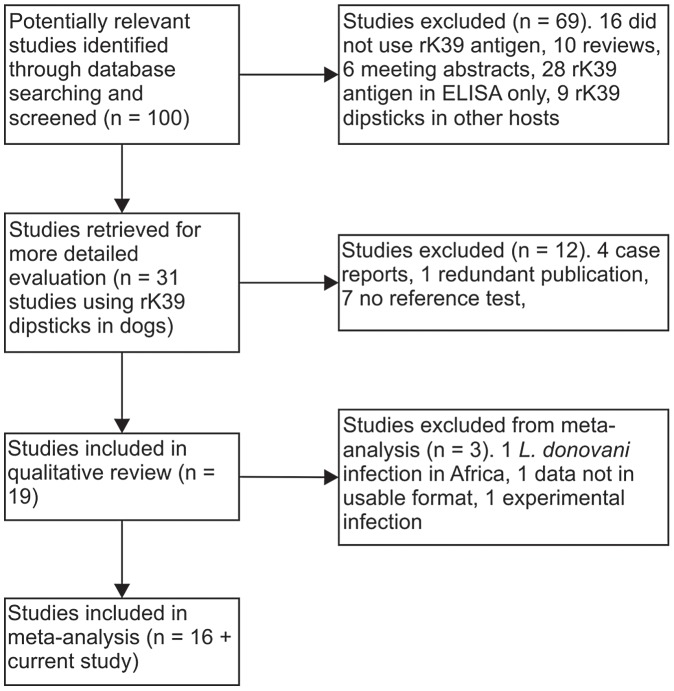
We used a rK39 RDT (Kalazar Detect Canine Rapid Test; Inbios) to test sera collected from 54 sentinel dogs exposed to natural infection in an endemic area of Brazil. Dogs were sampled bimonthly for up to 27 months, and rK39 results compared to those of crude antigen ELISA, PCR, clinical status and infectiousness to sandflies. We then searched MEDLINE and Web of Knowledge (1993-2011) for original studies evaluating the performance of rK39 RDTs in dogs. Meta-analysis of sensitivity and specificity was performed using bivariate mixed effects models.
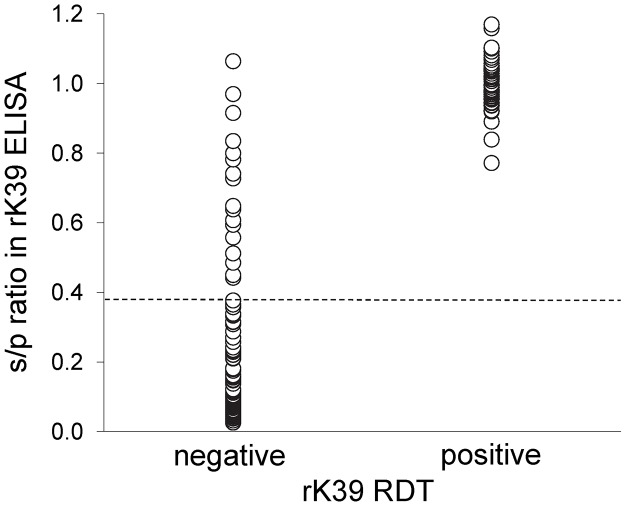
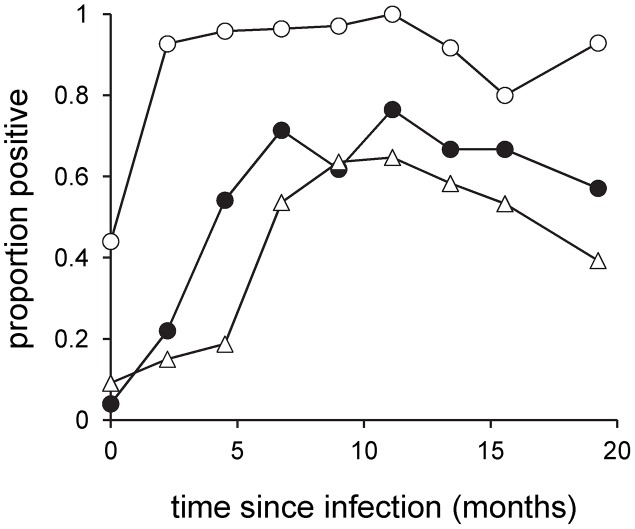
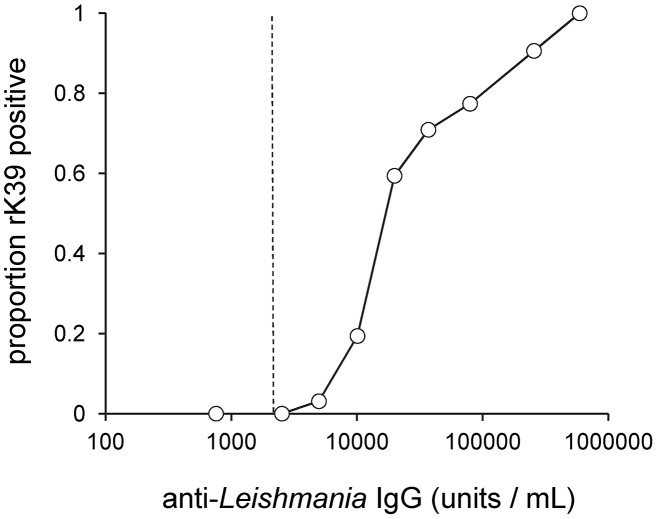
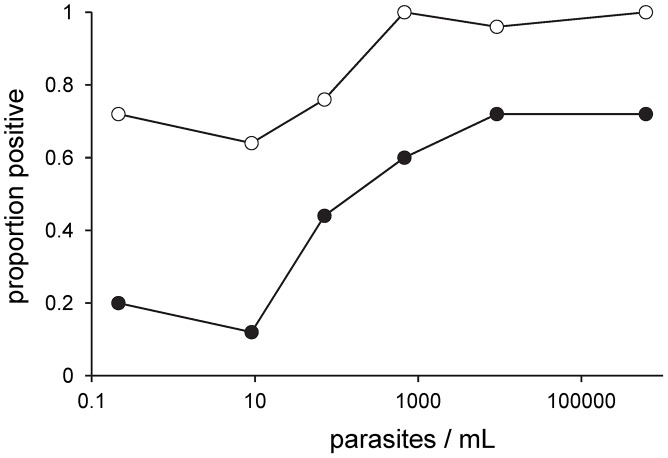
The sensitivity of the rK39 RDT in Brazil to detect infection, disease and infectiousness was 46%, 77% and 78% respectively. Sensitivity increased with time since infection, antibody titre, parasite load, clinical score and infectiousness. Sixteen studies met the inclusion criteria for meta-analysis. The combined sensitivity of rK39 RDTs was 86.7% (95% CI: 76.9-92.8%) to detect clinical disease and 59.3% (37.9-77.6%) to detect infection. Combined specificity was 98.7% (89.5-99.9%). Both sensitivity and specificity varied considerably between studies.
The diagnostic performance of rK39 RDTs is reasonable for confirmation of infection in suspected clinical cases, but the sensitivity to detect infected dogs is too low for large-scale epidemiological studies and operational control programmes.
犬内脏利什曼病需要敏感和特异的快速诊断检测(RDT)。本研究的目的是通过(i)在巴西自然感染的纵向队列研究中调查 RDT 检测感染、疾病和传染性的敏感性,以及(ii)使用荟萃分析估计来自已发表研究的 RDT 的敏感性和特异性,来评估使用 rK39 抗原的免疫层析试纸 RDT 在犬内脏利什曼病中的诊断性能。
我们使用 rK39 RDT(Inbios 公司的 Kalazar Detect 犬快速检测试剂盒)检测了 54 只暴露于巴西地方性流行地区自然感染的哨犬的血清。每两个月对犬进行一次采样,最长可达 27 个月,并将 rK39 结果与粗抗原 ELISA、PCR、临床状况和对沙蝇的传染性进行比较。然后,我们在 MEDLINE 和 Web of Knowledge(1993-2011 年)上搜索了评估 rK39 RDT 在犬中的性能的原始研究。使用双变量混合效应模型进行敏感性和特异性的荟萃分析。
rK39 RDT 在巴西检测感染、疾病和传染性的敏感性分别为 46%、77%和 78%。敏感性随感染后时间、抗体滴度、寄生虫负荷、临床评分和传染性而增加。有 16 项研究符合荟萃分析的纳入标准。rK39 RDT 的联合敏感性为 86.7%(95%CI:76.9-92.8%),用于检测临床疾病,59.3%(37.9-77.6%)用于检测感染。联合特异性为 98.7%(89.5-99.9%)。在研究之间,敏感性和特异性差异很大。
rK39 RDT 的诊断性能对于疑似临床病例的感染确认是合理的,但对检测感染犬的敏感性太低,不适合大规模的流行病学研究和操作控制计划。