Department of Pathology, UT Health Science Center at San Antonio, San Antonio, TX 78229, USA.
Cell Death Dis. 2013 Jan 17;4(1):e457. doi: 10.1038/cddis.2012.192.
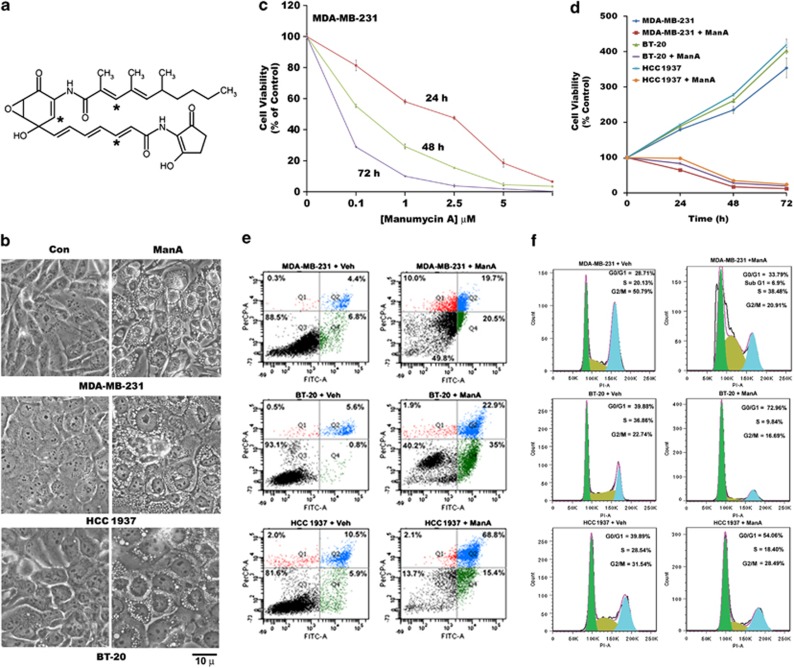
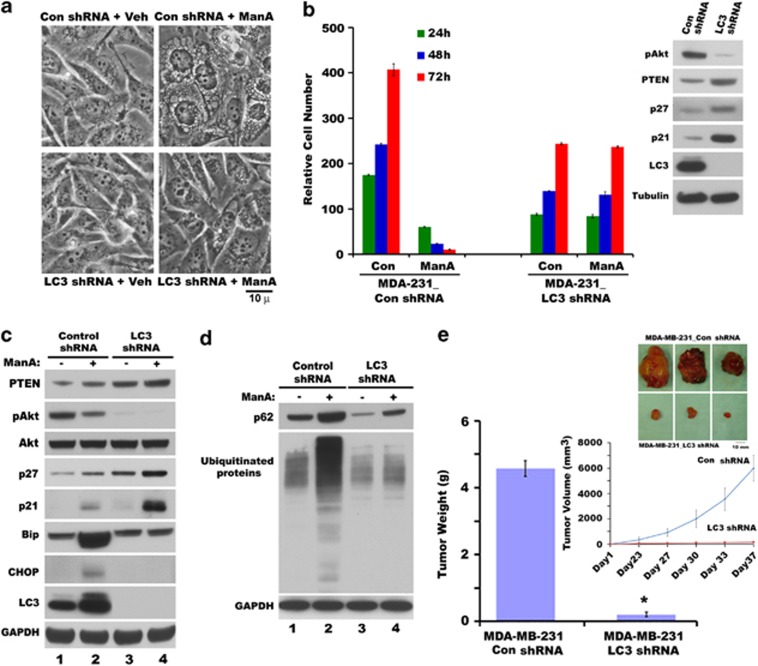
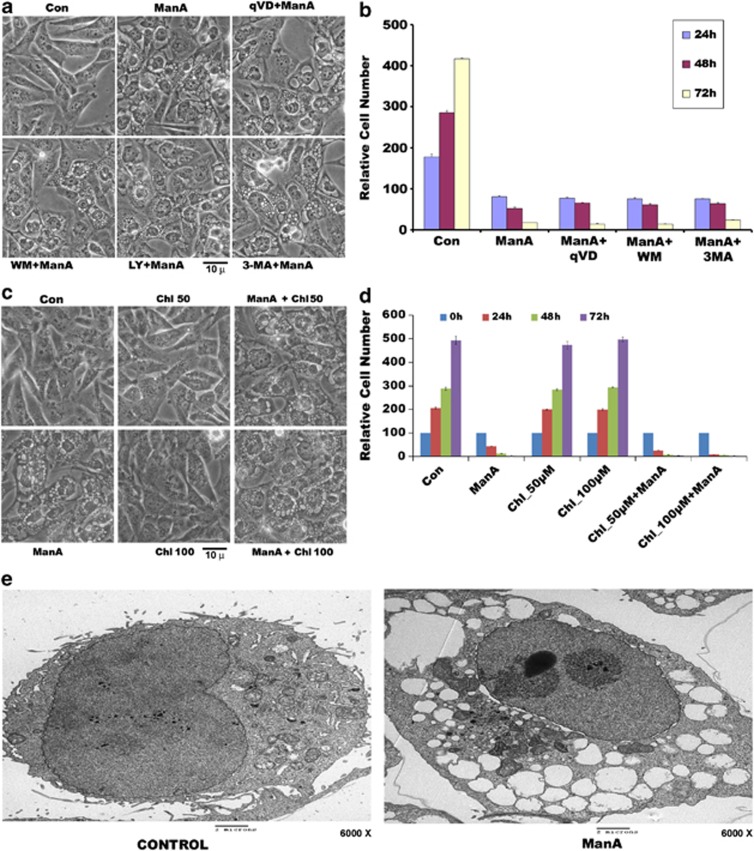
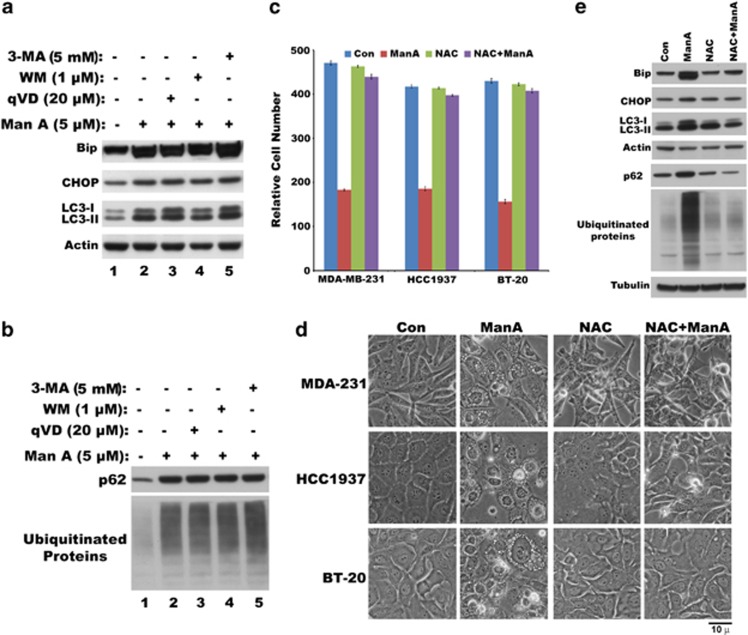
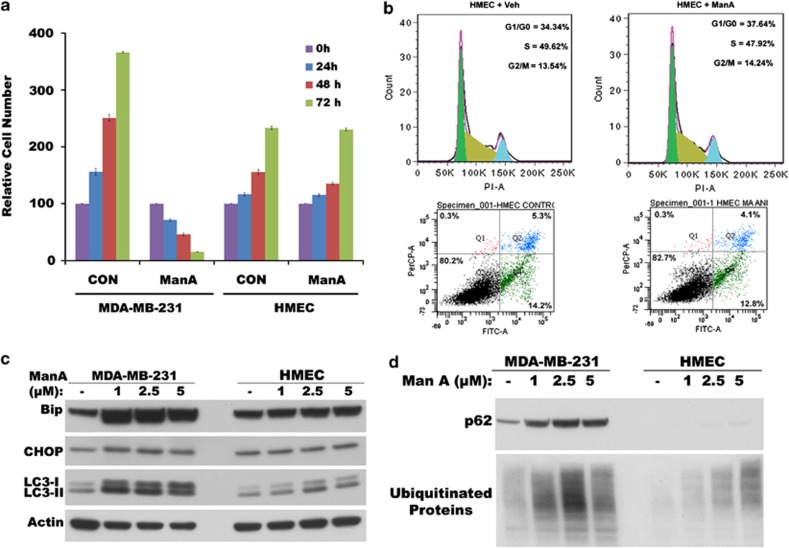
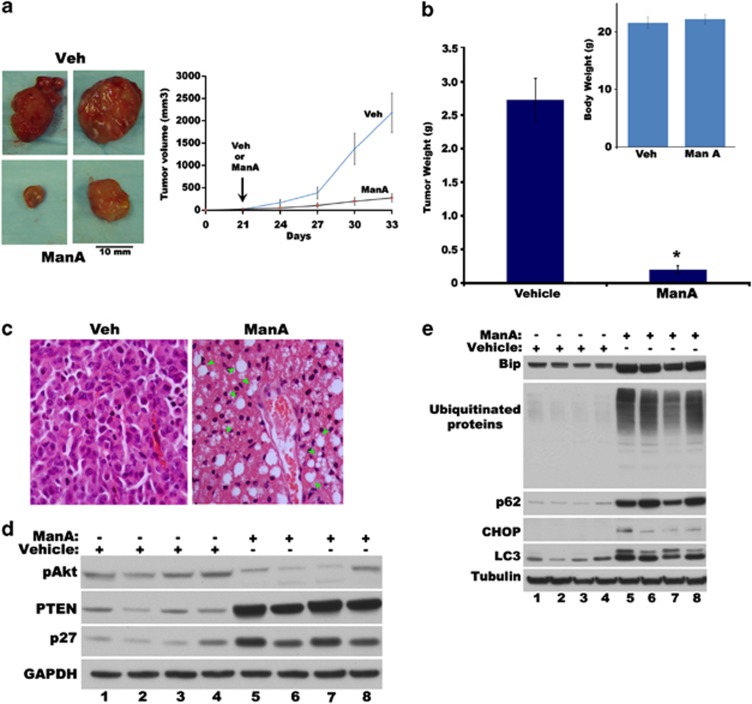
Therapy resistance can be attributed to acquisition of anti-apoptotic mechanisms by the cancer cells. Therefore, developing approaches that trigger non-apoptotic cell death in cancer cells to compensate for apoptosis resistance will help to treat cancer effectively. Triple-negative breast cancers (TNBC) are among the most aggressive and therapy resistant to breast tumors. Here we report that manumycin A (Man A), an inhibitor of farnesyl protein transferase, reduces cancer cell viability through induction of non-apoptotic, non-autophagic cytoplasmic vacuolation death in TNBC cells. Man A persistently induced cytoplasmic vacuolation and cell death through the expression of microtubule-associated protein 1 light chain 3 (LC3) and p62 proteins along with endoplasmic reticulum (ER) stress markers, Bip and CHOP, and accumulation of ubiquitinated proteins. As inhibitors of apoptosis and autophagy failed to block cytoplasmic vacuolation and its associated protein expression or cell death, it appears that these processes are not involved in the death induced by Man A. Ability of thiol antioxidant, NAC in blocking Man A-induced vacuolation, death and its related protein expression suggests that sulfhydryl homeostasis may be the target of Man A. Surprisingly, normal human mammary epithelial cells failed to undergo cytoplasmic vacuolation and cell death, and grew normally in presence of Man A. In conjunction with its in vitro effects, Man A also reduced tumor burden in vivo in xenograft models that showed extensive cytoplasmic vacuoles and condensed nuclei with remarkable increase in the vacuolation-associated protein expression together with increase of p21, p27, PTEN and decrease of pAkt. Interestingly, Man A-mediated upregulation of p21, p27 and PTEN and downregulation of pAkt and tumor growth suppression were also mimicked by LC3 knockdown in MDA-MB-231 cells. Overall, these results suggest novel therapeutic actions by Man A through the induction of non-apoptotic and non-autophagic cytoplasmic vacuolation death by probably affecting ER stress, LC3 and p62 pathways in TNBC but not in normal mammary epithelial cells.
耐药性可归因于癌细胞获得抗凋亡机制。因此,开发触发癌细胞非凋亡性细胞死亡的方法来补偿凋亡耐药性将有助于有效地治疗癌症。三阴性乳腺癌(TNBC)是最具侵袭性和治疗耐药性的乳腺癌之一。在这里,我们报告说,法呢基转移酶抑制剂马努菌素 A(Man A)通过诱导 TNBC 细胞中非凋亡、非自噬的细胞质空泡化死亡来降低癌细胞活力。Man A 通过表达微管相关蛋白 1 轻链 3(LC3)和 p62 蛋白以及内质网(ER)应激标志物 Bip 和 CHOP,以及泛素化蛋白的积累,持续诱导细胞质空泡化和细胞死亡。由于凋亡和自噬抑制剂未能阻断细胞质空泡化及其相关蛋白表达或细胞死亡,因此这些过程似乎不参与 Man A 诱导的死亡。硫醇抗氧化剂 NAC 阻断 Man A 诱导的空泡化、死亡及其相关蛋白表达的能力表明,巯基稳态可能是 Man A 的靶点。令人惊讶的是,正常的人乳腺上皮细胞在 Man A 存在的情况下无法发生细胞质空泡化和细胞死亡,并且正常生长。与体外作用相结合,Man A 还减少了异种移植模型中的肿瘤负担,该模型显示出广泛的细胞质空泡和浓缩核,与空泡化相关蛋白表达的显著增加以及 p21、p27、PTEN 的增加和 pAkt 的减少有关。有趣的是,Man A 介导的 p21、p27 和 PTEN 的上调以及 pAkt 的下调和肿瘤生长抑制也可以通过 MDA-MB-231 细胞中的 LC3 敲低来模拟。总体而言,这些结果表明 Man A 通过可能影响 ER 应激、LC3 和 p62 途径在 TNBC 中诱导非凋亡性和非自噬性细胞质空泡化死亡而具有新的治疗作用,但在正常乳腺上皮细胞中则没有。